Manuscripts
Search Filter
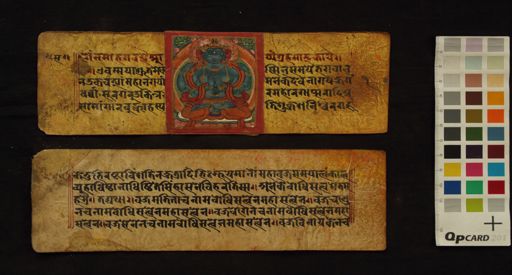
Grahamātṛkādhāraṇī
eap_79014005 Language : Sanskrit Scripts : Nepālākṣara
A Buddhist Dhāraṇī text contains mystic mantras for the veneration of the nine planets. These mantras belong to the Tantric class. The text describes the rituals of worshiping the planets with diagrams drawn on the floor of a room, chanting the mantras seven times each day, from the seventh day to the 14th day of the waxing moon in Kartika, with the final ritual occurring at midnight on the 15th day. The mantras were revealed to a congregation of gods by Buddha himself while residing in the Alakavati mansion of Indra (Mitra, 1882, pp. 50-51). The first folio contains a colourful illustration of a Buddhist deity. The final folio is heavily damaged and torn, so half of the manuscript’s colophon is missing.
Lokeśvara-aṣṭottara-śataka
eap_79014006 Language : Sanskrit Scripts : Nepālākṣara
A stotra text composed of 108 verses praising the different forms of the Bodhisattva Avalokiteśvara-Lokeśvara. The manuscript depicts an illustration of Mañjunātha-Lokeśvara, who has four arms and is white in colour. He holds a rosary in his right hand and a book in his left hand, while the other two hands are joined against his chest, forming the dharmacakra-mudrā.
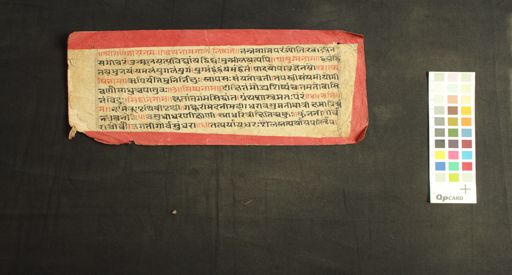
Nāmamālā
eap_79005074 Language : Sanskrit Scripts : Jain Nāgarī
This is a sanskrit Lexicon text composed by the Jain poet Dhanañjaya, son of Vāsudeva and Śrīdevī. This is the most famous version, written around the 12th century. It is a synonymous dictionary, often studied alongside the Amarakośa. It consists of 2 chapters including; Synonyms, Homonyms. The first section containing about 200 verses is called Nāmamālā in one of the concluding verses; the second section in about 50 verses is often called Nighaṇṭu; Dhanañjayakośa, Nāmamālā etc. sometimes refers to the whole work also. The manuscript holds only first chapters some verses but that is not complete in between it several verses are missing so it seems it is an incomplete text. In the colophone part only title of the text has mentioned author name or leneage has not mentioned but the author name has disclosed by the intermadiate colophone. The manuscript is good readable, written in Sanskrit language and Jain Nagari script also whole folios margin side has beatifully covered with red coloured paper. The condition of the text is good readable but some folios are slightly torn.
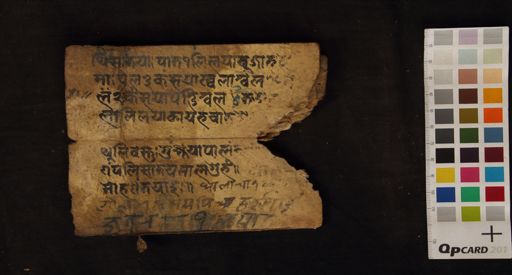
Unknown Fragment
eap_79003016 Language : Newari Scripts : Nepālākṣara
This is an Incomplete fragment text. There are only 6 folios, which hasn't any colophone part so it isn't possible to ascertain the authors name, subject, title of the text.
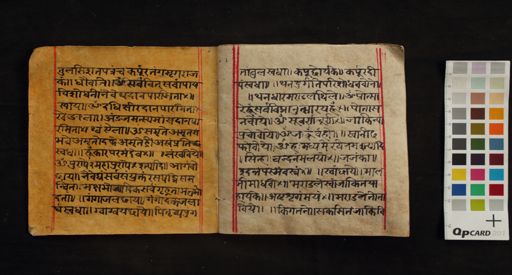
Thaṃlipājakapiṇḍakarma kriyā
eap_79002004 Language : Newari Scripts : Devanāgarī
The text describes the death of the forefathers, followed by some rituals, which are called Piṇḍadān Kriyā. The text names various items used during the Piṇḍadāna Kriyā, including: Candanacandadāna Pāramitā and Naivedyadāna Pāramitā. At the end of the text, the Yajamāna (patron/performer) will perform Namaskar (obeisance) to the forefathers and to the offerings (fruits, lamp, incense stick), which are all attributed to them. It is written in Newari language and Devanagari script, at the end of the folio Thaṃlipājakapiṇḍakarma kriyā.
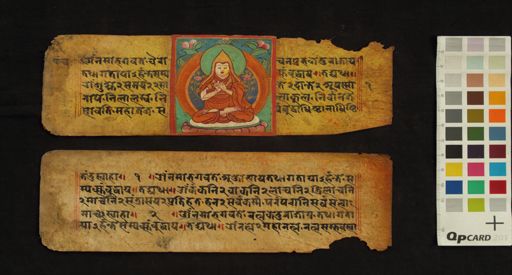
Pañcabuddha-dhāraṇī
eap_79014010 Language : Sanskrit Scripts : Nepālākṣara
This text contains five dhāraṇīs (spells) praising the five Buddhas: Vairocana, Akṣobhya, Ratnasambhava, Amitābha, and Amoghasiddhi. The manuscript includes an illustration of Vairocana Buddha.
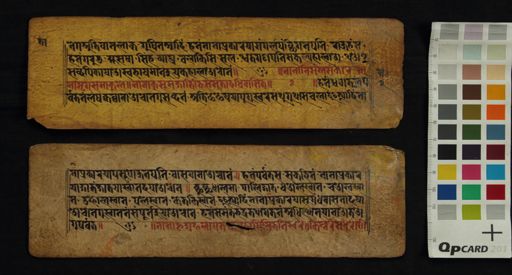
Āryyatārābhaṭṭārikāyā-nāmāṣṭottaraśataka
eap_79014013 Language : Sanskrit and Newari Scripts : Nepālākṣara
A mantra text composed in 55 verses, praising the Buddhist goddess Tārā through her 108 names. The manuscript contains an unknown commentary in the Newar language. The first folio is missing, so the beginning of the manuscript is lost; however, the manuscript preserves the complete set of 108 verses along with the commentary. The text identifies the Buddha as the speaker of these mantras.
Avalokiteśvara-aṣṭottaranāma
eap_79015013 Language : Sanskrit Scripts : Nepālākṣara
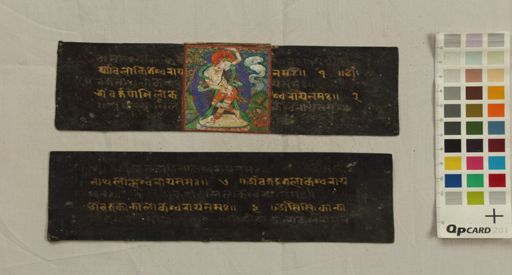
A Buddhist stotra text praising the Bodhisattva Avalokiteśvara through the chanting of his 108 names. The text is composed of 108 verses and is written on black paper in golden ink. Folio 1b of the manuscript contains an illustration of Avalokiteśvara.
Pañcarakṣāsūtra
eap_79015014 Language : Sanskrit Scripts : Nepālākṣara
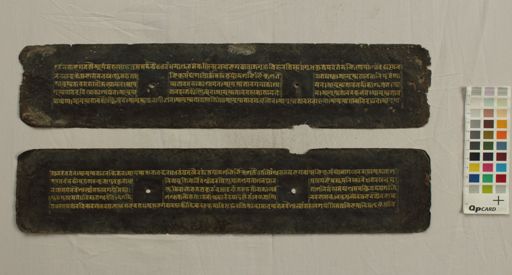
This is a Buddhist tantra text containing mantras dedicated to five Buddhist deities. The original text dedicates mantras in five sections, one for each deity; however, the present manuscript does not include the first section, which is dedicated to the deity Pratisarā. The manuscript begins with Mahāsāhasra-pramardanī (f. 1b–37a), Mahāmāyūryāvidyārājñī-avinastyāyakṣa-mukhānpratilabdhā (f. 37a–79b), Mahāśītavatī-mahāvidyārājñī (f. 79b–82b), and Mahārakṣā-mahāmantrānusāraṇī-mahāvidyā (f. 82b–115a). The manuscript is written on black paper in golden ink. It is believed that this text, or these sūtras, possess mystical power capable of protecting against dangers. This text is popular in Nepalese Buddhist culture.
Pañcarakṣāsūtra
eap_79015016 Language : Sanskrit Scripts : Rañjanā
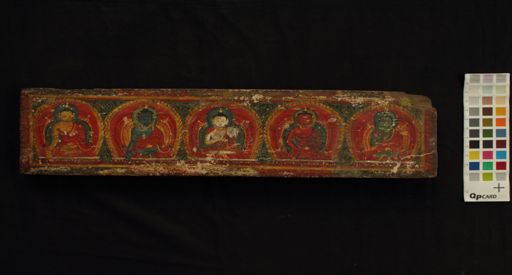
This is a Buddhist tantra text containing mantras dedicated to five Buddhist deities. The original text dedicates mantras in five sections, one for each deity. The manuscript begins with Āryamahāpratisarāmahāvidyāmahārājñārakṣāvidhānakalpāvidyādhara (f.1b–29b); Āryamahāsāhasrapramarddanīnāma-mahāyānasūtra (f.29b–60a); Āryamahāmāyūrīvidyārājñāsarvārthasādhanī (f.60a–105b); Āryamahāśītavatīnāmamahāvidyāmahānusaṃsārakṣāsūtra (f.105b–108a); Āryamahārakṣāmahāmantrānusāraṇīnāmamahāyānasūtrarakṣākalpa (f.108a–112b). The colophon of the manuscript provides details of the donor’s family, the purpose of the donation, the name of the scribe, and the date of the manuscript’s completion. It appears that the manuscript was created during the reign of King Jayanarendra Malladeva of Nepal. In the colophon, the scribe states that the manuscript was produced and donated during the time of Jayanarendra Malladeva, who is identified with the Malla king Amara Malla (1530–1560). The colophon also mentions that the donor resided at Pārāvata Mahāvihāra, Kantipura, Nepal. The donor was Śākyabhikṣu Amṛtasiṃha, together with his wife Rathanalakṣmī, his son Śākyabhikṣu Jayacandra, his daughter-in-law Vijayalakṣmī, and his grandson Śākyabhikṣu Jayatasiṃha. The donation was made for good health, economic prosperity, and a place in heaven in the afterlife. The manuscript was copied in Kathmandu, and the scribe was a resident of Sikamaguḍi-Tanuvara-Mahāvihāra
Svasthāni Vrata Kathā
eap_79017001 Language : Sanskrit and Newari Scripts : Nepālākṣara
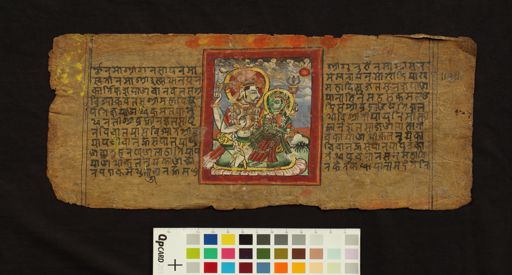
The text Svasthāni Vrata Kathā is treditinal Hindu religious text which is related to lord Mahādeva- Pārvati. The text presented as a dialogue between Kumar (Kārttikeya) and Sage Agastya. The manuscript contains 12 Adhyāya. It has 1 to 11 complete Adhyāya and 12'lth Adhyāya is incomplete.
Vidhi
eap_79019001 Language : Sanskrit Scripts : Nepālākṣara
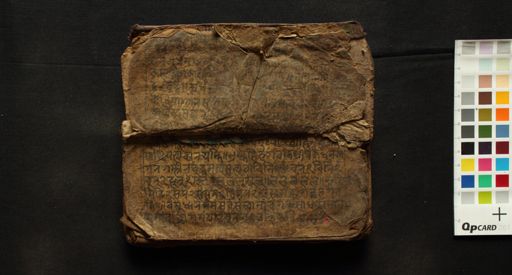
The manuscript contains Vidhi Mantras, which seems to used in tantric ceremonies. From (f.7a) of the manuscript has different handwriting. (f.7a) represents some Vidhi and its procedure. Procedure starts from Pūjā, Snāna vidhi. It seems it has some Bodhisattva story.