
Manuscripts
Search Filter
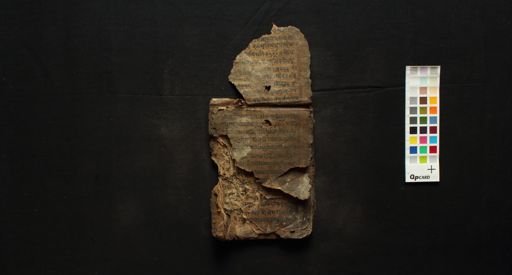
Composite manuscript-
eap_79019002 Language : Sanskrit Scripts : Devanāgarī
It is a composite manuscript. First 1–15 folias are damaged. It contains Gāthā's (f.1a–11b) in poetic form. Another folia's of the manuscript represents stotra of Buddhism - The name of the stotra is in a damaged part, but the name of the author, Harṣadeva Bhupati, is visible (f. 11b–14b). (In 25 verses) Vajrayogini stotra - (f.14b–15b) - (8 Verses) Pañcabudhagīta- (f. 15b–16a)- (6 Verses) Dharmadhātugīta - (f.16a–17a) -(14 Verses) Lokapāla stotra- (f.17a–18a) -(10 Verses) Dharmadhātugīta stotra - (f. 8a–19a)- (7 Verses) Dharmadhātugīta stotra- (f.19a- 21a) -(22 Verses) Budhagīta- (f. 21a–22a)- (12 Verses) Śāradā stotra- (f.22a–23a) - (8 Verses) Sodhārātava stotra or (Dhārātava stotra) - (f.23a–24a) ( 9 Verses) Narakodha stotra by -(f. 24a– 25a) ( 15 Veses) Pañcākṣara stotra- (f.25a–25b) (6 Verses) Nātava stotra by Vadhudama- (f.25b–28a) (25 Verses) Kāpotarlagīta - (f.28b) (2 Verses) Rakṣakāntavara stotra - (f.28b–29a). The text is incomplete.
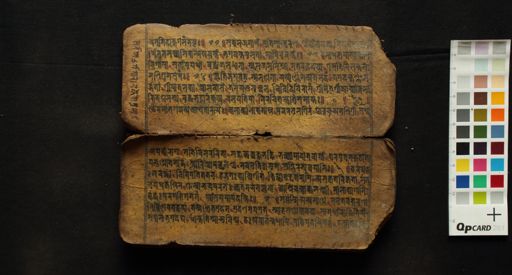
Buddhabhṭṭāraka stotra, Āryatārā Sragdharā Stotra, Śākya Kanyā Stotra
eap_79019003 Language : Sanskrit Scripts : Nepālākṣara
The manuscript contains 4 verious stotra of Buddhism. Buddhabhaṭṭāraka stotra(f.1a– 2b), Āryatārā Sragdharā Stotra, Śākya Kanyā Stotra. The forth stotra seems dedicated to Avalokiteśvara but the manuscript is damaged and it is incomplete.
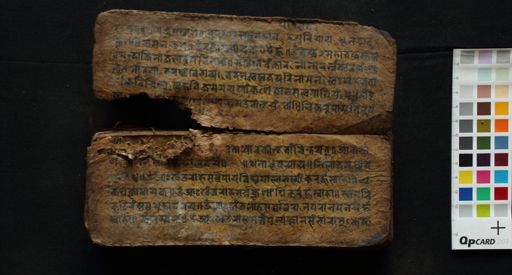
Homa kriyā, stavana, vidhi
eap_79019004 Language : Sanskrit Scripts : Nepālākṣara
The manuscript contains stotra, some vidhi mantra of Buddhism.The manuscript consists homakriya(Fire ritual text) (f.1a –12b) and (f.23b–34a), Stavana seems to be related to Vajrayāna(f.13a–14b),Some vidhi mantra (f.15a – 22b and 35a,36a to 38a). The Manuscript is torn from righ side, Some folioa are folded from the side.
Karaṇḍavyuha Sūtra
eap_79019005 Language : Sanskrit Scripts : Nepālākṣara
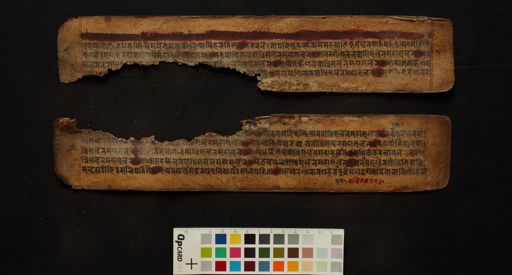
The Kāraṇḍavyūha is an early Mantrayāna sūtra and the source of the famous mantra Oṃ maṇi padme hūṃ. This sūtra holds particular significance, as the mantra has become central in the Tibetan Buddhist tradition. It also chronicles the transformation of Avalokiteśvara into the most prominent figure in the Buddhist pantheon, surpassing all other buddhas, not to mention bodhisattvas. In this sūtra , Avalokiteśvara is described as residing in Sukhāvatī, where he serves as a messenger and gift bearer for Amitābha. In a series of interwoven narratives, the sutra details Avalokiteśvara 's activities across various realms and the infinite realms contained within the pores of his skin. He is also portrayed as superior to all buddhas, creating a paradoxical status where he simultaneously holds both a subservient and dominant role.
Svayaṃbhu Purāṇa
eap_79019006 Language : Sanskrit Scripts : Nepālākṣara
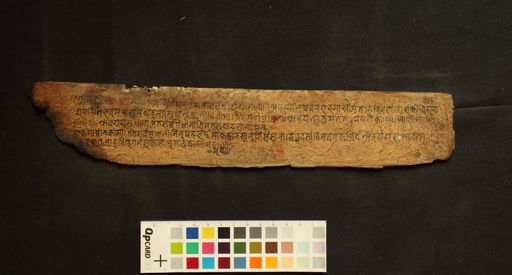
Svayaṃbhu Purāṇa is a Buddhist Puranic text. This text is well known among Newari Mahāyāna society. It has Puranic chronicles and legends of Kathmandu vally. The Svayambhupurāṇa is extant in a number of versions of different length, bearing slightly different titles. The shortest and earliest version, entitled (Gośṛṅgaparvate) Svayambhūcaityabhaṭṭārakoddeśa, was probably composed around the early 15th century.The manuscript contains ten Adhyāya. First Adhyāya is from (f.1a–15a), Second- (f.15a–29a), Third -(f.29–41a), Fourth- (f.41a–54a), Fifth- (f.54a–64a), Sixth- (f.64a–76b), Seventh -(f.76b–89a), Eight -(f.89a–106a), Nine- (106a–111b), Ten- (f.111b–123b). End of the Adhyāya's are marked in red colour. Firts two folia are not part of Svayaṃbhu Purāṇa. One image is missing. In the last folio date of the manuscript is menthioned.
Pūjā Vidhi
eap_79019007 Language : Sanskrit Scripts : Nepālākṣara
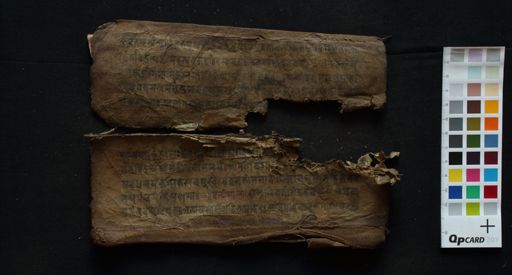
The manuscript contains Vidhi Mantras, which are prescriptive ritual mantra used in religious ceremonies. These mantras outline the correct invocations, and ritual actions to be performed during various rites and practices. It meybe used for counting the repetition of mantras. The word Valī or Balī mālā is used so many times.