

Manuscripts
Search Filter
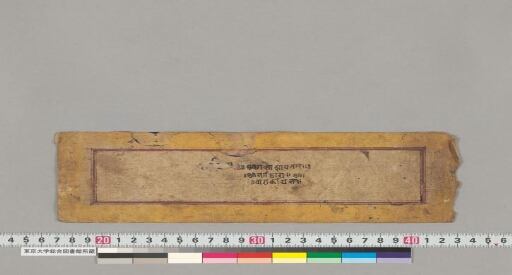
Sragdharāstotra
matsunami_396 Language : Sanskrit Scripts : Devanāgarī
It is a hymn dedicated to the goddess Tārā, a revered figure in Mahāyāna and Vajrayāna Buddhism. This stotra is composed in the Sragdharā metre, a classical Sanskrit poetic metre characterized by lines of 21 syllables, known for its intricate rhythmic structure. (Wisdom Library). There are 37 verses in this text. This work is attributed to Sarvajñamitra. The stotra is written and framed inside a red and black outlined margin.
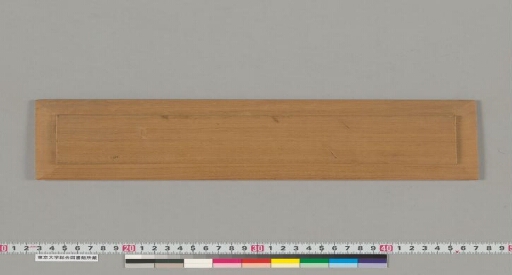
Śroṇakoṭikarṇāvadāna
matsunami_398 Language : Sanskrit Scripts : Nepālākṣara
The Śroṇakoṭikarṇāvadāna is the opening narrative of the Divyāvadāna, a Sanskrit anthology of Buddhist avadāna literature. It tells the story of Śroṇakoṭika, a boy born with a jewel in his ear, whose journeys expose him to vivid examples of the workings of karma. Through encounters with various individuals whose fortunes reflect their past actions, the tale conveys karmic causality as a moral and didactic theme. The narrative concludes with Śroṇakoṭika’s return home and his eventual ordination as a bhikṣu (monk).
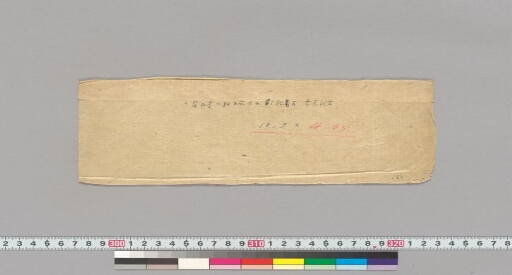
Ṣaṭpañcāśikā with Ṣaṭpañcāśikāṭīkā
matsunami_400 Language : Sanskrit Scripts : Nepālākṣara
The principal text is the Ṣaṭpañcāśikā by Pṛthuyaśas, the son of Varāhamihira. It is accompanied by a commentary entitled Ṣaṭpañcāśikāṭīkā, composed by Bhaṭṭotpala. In the manuscript, the root text appears in the central portion of the folios, with Bhaṭṭotpala’s commentary written around it.
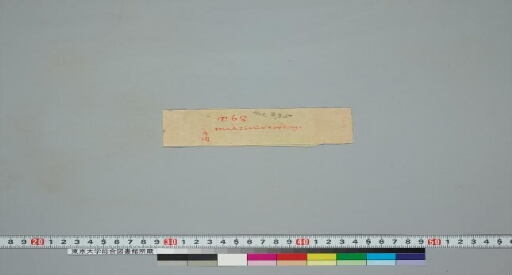
Saṃvarodayatantra
matsunami_401 Language : Sanskrit Scripts : Nepālākṣara
The Saṃvarodayatantra (also known as Saṃvarodaya or Samvarodaya Tantra) is a significant Buddhist tantric text associated with the Cakrasaṃvara cycle, a central tradition within Vajrayāna Buddhism. Comprising 33 chapters, it delves into advanced yogic practices, ritual frameworks, and esoteric teachings. Written in ornate and compact Newari script influenced by Kuṭila. Corrections and annotations made in black ink.

Saṃvarodayatantra
matsunami_403 Language : Sanskrit Scripts : Nepālākṣara
The Saṃvarodayatantra (also known as Saṃvarodaya or Samvarodaya Tantra) is a significant Buddhist tantric text associated with the Cakrasaṃvara cycle, a central tradition within Vajrayāna Buddhism. Comprising 33 chapters, it delves into advanced yogic practices, ritual frameworks, and esoteric teachings. Seems to be written by two different scribes given the difference in handwriting from fol 27a onward. Annotations and corrections made on the mss. in black ink.
Saṃvarodayatantra
matsunami_405 Language : Sanskrit Scripts : Nepālākṣara
The Saṃvarodayatantra (also known as Saṃvarodaya or Samvarodaya Tantra) is an important Buddhist tantric text associated with the Cakrasaṃvara cycle, a central tradition within Vajrayāna Buddhism. Comprising 33 chapters, it explores advanced yogic practices, ritual procedures, and esoteric teachings. This manuscript features both red and black ink on folios 17 and 18. The script is consistently compact and roughly executed throughout. A red ink splatter is visible on fol. 6a.
Saṅgharakṣitāvadāna
matsunami_406 Language : Sanskrit Scripts : Nepālākṣara
Folia 70–79 (left margin), 1–9 (right margin): This section recounts the story of Saṅgharakṣita, a dharma teacher accompanying five hundred merchants on an overseas journey. During the voyage, the ship is seized by nāgas who invite Saṅgharakṣita to their underwater realm to teach the four Āgamas. After fulfilling their request, he returns to the ship, and they reach land safely. There, Saṅgharakṣita encounters beings suffering in hell due to transgressions committed as monastic disciples under the Buddha Kāśyapa. He later meets and converts five hundred seers, and along with the original merchants, brings them all to the Buddha for ordination. (Rotman, Andy. Divine Stories: Divyāvadāna, Part 1. Somerville, MA: Wisdom Publications, 2008, p. 13.)

Saddharmapuṇḍarīkasūtra
matsunami_408 Language : Sanskrit Scripts : Bhujinmol
This manuscript contains the Lotus Sūtra (Saddharmapuṇḍarīka Sūtra), also known as The White Lotus of the Good Dharma, a foundational Mahāyāna scripture attributed to the Buddha Śākyamuni. Delivered on Vulture Peak to a vast assembly of bodhisattvas—including those emerging from beneath the earth—the sūtra teaches the existence of a single, true path to enlightenment. It distinguishes between provisional and ultimate teachings and portrays the Buddha as an eternal being who continues to teach beyond his historical lifetime. Central episodes include the appearance of the long-departed Buddha Prabhūtaratna in a suspended stūpa, into which Śākyamuni enters, signifying the unity of all Buddhas. Especially revered in East Asia, the text emphasizes its own supremacy and the boundless merit gained through devotion to it. (Source: 84000) According to Matsunami (Notebook 1, p. 41ff.), folio 35 is missing. The manuscript is incomplete and shows signs of damage, particularly toward the end. Folia are numbered on the recto in the right margin. To assist with foliation, Matsunami inserted paper slips. The final leaves are heavily deteriorated.

Saddharmapuṇḍarīkasūtra
matsunami_413 Language : Sanskrit Scripts : Nepālākṣara influenced by Kuṭila
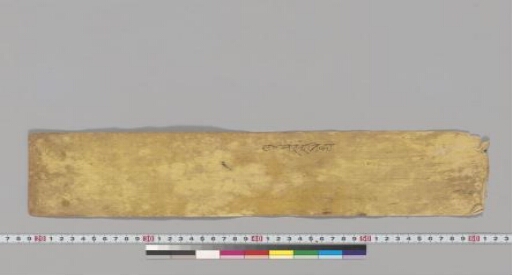
This manuscript contains the Lotus Sūtra (Saddharmapuṇḍarīka Sūtra), also known as The White Lotus of the Good Dharma, a foundational Mahāyāna scripture attributed to the Buddha Śākyamuni. Delivered on Vulture Peak to a vast assembly of bodhisattvas—including those emerging from beneath the earth—the sūtra teaches the existence of a single, true path to enlightenment. It distinguishes between provisional and ultimate teachings and portrays the Buddha as an eternal being who continues to teach beyond his historical lifetime. Central episodes include the appearance of the long-departed Buddha Prabhūtaratna in a suspended stūpa, into which Śākyamuni enters, signifying the unity of all Buddhas. Especially revered in East Asia, the text emphasizes its own supremacy and the boundless merit gained through devotion to it. (Source: 84000) Matsunami catalogues details of the mss in his notebook 2, p.12. Matsunami inserts paper slips to mark folio numbers and mentions that the folio from 167 on are lost.
Saddharmapuṇḍarīkasūtra
matsunami_414 Language : Sanskrit Scripts : Nepālākṣara
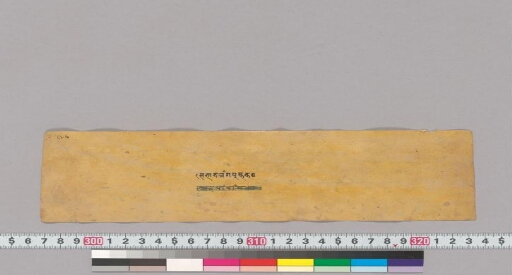
This manuscript contains the Lotus Sūtra (Saddharmapuṇḍarīka Sūtra), also known as The White Lotus of the Good Dharma, a foundational Mahāyāna scripture attributed to the Buddha Śākyamuni. Delivered on Vulture Peak to a vast assembly of bodhisattvas—including those emerging from beneath the earth—the sūtra teaches the existence of a single, true path to enlightenment. It distinguishes between provisional and ultimate teachings and portrays the Buddha as an eternal being who continues to teach beyond his historical lifetime. Central episodes include the appearance of the long-departed Buddha Prabhūtaratna in a suspended stūpa, into which Śākyamuni enters, signifying the unity of all Buddhas. Especially revered in East Asia, the text emphasizes its own supremacy and the boundless merit gained through devotion to it. (Source: 84000) .There is a picture of the Buddha with many attendants on the first folio.
Sabhātaraṅgapustaka
matsunami_422 Language : Sanskrit Scripts : Nepālākṣara
This manuscript titled Sabhātaraṅgapustaka spans folios 1b to 17b and corresponds to folios 53a2 to 67b6 of manuscript no. 423, a larger work titled Sabhātaraṅgiṇī. The Sabhātaraṅgiṇī, also known as Sabhātaraṅga, is a Sanskrit literary work attributed to Jagannāthamiśra, a member of the Rāḍhī family and descendant of Lakṣmaṇamiśra and Vedamiśra. It is dated to around 1600 CE, though a manuscript colophon suggests a compilation date of 1516 CE. The text is structured into sections called taraṅgas (waves) and comprises approximately 350 verses. It explores themes such as the praise of virtue, condemnation of wickedness, descriptions of natural elements like the bhramara (bee), cātaka (rainbird), and the moon, as well as critiques of social issues like poverty and begging. (NCC)
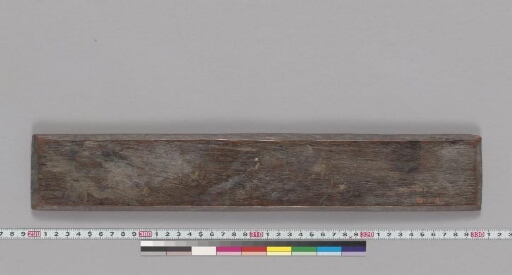
Sambhadrāvadānamālā
matsunami_429 Language : Sanskrit Scripts : Nepālākṣara
Sambhadrāvadānamālā is a Sanskrit collection of avadāna narratives illustrating the workings of karma, composed in campū style (a mixture of prose and verse). One of its stories belongs to the "gift-of-the-body" genre, as discussed by Reiko Ohnuma. The manuscript’s handwriting is messy and cluttered, making parts of the text difficult to read. Annotations by another hand appear throughout the manuscript.