

Manuscripts
Search Filter
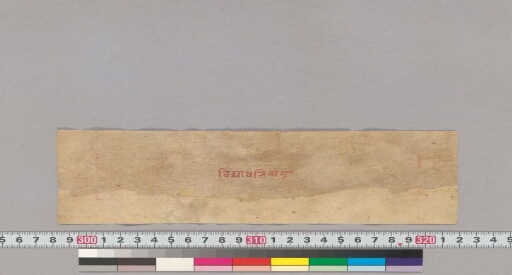
Yoginīvijayādhāraṇī
matsunami_314 Language : Sanskrit Scripts : Nepālākṣara
A dhāraṇī text dedicated to Yoginīvijaya whose colophon mentions "sarvva-rogaṃ praśāmyanti dīrghāyuś ca pralabhyate" indicating that all diseases are pacified and long life is obtained.
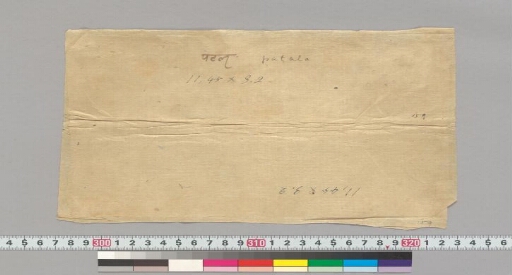
Rasasāra
matsunami_318 Language : Sanskrit Scripts : Nepālākṣara
Govindācārya, the author of Rasasāra, belonged to the Moḍha family and was the son of Śūrāditya and grandson of Sahadeva. He was a disciple of Śrīdhara and Dhīradeva, under whom he studied alchemy (NCC). Rasasāra focuses exclusively on alchemical processes such as jāraṇa, bandha, and vedha (Luminaries of Indian Medicine, p. 77). Matsunami notes that this manuscript consists of 20 chapters and appears to be a compilation of fragments from Govindācārya’s works. Variations in leaf forms suggest that it is not a single, continuous text. Folio 1 may belong to No. 516-III, while folios 5, 24, 25, 30, and 31 are missing.
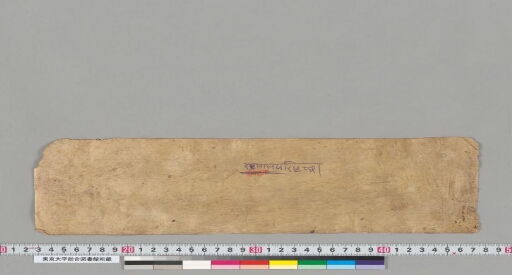
Rāṣṭrapālaparipṛcchā
matsunami_319 Language : Sanskrit Scripts : Nepālākṣara
The Raṣṭrapālaparipṛcchā Sūtra is a Mahāyāna Buddhist scripture included in the Ratnakūṭa (Kāsyapīya) anthology of sūtras. As a paripṛcchā, a text structured around a dialogue, it presents an exchange between the Buddha and the bodhisattva Raṣṭrapāla.
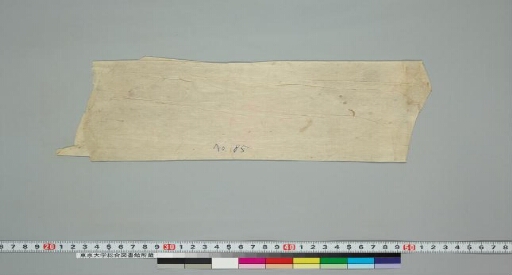
Lakṣacaityabimbakathā
matsunami_321 Language : Sanskrit Scripts : Nepālākṣara
Lakṣacaityabimbakathā is the third chapter of the Sarvajñamitrāvadāna and begins with the frame story of Upagupta and Aśoka.
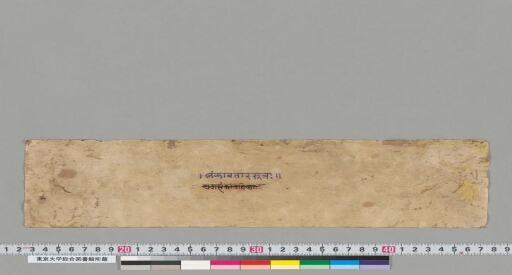
Laṅkāvatārasūtra
matsunami_328 Language : Sanskrit Scripts : Nepālākṣara
The Laṅkāvatārasūtra is a Mahāyāna Buddhist sūtra classified under the Sūtrānta category. It is one of the nine sacred texts of Nepalese Buddhism and consists of ten chapters with approximately 36,000 verses. The sūtra presents a philosophical dialogue between the Buddha and Rāvaṇa in the first chapter, followed by an extended discussion with Mahāmati in chapters two through ten. It is available in Tibetan and three Chinese translations (NCC).Matsunami notes that this manuscript is enclosed within two wooden covers adorned with colored illustrations. The front cover depicts the Buddha with four attendants, while the back cover portrays the Māra-tarjana scene, representing the Buddha’s subjugation of Māra. However, the back cover actually features the Buddha flanked by two female deities—what appears to be a yellow Prajñāpāramitā on the left and a red Tārā on the right. In the mss. there are gaps left for illustrations on folios 2a, 81a, and 82a. There are red ink splotches on folio 48 and along the left and right margins of folio 56. A black ink splotch appears on folio 195, and the numbering of folio 216 is skipped and 217 is repeated twice. The colophon mentions that this mss. also has verses (gāthās).
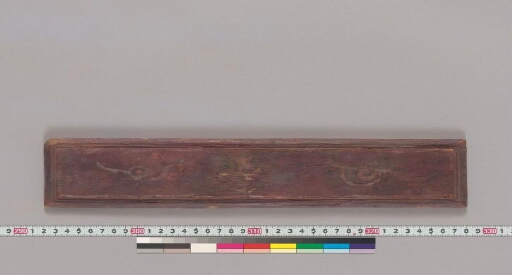
Laṅkāvatārasūtra
matsunami_332 Language : Sanskrit Scripts : Nepālākṣara
The Laṅkāvatārasūtra is a Mahāyāna Buddhist sūtra classified under the Sūtrānta category. It is one of the nine sacred texts of Nepalese Buddhism and consists of ten chapters with approximately 36,000 verses. The sūtra presents a philosophical dialogue between the Buddha and Rāvaṇa in the first chapter, followed by an extended discussion with Mahāmati in chapters two through ten. It is available in Tibetan and three Chinese translations (NCC).
Lalitavistara
matsunami_334 Language : Sanskrit Scripts : Nepālākṣara
"The Play in Full tells the story of how the Buddha manifested in this world and attained awakening, as perceived from the perspective of the Great Vehicle. The sūtra, which is structured in twenty-seven chapters, first presents the events surrounding the Buddha’s birth, childhood, and adolescence in the royal palace of his father, king of the Śākya nation. It then recounts his escape from the palace and the years of hardship he faced in his quest for spiritual awakening. Finally the sūtra reveals his complete victory over the demon Māra, his attainment of awakening under the Bodhi tree, his first turning of the wheel of Dharma, and the formation of the very early saṅgha." (84000) The manuscript is incomplete. The marginal page numbers are inconsistent and difficult to follow. Several missing folios have been replaced with paper insertions, but their numbering does not correspond to the original marginal pagination. Matsunami mentions numbering is not constant and the large page numbers on the mss are incorrect.
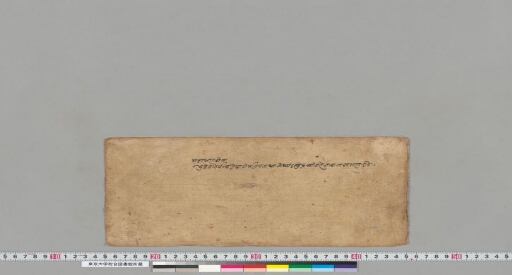
Lalitavistara
matsunami_335 Language : Sanskrit Scripts : Devanāgarī, modern
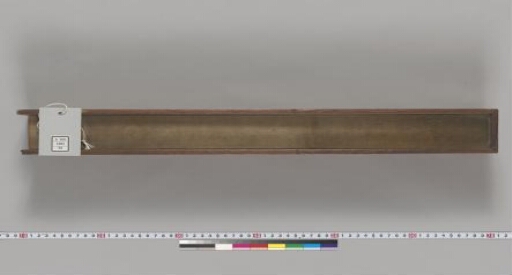
The Play in Full tells the story of how the Buddha manifested in this world and attained awakening, as perceived from the perspective of the Great Vehicle. The sūtra, which is structured in twenty-seven chapters, first presents the events surrounding the Buddha’s birth, childhood, and adolescence in the royal palace of his father, king of the Śākya nation. It then recounts his escape from the palace and the years of hardship he faced in his quest for spiritual awakening. Finally the sūtra reveals his complete victory over the demon Māra, his attainment of awakening under the Bodhi tree, his first turning of the wheel of Dharma, and the formation of the very early saṅgha." (84000). Mss. is heavily annotated in Devanāgari, with some key explanations Buddhist terms on every page with the meanings of the words, almost in the form of a commentary on some of the pages.
Lalitavistara
matsunami_336 Language : Sanskrit Scripts : Bhujinmol
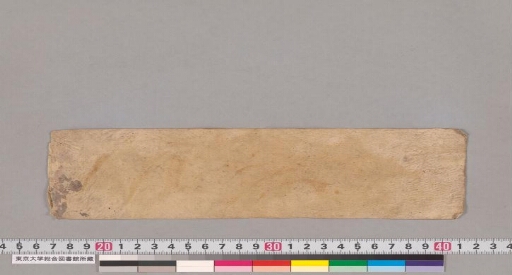
"The Play in Full tells the story of how the Buddha manifested in this world and attained awakening, as perceived from the perspective of the Great Vehicle. The sūtra, which is structured in twenty-seven chapters, first presents the events surrounding the Buddha’s birth, childhood, and adolescence in the royal palace of his father, king of the Śākya nation. It then recounts his escape from the palace and the years of hardship he faced in his quest for spiritual awakening. Finally the sūtra reveals his complete victory over the demon Māra, his attainment of awakening under the Bodhi tree, his first turning of the wheel of Dharma, and the formation of the very early saṅgha." (84000). All leaves are more or less damaged, though the lettering remains very fine. Folios 2, 9, and 10 are missing. The recto of the first leaf contains the list of chapter titles of the sūtra. The colophon is difficult to read, as the ink has been washed out. For further details, see Matsunami’s Note Book 3, p. 46ff., where the scribe is identified as Jñānarāja.
Varṣāpaṇavidhi
matsunami_353 Language : Sanskrit Scripts : Nepālākṣara
A buddhist ritual manual on agriculture. This mss has a few marginal corrections, foliation: two sets of numbering, one with letters and the other with numerals, on verso. The manuscript contains the colophons of the following texts: Herukabhyudayatantroddhrta-varsāpaņavidhi 4a, Mārīcīkalpoktakrama-varsāpaņavidhi 15a, Varsapanakramamahābalasādhana 27a, Mahākālatantroddhrta-varsāpaņavidhi 28a, Kalaviretamantroddhrtavarsāpaņavidhi 28b, Vajratuņdanāmasamayakalparāja 86b, Herukabhyudayatantroddhrtavarsapanavidhi 88a, Catuspithatantroktakrama-varsapanavidhi 95b, Abhidhanottaratantroddhrta-varsapanavidhi 99b, Samputatilakatantroddhrta-varsapanavidhi 101a, Samaryatantroktavarsapanavidhi 107a, Samvarodayatantroddhrta-varsapanavidhi 107a, Vajradakamahatantroddhrta-varsāpaņavidhi 125b, Hevajratantrokta-varsāpaņavidhi 129a, Hevajratantrokta-meghasthapanavidhi 129b, Mahāvipulavimānasupratisthitaguhyakalpoddhrta-varsāpaņavidhi 131b, Kurukullakalpokta-varsapanavidhi 134a, Mahakalatantrokta-varsapanavidhi 140a, Vajrapanisadhana-upacaravidhi 145a. (A Buddhist ritual manual on Agriculture, p. 30)
Vasantatilakā
matsunami_354 Language : Sanskrit Scripts : Devanāgarī
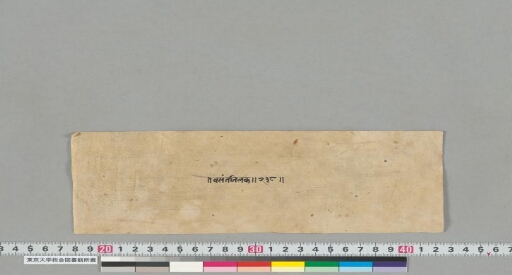
Vasantatilakā is a Tantric Buddhist work associated with the Cakrasamvara tantra. It is attributed to Kṛṣṇācārya.
Vasudhārādhāraṇī
matsunami_356 Language : Sanskrit Scripts : Rañjanā
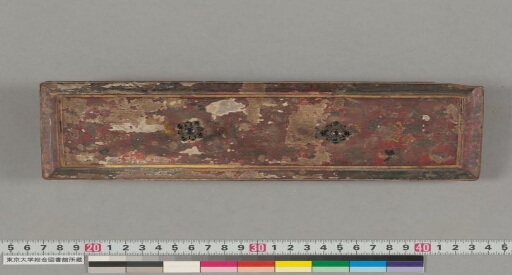
This mss. is a fragment of the Vasudhārādhāraṇī, dedicated to Vasudhārā, the bodhisattva of wealth, prosperity, and abundance (who has a strong following among the Newar Buddhists of the Kathmandu valley). The wooden covers are beautifully illustrated with two images. The first image before fol 1 is an orange figure with a mustache. On the last side is the image of 6 armed Vasudhārā in yellow. Mss written on black paper with gold/yellow lettering, in a newari script influenced by Kuṭila. Last page is undecipherable due to faded Ranjana lettering.