
Manuscripts
Search Filter
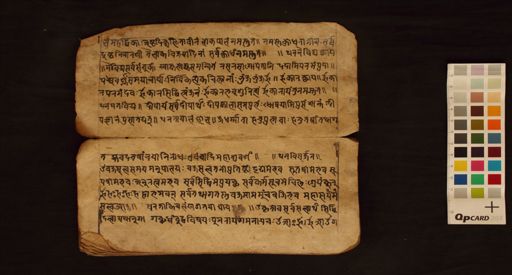
Saṃkṣipta Deguri
eap_79002008 Language : Sanskrit & Newari Scripts : Nepālākṣara
The text has describes about the puja vidhi f.1, has the name of the buddhist deity Vairocana wth bija mantra and his puja vidhi, f.5, the vairocana pūjā vidhi is ending with buddha, guru and Degulī jaya after that from same folio Śrīcakrasaṁvara pūjā vidhi is starting but not end, so the text is incomplete. Interestingly the text has same digitized copy with repeat, here the text ending with 'Saṃkṣipta Deguri Samāpta' after that the kalaśpūjā is starting in this folio but it has not mentioned about the puja of the Śrīcakrasamvara. The text has no pagination and incomplete with text and manuscript itself.
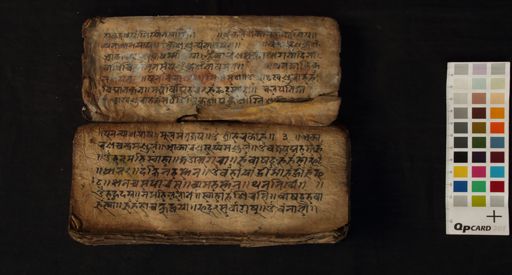
Saṃkṣipta yajña vidhi
eap_79002009 Language : Sanskrit & Newari Scripts : Nepālākṣara
This text is a Fragment part of some buddhist medical text. The text mentioned some Ayurvedic words, Vātaja. Pittaja, kaphaja doṣa with Lokeśvara deity. Though it is not mentioned any where its text name or colophone part so its can't determined that which part of the text. The manuscripts letters are good but some pages are damaged.
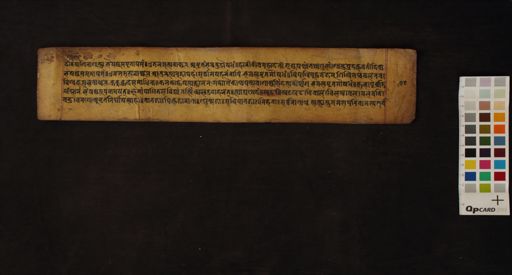
Unknown Fragments
eap_79002010 Language : Sanskrit Scripts : Nepālākṣara
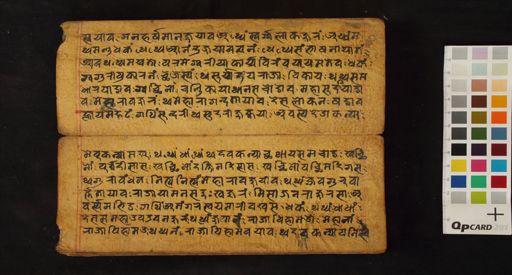
The text describes buddhist ritual but it has incomplete. It has starts some middle part of buddhist text and end with Bhramitavidyā other part of the text is atha vaisravanomaha has starting but not end so it seems it is incomplete, also the manuscript has no pagination number.
Vasudhārā vrata kathā
eap_79002011 Language : Newari Scripts : Nepālākṣara
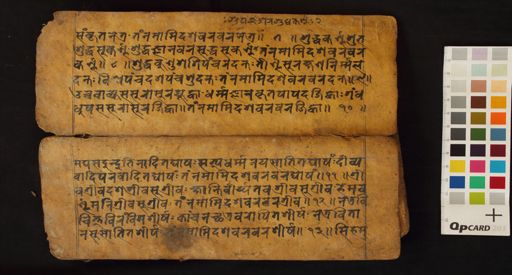
This is a vrata text praising the Buddhist goddess Vasundharā (or Vasudhārā). She is the goddess of both wealth and prosperity, and this text describes the positive impact of the Vasudhārā vrata. The text has not pagination like an ordinary manuscript it is written most of the newari language, but somewhere the text has used only vibhakti of Sanskrit. It has damaged by water and pages are slightly broken. at the end of the text the author or scriber has given a huge list of deities name in vertically from folio no. 14-29.
Collection of Stotra
eap_79002012 Language : Sanskrit Scripts : Nepālākṣara
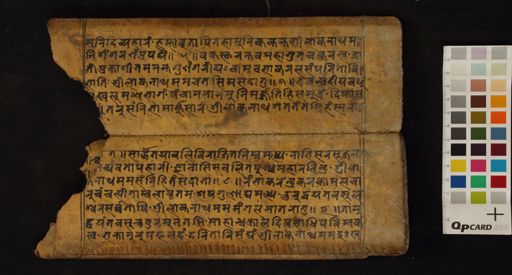
This manuscript is a collection of various stotra (hymns), which are written in a poetic style. The described texts include: (f.3a) Pañcākṣara stotra (f.3b) Buddhadharmasaṁghastava stotra (f.4a) Tadayamālāstava stotra (f.5) Śākyamunistava stotra (f.6) Padmapālastotra (f.8) Āryāvalokiteśvara bhaṭṭārakasya puṇḍarīkāstava stotra (f.15) Pañcabuddhaguṇastava stotra (f.17) Śākyamunibuddha bhaṭṭārakasya (composed by Harṣadeva) .The stotras are incomplete, some pages are missing and stotra numbers do not match or follow a consistent sequence because the manuscript lacks its own page or folio numbers, the listed serial numbers are a reconstruction (or based on a presumed order). The manuscript is slightly damaged and some pages are repeated.
Stotra Saṃgraha
eap_79002013 Language : Sanskrit Scripts : Nepālākṣara
This is a collection of stotra texts dedicated to various forms of the Bodhisattva Avalokiteśvara (as referenced by Benoytosh Bhattacharya). The stotra described include: (f.5a) Lokanāthasya Ānandamuktāvali Stotra (f.7a) Śākāstava Stotra (f.8b) Śrī... rājastava stotra. The text has repeated pages. The text contains a colophon in the middle, in which the scribe identifies himself, states that he is donating the manuscript, and includes a praise/blessing for those who protect the text, promising them prosperity. The manuscript lacks its own pagination (page or folio numbers); therefore, a serial number system has been applied (or is being followed) for referencing. manuscript is heavily damaged and broken in some parts.
Aryāsarvatathāgatoṣṇīṣśitāntapatrānāmāparājitāmahāpratyaṁgīrānāma Dhāraṇī
eap_79002014 Language : Sanskrit Scripts : Nepālākṣara
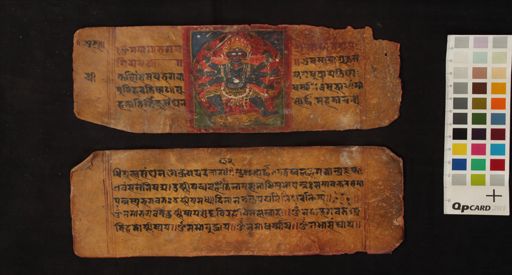
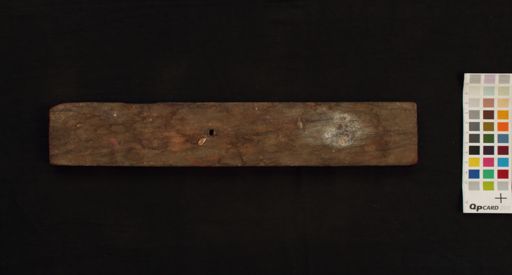
This is a Dhāraṇī sutra text dedicated to the Buddhist deity Mahāpratyaṁgīrā. It describes the pūjā-vidhi (ritual method) of the deity. Folio 1a features an illustration of the deity, who is dark blue and has three hands. The text begins with "Oṃ namo Āryāmahāpratyaṅgirāyai." A mystic mantra bearing the name of Uṣnīṣavijaya, a Bodhisattva, It was imparted by Buddha Amitābha to Avalokiteśvara, It is specially efficatious in curing diseases and prolonging life.There are two colophons in the manuscript: one on the middle page and one on the last page. The manuscript also includes a date. Since the pagination is not mentioned, the serial number is followed for ordering. The text is complete, but some letters are faded and the manuscript is slightly damaged.
Pañcarakṣā Sutra
eap_79002015 Language : Sanskrit & Newari Scripts : Nepālākṣara
This is a sutra text on the five Buddhist Goddesses, the Pañcarakṣā (or Pañcarakṣā Sutra), who protect the people. They are: (f.111a) Āryāmahāpratisarā, Āryāmahāsāhasrapramardanī, Āryāmahāmāyūrī, Āryāmahāmantrānusāriṇī, and Āryāmahāgītavatī. The Āryāmahāpratisarāvidyārājñī Sūtra ends on f.48a, the Āryāmahāmāyūrīvidyārājñī Sūtra ends on f.95a, and the Āryāmahāmantrānusāriṇī Mahāyāna Sūtra ends on f.112a. Āryāmahāgītavatī starts on f.113a but does not end there, and the Āryāmahāsāhasrapramardanī Sūtra is missing. In the colophon, the scribe is Śrīlakṣmīdhara. The donor, Brahmacaryabhikṣu Śrīgṇontaju, donated the manuscript along with all his family members, including his elder son Śrīguṇadhaṁju, middle son Śrīharṣaju, and grandson Śrīdharaotiju, for the ultimate happiness of the eternal world. The manuscript is complete and contains a colophon, but the main text is not complete. Furthermore, the pagination has not systematically done, some folios appears to be added, and the handwriting is inconsistent.
Yoga Samādhi
eap_79002016 Language : Sanskrit Scripts : Devanāgarī
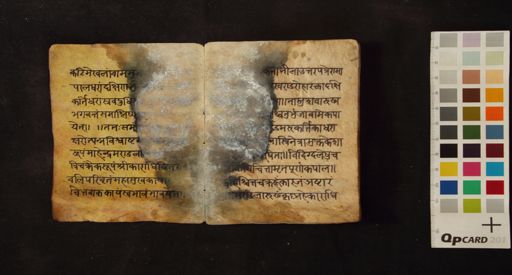
This manuscript is on Yoga Samādhi. The manuscript is fully damaged by water specially last three pages. the letters are not decipherable. The manuscript has not any pagination like an oridanary manuscript.
Madhya Siddhānta Kaumudī Fragments
eap_79002017 Language : Sanskrit Scripts : Devanāgarī
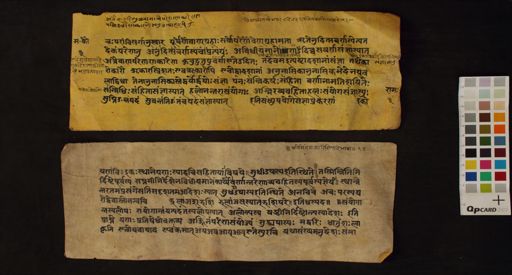
Madhyasiddhāntakaumudī a work on grammar which is an abridgment, to a certain extent, of Bhaṭṭojī's Siddhāntakaumudī. The treatise was written by Varadarāja, a pupil of Bhaṭṭojī Dīkṣita for facilitating the study of the Siddhānta-kaumudi. The work simplifies the original text's complex rules, making it easier for students to understand the principles of Sanskrit grammar, and is a significant and popular introductory text in the field. It is also known as Madhyakaumudi or Madhyamakaumudi and is an important part of the Kaumudi series of grammar texts. The manuscript here is a fragment of Siddhāntakaumudī, The first part of the text is missing and the only svar sandhi prakarṇa part is is here including, f.1,Bāhyaprayatna, f.3 Paraḥ Sannikarṣaḥ Saṁhita, f.4 Adeṅguṇaḥ, f.5 Bhuvādayaupasargā. The colophone part is not in the text so the author name has not found. Folio three has a Manuscriptology part the scriber missing a Paribhasa sutra and the part decorated and mentioned the sutra in the margin area.
Aṣṭasāhasrikā Prajñāpāramitā Sutra
eap_79002018 Language : Sanskrit Scripts : Nepālākṣara
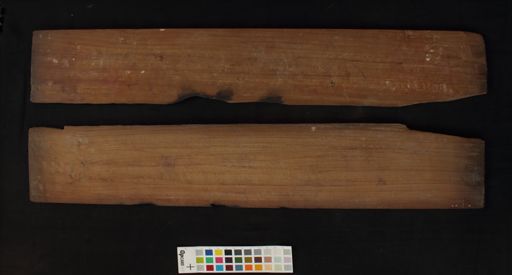
This is a Buddhist Aṣṭasāhasrikā Prajñāpāramitā text. The "Perfection of Wisdom in Eight Thousand Lines" (Aṣṭasāhasrikā Prajñāpāramitā) is one of the earliest Mahāyāna scriptures. This foundational sūtra of Mahāyāna Buddhism developed gradually over a period of about two hundred years, from the first century B.C.E. to the first century C.E. (some of its earliest recensions were translated into Chinese during the Han dynasty, 206 BC – 220 CE).It has 31 chapter and all chapter has a name and chapters name in Parivartto including; 1) f.19b Sarvākaṁrkṣatācaryāparivartto, 2) f.23b Śakraparivartto, 3) f.46a Stupasatkāraparivartto, 4) Dhāraṇaguṇaparikīrttanaparivartto, 5) f.66b Puṇyaparyāyaparivartto, 6) f.84a a Anumodanāpariṇāmanāparivartto, 7) f.91 Nirayaparivartto, 8) f.97a Viśuddhiparivartto, 9) 100b Stutiparivartto , 10) f.122a Parikīrttanaparivartto, 11) f.122a Mārakarmaparivartto 12) f.134b Lokasaṁdarśanaparivartto, 13) f.137b Acintyaparivartto, 14) f.142a Aupamyaparivartto, 15) f.148a Devaparivartto, 16) f.155b Tathatāparivartto, 17) f.164b Vinivarttamākāraliṁganimittaparivartto, 18) f.177a Gaṁgadevābhaginiparivartto, 20) f.184b Upāyakocolpaparivartto, 21) f.191 Karmaparivartto, 22) f.197a Kalyāṇamitraparivartto, 23) f.199a Śakraparivartto, 24) f.203a Vimānāmaparivartto, 25) f.207a Śikṣāparivartto, 26) f.212a Māyoyaparivartto, 27) f.218a Mānaparivartto, 28) f.227a Avakīrṇakusumaparivartto, 29) f.229b Anugamaparivartto, 30) f.229b Sadāpraruditaparivartto, 31) f.251a Dharmokṣataparivartto. At the end of the Manuscript two name Śrīvajrarāja Vajrācarya and his son Herākāja Vajrācarya had written but there is not mention as scriber or donar .
Ugratārā Nityarcanā Paddhati
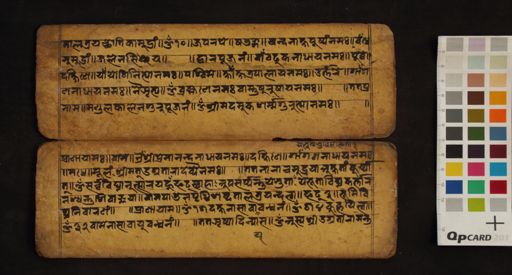
eap_79002019 Language : Sanskrit Scripts : Nepālākṣara
This is a Buddhist ritual text, it describes about the procedures for the daily worship (Nityarcana) of the fierce goddess Ugratārā. She is also known as Mahacinatārā or Tārā of Mahācina (Great China).This Ugratārā or Mahācinatārā of the Buddhists has been incorpora^ ted in the Hindu pantheon under the name of Tara, and is now regarded as one of the ten Mahāvidyā goddesse. The mantras are written on Anuṣṭupa Verse, it has also describes about the hand gesture during the Pūjā. There is not mention any scriber or donar of the text, and the pagination is also not doing as an ordinary manuscript.