Manuscripts
Search Filter
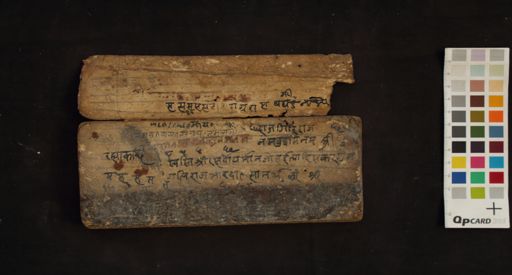
Dipaṁkara Buddha Gāthā
eap_79002020 Language : Newari Scripts : Nepālākṣara
This is a Gāthā text about Dipankara the Buddhist narrative, or Jātaka tale, of the distant past Buddha, Dipankara, and his encounter with a young ascetic named Sumedha. This story is profoundly significant in Buddhist tradition because Dipankara prophesied that Sumedha would one day become a Buddha in a future life, an event which came to pass with the birth of Siddhārtha Gautama. The text manually scratched line or margines for the writing and interestingly some page margins has filled of colour. Had found two date but not mentioned any functon or purspect about the date. The manuscript has partially torn and at the end there is a list in vertically but its not decipherable.
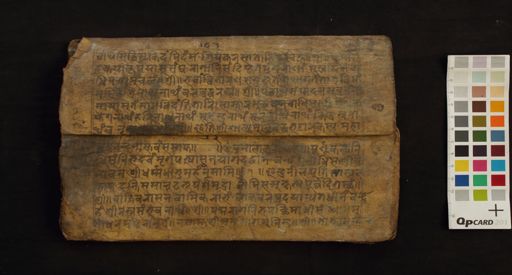
Collection of Stotra
eap_79002021 Language : Sanskrit Scripts : Nepālākṣara
This is a collection of Stotra text. It describes various buddhist deity stotra including; f.1 Vāsukīnāgarājāstotra, f.2b Mahābuddhavandanāstava, f.5b Tathāgatastotra, f.6b Lakṣakālāstava, f.8a Pañcabuddhastava, f.9a Vidyāstava, f.13a Trailokyanāthastava, f.14a Pañcatathāgatastava, f.15a Mañjughoṣastotram by Mañjughoṣa. The manuscript old and damaged very badly even its pagination also hasn't serially. There is no number on the folios and interestingly the broken or torn pages are get stiched for the preservation.
Pūjā vidhi
eap_79002022 Language : Sanskrit & Newari Scripts : Nepālākṣara
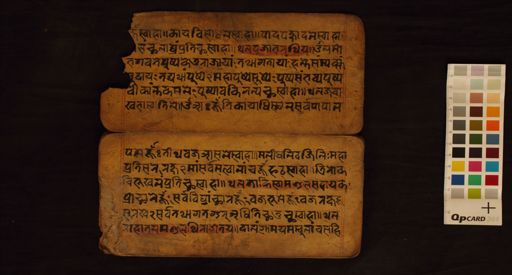
This is a Buddhist ritual text on Buddhist deities Pūjā vidhi. It describes various deities Pūjā including; Āryavailocanāya svāhā, Visvavarṇāya svāhā, Sālibhadrāya svāhā, Vajrapuṣpaṃpraticcha svāhā. The person who will be perform the pūjā would get back long life, good health, prosperity, progeny, etarnal happiness, glory and knowledge; Ayuvridhiya svāhā, Yaśaprajñāya svāhā, Sukha-ārogyavridhya svāhā, Dhana santānavṛdhaya svāhā. The manuscript has no pagination number, it is very old some pages are broken and the text is not complete.
Gandhārabhairavīrāge Jatitāle
eap_79002023 Language : Sanskrit Scripts : Nepālākṣara
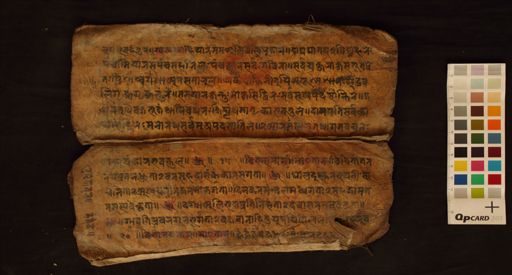
This is a Buddhist tantra text, on Bhairavirāgejatitāle. It describes Devī bhairavī tantra text. She is placed on cremation ground and giving knowledge. There is so much Maṅgala sign at the end of the mantras also that is highlighting with another colour. The manuscript is very old and damaged some pages are torn and broked. It has no pagination like an ordinary text interestingly 1 or 2 folios are repeated.
Vividha Tipot
eap_79002024 Language : Newari Scripts : Nepālākṣara
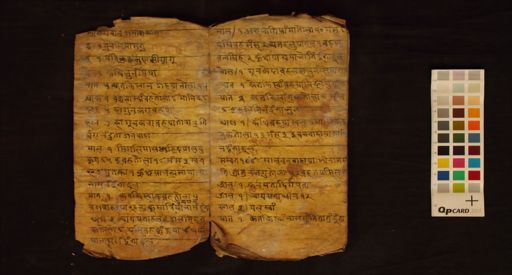
This is a Buddhist Vividha Tipot text in nepali language Tipot meaning a brief note or annotation including; (1)Triratnayākā Phalya, (2) myāmalyalayākāya, (3) cidhiciyā kāyabubāha, (4) savata lājayākāhṇukṣa, (5) davalājakāya, (6) indrarayākāya kunja, (8) harṣabrajayākāyanahabāhā and more. So the text holds various anotation sentences may be on buddhist ritual which is written in vertically on the page, it is written on Newari language two or three pages are written by pencil, a page has written by modern colouring pen, and a page has an orange colour blinked on paper. Interstingly a complete folio has nepal samvat date. The pages are damaged old and broken, pagination are not mentioned in the and it is an incomplete text.
Aṅka jyotiṣ
eap_79002025 Language : Newari Scripts : Nepālākṣara
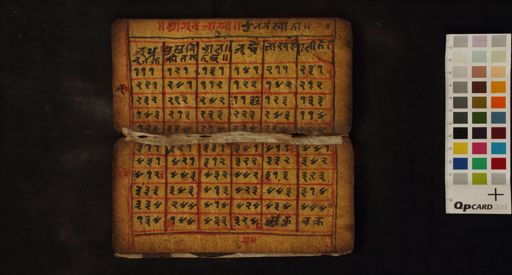
This is a jyotiṣ text, at the 2nd folio there is a numbers astrological chart and at the end it is written Aṅka cakra which refers in newari language numerology, the ancient mystical study of how numbers influence human affairs. The next folio of the number chart has describes all the numbers. In the chart has last most valuable digit is 4 and horizontaly there is 6 line and vertically 12 lines describes the numbers. The charts lines are scratched in red ink and numbers are in black ink and the numbers descriptions are in black ink and numbers are in red ink. The text is physically good and words are readable. it is written in newari language and newari script also but it is an incomplete text.
Āpadudvāra stotra
eap_79002026 Language : Sanskrit & Hindi Scripts : Nepālākṣara
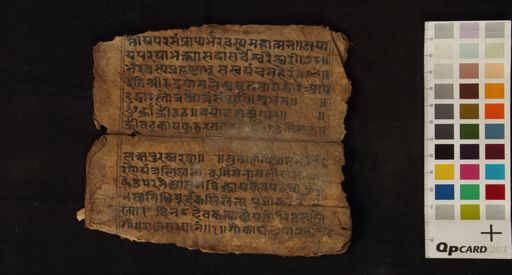
This is a stotra text from Rudrayāmala tantras Āpadudvāra stotra, also called Āpaduddharaṇa or Kālikā(kālī)kavaca. The text has two part first describes stotras and next part describes tantra vidyā it has also three chapters rājasikadhyāna, tāmasik dhyāna and may be sāttvik dhyāna but its not in the text so its an incomplete text. The tantra part is describe in Hindi language there is an Illustrate of yantra how it would be scratched also be dscribe like, the ass of cremation ground would be use to draw the yantra and who wants to kill his/her enemy can perform this tantra. The text is so old and damaged broken. see NCC vol. 4, pg. 47b.
Mahāmāyūrīvidyārājñī
eap_79002027 Language : Sanskrit Scripts : Nepālākṣara
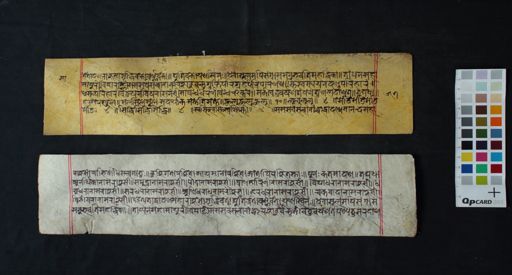
This is a stotra text on Mahāmāyūrīvidyārājñī who is a dhāraṇī goddess. In Buddhism there are five dhāriṇīs: Mahāpratisarā, Mahāsāhasrapramardanī, Mahāmāyūrī, Mahāmantrānusāriṇī and Mahāśīta(sita)vatī they all are give protection to the people so they called Pañcarakṣā goddess and their stotra is in sutra form so this is Pañcarakṣā sutra. The text describes only Mahāmāyūrīvidyārājñī stotra, her puja rituals and vija mantras. The text is no complete here, it is started from middle and the manuscript is very damaged . The folios where top pages are in yellow coloured and bottom pages are in white coloured.
Kāmakalā prayoga
eap_79002028 Language : Sanskrit &Newari Scripts : Devanāgarī
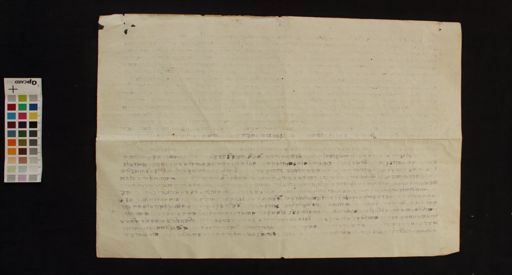
This is a hindu ritual text on Kāmakalā prayoga, the text is a part of the Kakārādikālīsahasranāma and also under Mahākālasaṃhitā. Kāma means intent to create and kalā refers to a part of the main object, in this case, Śiva. The conjugation of Kāma and kalā leads to the manifestation of Kāmeśvara and Kāmeśvarī forms. Śiva and Śaktī unite only in their kāma forms these two are their highest forms that cause Creation she is also called Mahā-tripura-sundarī. The author of the text is Ādinātha or Ādinātha Pārvatīpura, a tantric writer of Nātha school, sometimes found as Ādinātha Mahākāla. The text describes various adjective of the deity including; śmaśānacāriṇī, arṇyacāriṇi, muṇdamālādhāriṇī, pretavāsinī the following pages are describes the prayogavidhi of the puja. The manuscrpt is good but the stotras are written in prose form and there is so many correction, uppar and side notes by pencil. see NCC vol. 38, pg. 161b
Composite manuscript
eap_79002029 Language : Sanskrit Scripts : Devanāgarī
This is a composite stotra text on hinduism. Saṁkaṭānāmāṣṭakastotram, Saṁkaṭakavacam (f.1), Saṁkaṭāhṛdayam, Saṁkaṭāṣṭottaraśatanāma (f.2), Saṁkaṭāṣṭottarasahanāmārtha (f.5) are part of Mahākālasaṃhitā. The text describes to protect people form trouble or danger. There is not mentioned any authorship or scriber but the Mahākālasaṃhitā text is written by Ādinātha as per previous text. The manuscript is good and modern, the colophone parts are bold by ink, interestingly there is some notes on the bottom of the pages by pencil.
Sāmāṇya prayoga and Homa vidhi prayoga
eap_79002030 Language : Sanskrit Scripts : Devanāgarī
This is a ritual or prayoga vidhi text. This text is a part of the Mahākālasaṃhitā, it describe ten incarnations of śiva and their respective śaktis. The text describes the chapter no. 254, it has 2 parts Sāmāṇya prayoga and Homa vidhi prayoga. Sāmāṇya prayoga is describes about the siddhis (f.2) Khecarī siddhi, Khadga siddhi, (f.3) Añjana siddhi, Guṭikā siddhi, (f.4) Vetāla siddhi after that its describe about Homa vidhi prayoga interestingly it mentioned some fruits (śrīphala, nāgaraṁga, panasa, jaṃbīra, udumbara), flowers (yūthikā, nāgakeśara, mādhavī, campā, kuṃda, jabā, padma, aparājitā) and lean meat (chāga, kṛṣṇsāra, rūrū) each sacrificial things has each results. The manuscript is on paper and its fold like an ordinary manuscript and at the time of copying pagination and chapterization has followed the traditional way like left side of the text has text name in abbriviation. Some pencil and pen mark is on the manuscript.
Dakṣinā Kalya Stotra
eap_79002031 Language : Sanskrit Scripts : Devanāgarī
This is a stotra text on Dakṣinā Kalī Stotra, which is a part of the Mahākālasaṃhitā. Dakṣinā Kalikā Stotram is one of the most popular hymns dedicated to Goddess Kāli. This stotram is devoted to the Dakṣinā Kalikā form of the Goddess. Worship of this form of Kāli is especially prevalent in regions like Bengal and Nepal. Regular recitation of this stotram grants devotees freedom from fear, victory over enemies and progress on the spiritual path. Goddess Kāli is the first among the Daśa Mahāvidyā. There is not any colophone and not mentioned any authorship but the Mahākālasaṃhitā is written by Ādinātha. The manuscript is good and interestingly there is used a calligraphy the style is every letter has a back dot and some notes written by pencil.