

Manuscripts
Search Filter
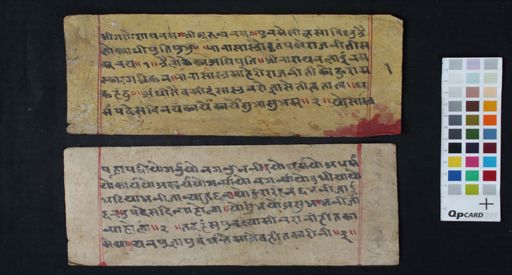
Rājanīti-samuccaya
eap_79016002 Language : Newari Scripts : Devanāgarī \ Nepālākṣara
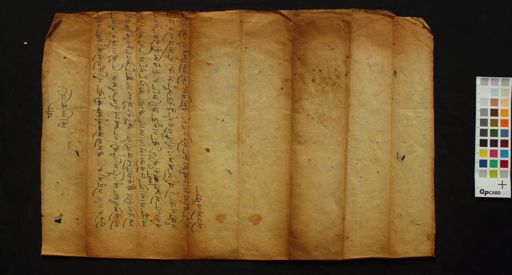
The manuscript is on Politics. It manuscript is written to show right and wrong duty of leaders. The manuscript is incomplete. It is written in newar language.
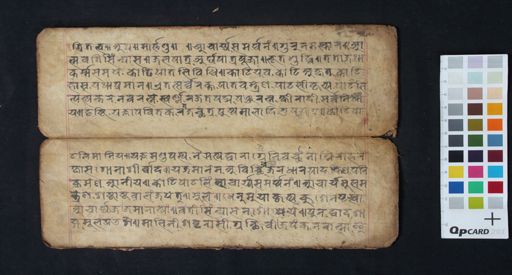
Koṭi Poṭali Vidhi
eap_79016003 Language : Sanskrit and Newari Scripts : Devanāgarī \ Nepālākṣara
The manuscript describes a traditional ritual known as Koṭi Poṭali Vidhi.This ritual is associated with the worship of goddess Lakṣmi and Lord Kuber, the deities of wealth and prosperity.The manuscript explains the detailed procedure for performing the pūjā. It instructs that gold, silver, and nine ratnas (precious gemstones) should be placed together in a sacred bundle. After the ritual is completed, this bundle is to be kept in the place where valuables and wealth are stored, as it is believed to attract prosperity and protection. The manuscript datet as Nepal-Saṃvat 857(1737 CE) (tenth month of the Hindu lunar calendar)Pauṣa Kṛṣṇa pakṣa Pratipaḍā(First day of Hindu lunar calendar). The first folio is not connected to the Kouti Potali Vidhi. It is an incomplete manuscript. Ending folio also not connected to the main text.
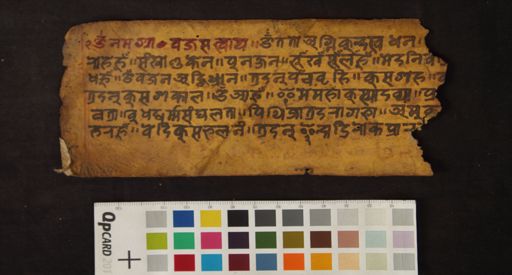
Vajrayāna, Bhīmaratha -Candraratha-Mahāratha, Bhūtaḍamara, Aṣtami vrata
eap_79016004 Language : Sanskrit and Newari Scripts : Devanāgarī \ Nepālākṣara
The work contains composite manuscripts, which consist of five different texts. Each text is incomplete. It is possible that the manuscript (f.1b,3a,3b,4a) is on Vajrayāna. The (f.2b) is on the Hindu rituals (specifically Newar Buddhist culture in Nepal) Bhīmaratha -Candraratha-Mahāratha. The Bhūtaḍamara text fragment consists 2nd chapter (f.4b-5a), Aṣtami vrata from (f.6b-7b). Most of Manuscript (f.1a–b) is damaged.
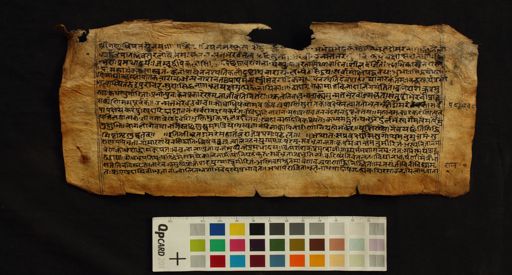
Bhūtaḍāmara Tantra
eap_79016005 Language : Sanskrit Scripts : Devanāgarī
The Bhūtaḍāmara Tantra is a Buddhist esoteric text on magic and exorcism, detailing rituals for controlling spirits and deities under the authority of Vajrapāṇi as Bhūtaḍāmara, the “Tamer of Spirits.” Likely compiled in eastern South Asia around the 7th–8th century CE, it introduced the cult of Bhūtaḍāmara. The text was later absorbed into Hindu traditions with a Śaiva reinterpretation and spread throughout the Himalayas and Tibet. It opens with Śiva being overpowered, slain, revived, and converted by Vajradhara, after which he becomes a Buddhist protector. The tantra’s sādhanas invoke female deities who grant yogīs supernatural power and wealth. The manuscript contains complete 15 paṭala (chapters). First chapter (f.1b), Second chapter (f.1b–2a), Third chapter (f.2a– 3b), Forth chapter (f.3b–4b), Fifth chapter (f.4b–6b), Six'th chapter (f.6b–9a), Seventh chapter (f.9a–9b), Eighth chapter (f.9b–10a), Ninth chapter(f.10a–10b), Tenth chapter (f.10b–11b), Eleventh chapter (f.11b–12b), Twelfth chapter (f.12b– 13b), Thirteenth chapter (f.13b–14a) fourteenth chapter (f.14a–15a) fifteenth chapter (f.15a–16a) The interesting thing of the manuscript is , the scribe is decribing hisself in different words 'The skill of my hands'.
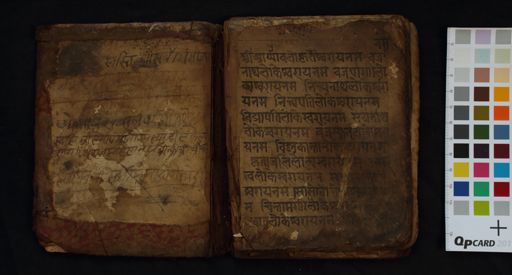
Aṣtottarajapa nāma of Aparīmitā , Arya Aparīmitayū Jñāna dhāraṇī Mantra
eap_79018004 Language : Sanskrit and Newari Scripts : Devanāgarī
The manuscript is a devotional text for Amitāyus. The text contains Aṣtottara nāma japa of dhāraṇī From (f.1a – 4b). The (f. 4b – 6a) explains rituals and importance of Aṣtottara japa nāma of Aparīmitā dhāraṇī. And then from (f. 6a – 20b) text having Aparīmitā dhāraṇī Chanting mantras for long life, health and well being. It is often used in Buddhist rituals to pray for the long life, health and well being. The Aparīmitā, also known as Amitāyus, is a revered figure in Mahāyāna and Vajrayāna Buddhism. He embodies the qualities of infinite life, wisdom, and spiritual merit. The handwriting and reading quality are very good, but the page edges are black on all sides. Ending colophone is not available. Last 2 folias are not connected with the main text.
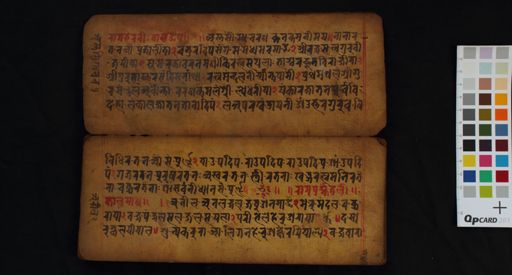
Caryāgīta
eap_79018005 Language : Sanskrit and Newari Scripts : Nepālākṣara
This text Caryāgīta has salutation songs dedicated to various Buddhist deities. This songs are called Caryāgīta. During the time of ritual performances Caryāgīta plays accompanying ritual dances, It mentions rāgas such as Bhairāvi, Madhumath, Vasanta, Lalita, etc. Name of the rāga and tāla is mentioned in red colour. The left side of the manuscript some words are written. Marginal lines are in red colour.
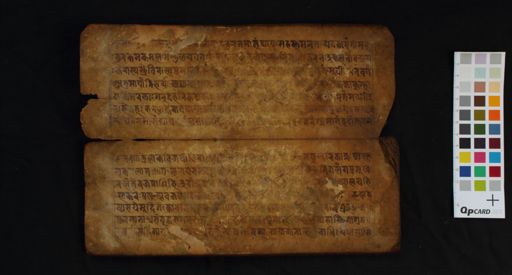
Nāmasaṃgiti Gāthā , Lokeśvara Stotra
eap_79018006 Language : Sanskrit Scripts : Nepālākṣara
The text is a composite manuscript. It consists Nāmasaṃgiti Gāthā (f.1b to16a), Narakodhara stotra (f.16b–18a)which is on the devotee vividly describes the human condition—being trapped in the darkness of ignorance, separated from loved ones, and bound by past misdeeds. The text contains Narakodhastaja stotra (15 verses) (f.16b–18a), Saka..rastaja stotra (8 verses)(f. 18a–19b). The last stotra contains only 3 veses. It is incomplete manuscript.
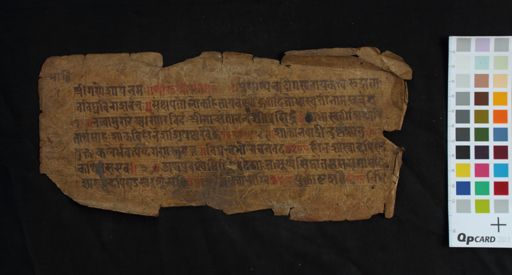
Bhāsvatikaraṇa
eap_79018007 Language : Sanskrit Scripts : Devanāgarī
The text is on Astronomy and Mathematics . Bhāsvatikaraṇa, composed in 1099 A. D. by Śatānandācārya son of Sankara and Sarasvati, Śatānandācārya, the astronomer and mathematician of 11th century, was born in 1068 C.E. at Purusottamdham Puri (Jagannath Puri) of Odisha. The manuscript contains 8 Adhyāya. First Adhyāya (f. 1b– 3a) and Second Adhyāya (f. 3a –6a) delas with Dhruva. Third Adhyāya (f. 6a - 8b) is on Calculation of Pañcādhikāra (Lunar months, Tithis, Season). Forth Adhyāya (f.8b –12a) Grahasphuṭādhikāra. Fifth Adhyāya (f. 12a–14b) is on Tripraśṇādhikāra. Sixth Adhyāya (f.14b –15a) Candragrahaṇādhikāra (lunar eclipse). Seventh Adhyāya (f. 15a–16a) Sūryagrahaṇādhikāra (Solar eclipse) and Eighth Adhyāya (f. 16a–17a) is on diagram of eclipse ( size, measures). The numbers in the manuscripts are written in red colour.
Śākyasiṃha-stotra and Triratna
eap_79018008 Language : Sanskrit Scripts : Devanāgarī
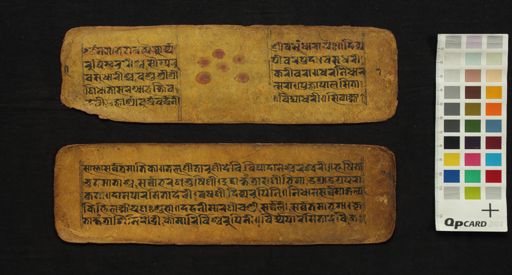
This manuscript contains two buddhist texts which are Śākyasiṃha stavan (f.1a) and Triratna (f.1b). Buddha was also referred to Śākyamuni or Śākyasiṃha . Praising him as one who upholds the true Dharma, eradicates sin, and teaches from a state of enlightenment. The text titled Triratna is incomplete.
Vasudharā-aṣṭottara-śataka and Collection of six Dhāraṇīs
eap_79015001 Language : Sanskrit Scripts : Nepālākṣara
The manuscript contains one Buddhist stotra text and six Dhāraṇī text.: Vasudharā-aṣṭottara-śataka (f.1b–4b): This text contains verses of salutation to the goddess Vasudharā. Vajravidāraṇa-nāma-hṛdaya-dhāraṇī (f.5a–8a): This text contains spells praising the god Vajra. Gaṇapati-hṛdaya-nāma-dhāraṇī (f.8b–11b): This text begins with a story in which Lord Buddha resides in Rājagṛha and gives lessons to his closest disciple, Ānanda (Dhāraṇī Sūtras, Gergely Hidas). Uṣṇiṣa-vijayānāma-dhāraṇī (f.12a–16b): This text contains mystical mantras bearing the name of Uṣṇiṣavijayā. These mantras were passed from Buddha Amitāyus to Avalokiteśvara. It is believed that these mantras are effective in curing diseases and promoting long life (Mitra, 1985, p. 267). Māricī-nāma-devatā-hṛdaya-dhāraṇī (f.16b–19b): The name Māricī means "darkness-destroyer." It is believed that merely hearing her name grants one her qualities. Lord Buddha revealed this teaching to his disciples while residing in Jetavana in Śrāvastī. This text contains charms for self-preservation. (Mitra, 1985, p. 174). Parṇṇaśavarī-nāma-dhāraṇī (f.19b–22a): Parṇṇaśavarī is a demi-goddess or demoness who wears leaves. This text contains many mystical terms and is believed to offer protection from evil and accidents. (Mitra, 1882, p. 176). Graha-mātṛkā-nāma-dhāraṇī (f.22a–25b): This text includes śānti-svastyayana, graha-pūjā mantras, and other rituals. The manuscript contains an illustration of Graha-mātṛkā on folio 22a.

Ārya-Tārā-Sragdharā-Stotra
eap_79014002 Language : Sanskrit & Newar Scripts : Nepālākṣara
This is a Buddhist stotra text composed in the Sragdharā metre in praise of the goddess Tāra. The text consists of 37 verses composed by Sarvajñamitra, a Kashmiri poet. The manuscript contains an illustration of red Tāra on folio 1b.

Āryasarvatathāgata-Uṣṇīṣasitātapatrenāma-aparājitā-mahāpratyaṃgīrā-dhāraṇī
eap_79014003 Language : Sanskrit Scripts : Nepālākṣara
A Dhāraṇī (spell) text dedicated to the deity Uṣṇīṣa-sitātapatrā (the White Umbrella Goddess). It is believed that her spell provides magical power to avert dangers, illness, and threats. The spell is considered especially effective at averting dangers before they strike; therefore, it is designated as pratyaṅgirā (averting or counter-spell). Because of its effectiveness, it is also called aparājitā (invincible). The manuscript contains an illustration of Uṣṇīṣa-sitātapatrā on folio 1b.