Manuscripts
Search Filter
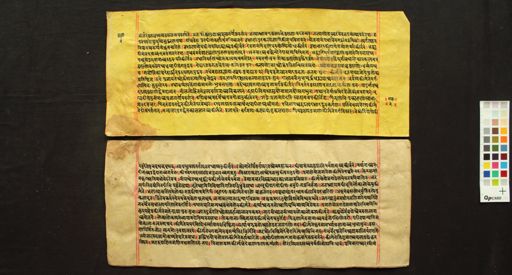
Brahmāṇḍa Purāṇa
eap_79021033 Language : Sanskrit Scripts : Devanāgarī
This is a Purāṇa literature text of Brahmāṇḍa Purāṇa attribuited to Vyāsa. It is a classic Puranic structure of a conversation involving Sūta (specifically Lomaharṣaṇa) and the sages of Naimiṣāraṇya, led by Śaunaka. The text has two types of chapter Frame Narrative chapter and Internal Narrator chapter, in the opening chapter, the text describes Lomaharṣaṇa Sūta arriving at the sacrificial session in Kurukṣetra. There, the sages, headed by Śaunaka, request him to recite the Purāṇa that he learned from his Guru, Veda Vyāsa. While Sūta is the one speaking to Śaunaka, he is actually recounting a conversation that took place previously. The core knowledge is traditionally said to have been narrated by Vāyu. The Brahmāṇḍa Purāṇa is often considered to be nearly identical in content to the Vāyu Purāṇa. The text is written in sanskrit language and devanagari script the chapters are highlighted in red colored ink.
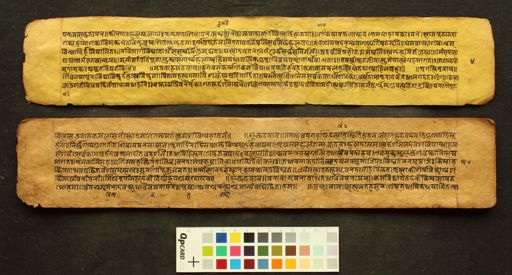
Devī Purāṇa
eap_79021034 Language : Sanskrit Scripts : Nepālākṣara
This is a Purāṇa literature text (Upapurāṇas) of Devī Purāṇa attributed to Vyāsa. It is a foundational text for the Śākta tradition, specifically focusing on the power of the Goddess as the supreme creative and destructive force. It provides a much more technical and ritualistic view of the Goddess, blending Vedic mythology with early Tantric practices. It is also follows the traditional Purāṇic dialogue structure between Sage Vasiṣṭha and King, the text main part is He asks how the Goddess, who is essentially formless and the source of the universe, takes on physical forms to fight demons and protect the world. and Vasiṣṭha’s response Vasiṣṭha narrates the various exploits, rituals, and philosophical truths of the Devī, claiming to have heard them through divine transmission Janamejaya.Janamejaya’s Doubt. The text is written in sanskrit language and Nepālākṣara. (See NCC. vol. 9 pg. 138)
Upanayana Paddhati
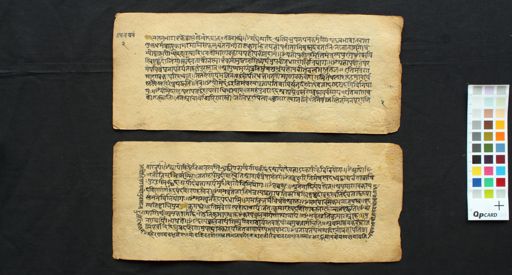
eap_79021036 Language : Sanskrit Scripts : Devanāgarī
The Upanayana Paddhati is a ritual manual that details the procedures for the Upanayana Saṃskāra.In Indian tradition, Saṃskāra refers to the rites of passage that purify and refine an individual at various stages of life. While different texts list varying numbers ranging from 12 to 48 the most widely accepted and practiced standard is the Ṣoḍaśa Saṃskāras. So the Upanayana Saṃskāra is one of the Ṣoḍaśa Saṃskāras. Upanayana is often considered the most important ceremony for a young student. It marks the "second birth", where the child is formally initiated into the world of Vedic study and spiritual discipline.Different families follow different Vedic branches, the specific "Paddhati" (manual) used depends on the Veda and Sūtra associated with one's lineage. The text here describes Yajurvedīya Upanayana Paddhati. The text is written in Sanskrit language and Devanagari script, also there are several part of Vedic rituals are included there.
Laghustava
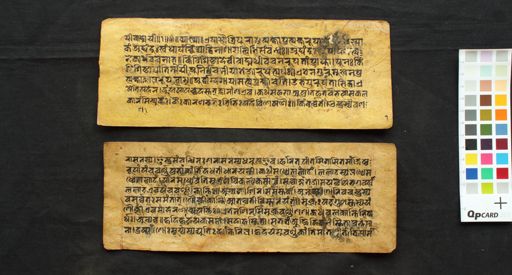
eap_79021037 Language : Sanskrit Scripts : Nepālākṣara
This text Śākta tantra text, Pañcastavī, a masterpiece of Kashmiri Śākta literature, which has 5 different praise on goddess including; laghustava, carcāstava, ghaṭastava, ambāstava, sakalajananīstava. The text here details about only laghustava Vyākhyā , which is describing esoteric devotional poem dedicated to Tripurasundarī, also known as Tripurāstotra/Tripurasundarī/Viṃśati in 21 or 22 verses. It is not as general commentry text which shown uppar and lower parts are commentry and middle part is the main text . It is written in throughly and interestng part is the manuscript mentioned 108 names and an astrological chart may be from yogini cakra. It is written in sanskrit language and Nepālākṣara. Though the colophone part is not mentioned in the text but intermadiate colophone has mentioned about the title and authors name, also it seems that the last page could be an attach page which is missing.
Rudrayāmalatantra
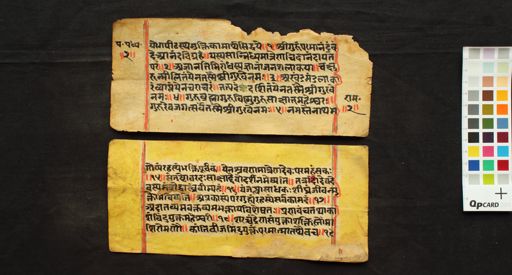
eap_79021038 Language : Sanskrit Scripts : Devanāgarī
This is a Tantra text of Paramahaṁsa paṭala on bhairava-bhairavi saṁvāda of Rudrayāmalatantra, a category of texts that emphasizes the union of Shiva (Rudra) and Shakti, the word Yāmala refers to "twins" or "pair".The manuscript describes here only Paramahaṁsa paṭala in 45 verses, though several verses are missing. The starting part it has praises to guru in several verses. It is written in sanskrit language and Devanāgarī script. some portion are torn but verse numbers are highlighted in red coloured ink.
Śiva Stotra
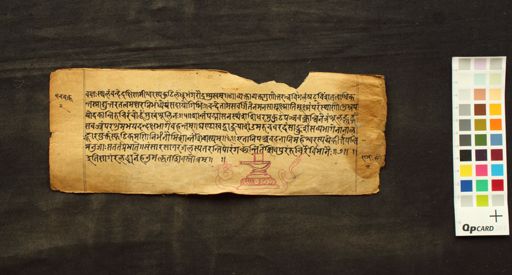
eap_79021039 Language : Sanskrit Scripts : Devanāgarī
This is a stotra text from Padma Purāṇa Pātāla khaṇḍa, in the context of the post-war rituals and the atonement for the sin of killing Rāvaṇa, Rāma returned and established the Rāmesvaram śivaliṅgam at that time, Hanumāna who is an incarnation of Lord Śiva offered this prayer to Lord Śiva to express gratitude for the successful crossing of the sea. The manuscript here holds only Śiva Stotra attributed by Hanumāna in 7 verses. Interestingly on the margin side of the manuscript is highlighting the word Pañcavakra, which refers to the five primordial faces or aspects of Lord Śiva. The manuscript is written in Sanskrit language and Devanāgarī script. It has two illustration following; f.1b has a Kirāta form of śiva and f.2 has a red sketch of śivaliṅgam sarounded by snake.
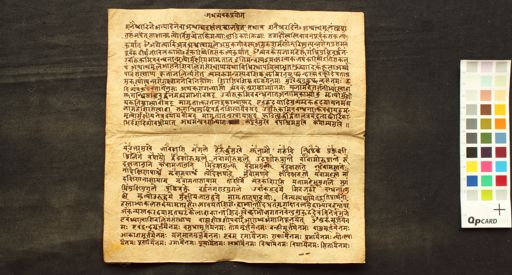
Cākṣuṣopaniṣad
eap_79021040 Language : Sanskrit Scripts : Devanāgarī
The Cakṣuṣopaniṣada also known as the Cakṣuṣmatī Vidyā or Akṣikopaniṣad or Akṣyupaniṣad or Netropaniṣad is a small but potent text found in the Kṛṣṇa Yajurveda. The Upaniṣad identifies our physical sight as a localized fragment of the cosmic solar energy. The ritual involves reciting the text while offering water to the Sun (āditya) during the sunrise. It is written in Sanskrit language and Devanāgarī script. f.1b has starting with Trayamvakaprayoga, which is describe several name of śiva and mannual rituals at the time of liṅga pratiṣṭhā.Though the Netra Tantra, a Kashmiri śaiva text where lord śiva is worshipped as Amṛteśvara for the blesings form blindness to see. It describes the "Tryambaka Prayoga". In the manuscript the writing syle is changed in the Trayamvakaprayoga section. (see NCC. vol. 1, pg. 15b)
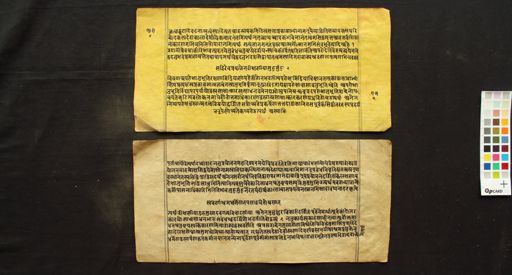
Aparokṣānubhuti
eap_79021041 Language : Sanskrit Scripts : Devanāgarī
This is a Vedānta philosophical commentry text of Aparokṣānubhuti tika Dīpikā written by Vidyaraṇyamuni on Aparokṣānubhuti written by Śankarācāryā. The word Aparokṣānubhūti means Direct Perception of the Self. The commentry serves to clarify the complex psychological and philosophical nuances involved in moving from intellectual understanding to actual spiritual experience. It is written in sanskrit language and Devanāgarī script. The colophone part is mentioned at the end of the text both author and commentator. (See NCC, vol. 9, pg. 68)
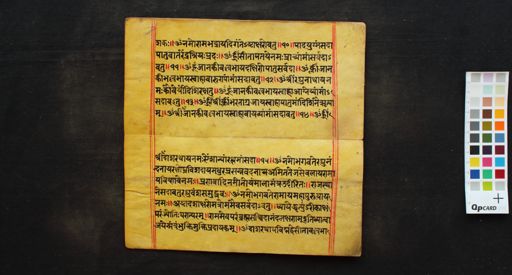
Śrī Rāma Kavacam
eap_79021043 Language : Sanskrit Scripts : Devanāgarī
This is a stotra text of Trailokyamohana Kavacam or Śrī Rāma Kavacam is a powerful protective hymn found within the Rudrayāmala Tantra. It is framed as an Umā-Maheśvara Saṃvāda. The manuscript describes here the praising to lord Rāma with his consort in various incarnation, after that the result part has detailed for whom recite the stotra. It is written in sanskrit laguage and Devanāgarī script in verses, the text is good complete and verse number has highlighted in red colour.
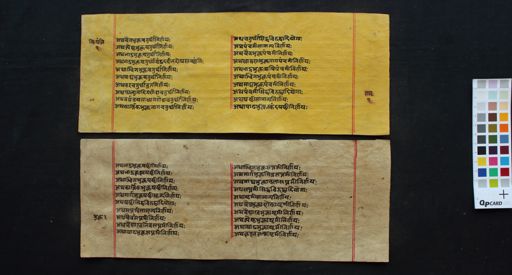
Nirṇayāmṛta
eap_79021044 Language : Sanskrit Scripts : Devanāgarī
This is a commentry text of Hindu jurisprudence and ritual law digest text, Nirṇayāmṛta pañjikā written by Sūryasen mahīmahendra, on Nirṇayāmṛta by Allāḍanātha. Pañjikā is a detailed commentary that does more than just define words breaks down the etymology of terms. The manuscripts holds a comprehensive manual on Vratas, Utsavas, and Samskāras. It is written in sanskrit and Devanāgarī script. The first 10 folios has describes list of Anukramaṇī. The manuscrpt is good complete and highlighted every chapters end colophone.
Kārtika Māhātmya
eap_79021045 Language : Sanskrit Scripts : Old Devanāgarī
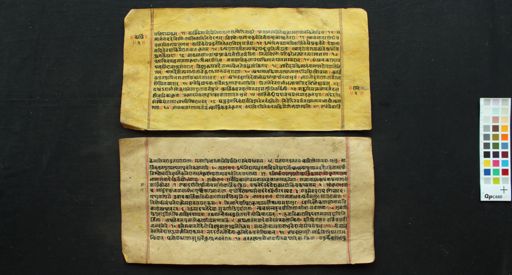
This text is the part of Padma Purāṇa. It refers to the glories of the month of Kārtika, which is considered the holiest month in the Hindu lunar calendar. According to Vedic scriptures like the Padma Purāṇa and Skanda Purāṇa, any spiritual activity performed during this month is said to yield results many times greater than usual. The manuscript holds some sub chapters of the text including; f.1 -1st chp; f.2 -2nd chp; f.3- 3rd chp; f.5 -5th chp; f.6 -6th chp; f.6b -7th chp; f.7b -8th chp; f.8b -9th chp; f.9b -10th chp; f.10b -11th chp; f.11b -12th chp; f.12b - 13th chp; f.17-18th chp; f.17b -19th chp; f.18b -20th chp; f.19 -21st chp; f.20 -22nd chp; f.21 -23rd chp; f.23 - 25th chp; f.24 -27th chp; f.25b -28th chp; f.27th -29th chp. The manuscript is good readable, the colophone part has end of every chapter.
Vālmīki Rāmāyaṇa (Vālakāṇḍa)
eap_79021046 Language : Sanskrit Scripts : Devanāgarī
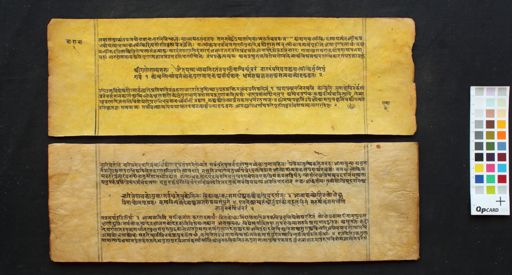
This is a commentry text of Rāmāyaṇa Tilaka, written by Śrīrāma Śarman, on Vālmīki Rāmāyaṇa by Ṛṣi Vālmīki. It has seven chapters (kāṇḍa) including; Bāla Kāṇḍa; Ayodhyā Kāṇḍa; Araṇya Kāṇḍa; Kiṣkindhā Kāṇḍa; Sundara Kāṇḍa; Yuddha Kāṇḍa; Uttara Kāṇḍa all chapters hold 24000 slokas. The text here describes only the Bāla Kāṇḍa which contains 77 sarga (sub chapters) , birth and childhood of Rāma; his education and marriage to Sītā. It is written in sanskrit language and Devanāgarī script, in the middle part of the folio has the main text and uppar and lower part of the folio holds the commentry part. Some folios has slightly torn to the uppar and lower part.