

Manuscripts
Search Filter
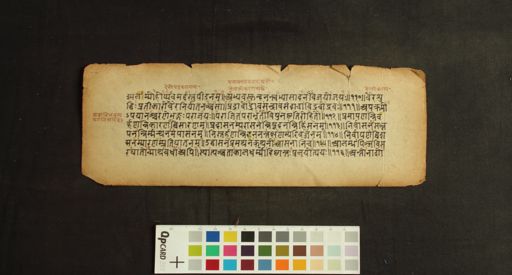
Amarakoṣa
eap_79005070 Language : Sanskrit Scripts : Devanāgarī
This is a famous Sanskrit lexicon, Amarakośa attributed to Amarsiṁha. The text has 3 chapters in (Kāṇḍa). The manuscripts holds the 2nd kanda including; f.3 kaṣtriya varga, f.24 b śudravarga, f. 29 bhūmi varga, f.35 vanauṣadhi varga, f.36 saṅkirṇa varga, f. 38 siṁhādi varga. Though the printed text has noted accordingly its opposite. The manuscript has not appropriate accordance so some pages are back folio no. has done at corner of the pages and several notes are in red ink at the margin side of the manuscripts. It is written in sanskrit language and devanagari scripts slightly torn in the margin side and it not a complete manuscript.
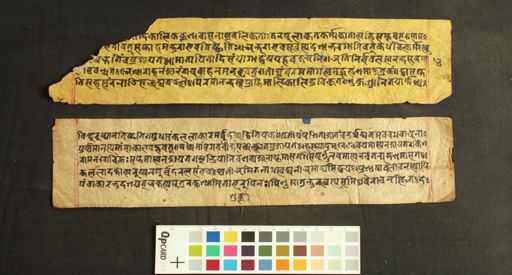
Saṃvarodayatantra
eap_79005072 Language : Sanskrit Scripts : Nepālākṣara
This is a Buddhist tantra text, Saṃvarodayatantra (also known as Saṃvarodaya or Samvarodaya Tantra) is a significant Buddhist tantric text associated with the Cakrasaṃvara cycle, a central tradition within Vajrayāna Buddhism. It is comprising 33 chapters, it delves into advanced yogic practices, ritual frameworks, and esoteric teachings. The text holds only 3 chapters including; f.16 candrasūryakramopadeśapaṭala, f.17 pathapañcanirdeśapaṭala, mantrajapākṣamālānirdeśapaṭala so it is an incomplete text also it has not mention colophone, and the title has been listed from inter madiate colophone. It is written in Sanskrit language and Nepālākṣara script, cndition of the manuscript is heavily damaged some folios are completly torn.
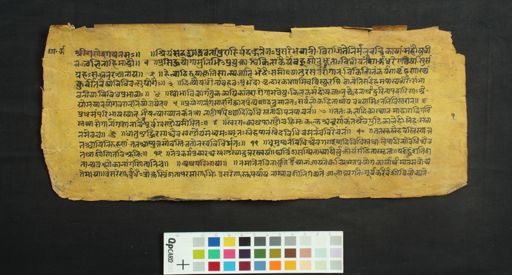
Śāraṅgadhara Saṃhitā
eap_79005073 Language : Sanskrit Scripts : Devanāgarī
This is an Ayurvedic text Śārṅgadhara Samhitā attributed to Śrī Śārṅgadhara, son of Dāmodara, grandson of Rāghavadeva, nephew of Gopāla and Devadāsa, elder brother of Lakṣmīdhara and Kṛṣṇa. Śārṅgadhara lived at the court of Hammīra. If this Hammīra is identified with King, who ruled from 1282 to 1301 C.E. then the date of Śārṅgadhara may be 133th Cent. It consists of 32 chapters. the manuscript here holds only 22 chapters but it has not mentioned the number of the chapters only has mentioned name of the chapters including; f.2b Paribhāṣādhyāya, f.3 dravyarasavipāka, doṣāṇāmaprakopopaśamana, f.4 b sṛsṭikramaśarīrādhyāya, prakṛitilakṣaṇakṣāmaśarīrādhyāya, f.6 śakunalakṣaṇanāḍīparīkṣāvidhi, f.6b guṇoktividhirdhyāya. The text is good written in sanskrit language and Devanagari script. in the colophone part has mentione authors fathers name. chapters are highlighted by red ink.
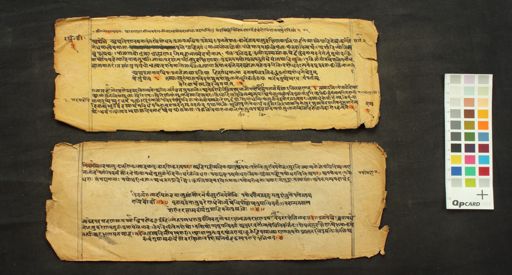
Raghuvaṁśam
eap_79005075 Language : Sanskrit Scripts : Devanāgarī
This is a Commentry of Sañjīvinī by Mallinātha on Raghuvaṁśam the great Epic composed by Kālidāsa. The text has 19 chapters (or Sarga). The subject of the text is the leneage of Lord Rāma and their work. The manuscript here holds only 2nd chapter some verses including ; 1 - 74, it seems it is an incomplete text.It is written in Sanskrit language and Devanagari script.
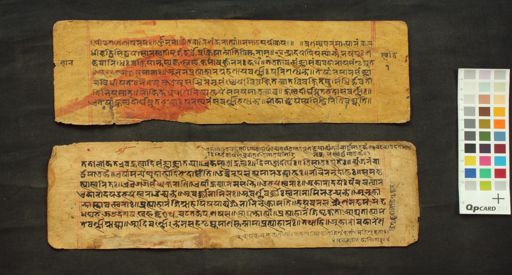
Sāraswatī prakriyā
eap_79005076 Language : Sanskrit Scripts : Nepālākṣara
This is a Grammatical text of Sāraswatī prakriyā or Sāraswata Vyākaraṇa composed by Anubhūtisvarūpācārya. The text was designed to be a simplified system. It is famous for its brevity, using only about 700 sūtras. The manuscripts holds here only some sutras including; hasanta napuṁsakaliṁga śabda has ended. It is written in sanskrit language and devanagari script but the text has several margin notes, first folio has some red ink faded.
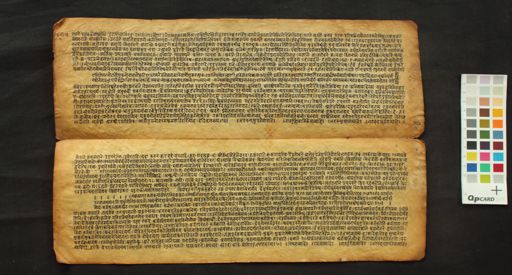
Amarkoṣa
eap_79005077 Language : Sanskrit Scripts : Devanāgarī
This is a commentry text, Vyākhyāsudhā composed by Bhānujī Dīkṣita (the son of the famous grammarian Bhaṭṭoji Dīkṣita, in the 17th century) on Amarsiṁha's Amarkoṣa. The text is divided into 3 Kāṇḍas, which are further subdivided into 25 Vargas. The manuscripts holds here 3rd kandas 5th varga Liṅgyadisaṁgraha varga. It is written in sanskrit language and devanagari scripts. Though the text has not mentioned title or author name only the leaneage has mentioned, but intermadiate colophone has mentioned the author name and title of the commentry.
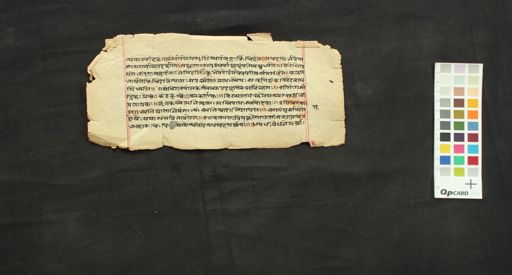
Vīrasiṁhāvaloka
eap_79005078 Language : Sanskrit Scripts : Devanāgarī
Vīrasiṁhāvaloka is a unique and significant 14th-century Sanskrit text that blends, medicine, astrology, and karmic law/ethics. It was composed by King Vīrasiṁha, a ruler of the Tomara dynasty of Gwalior around 1383 CE. The text is divided into 80 chapters, which are referred to as Avalokas. The manuscript here holds some chapters name only but the nuber has not mentioned. It is written in Sanskrit language and Devanagari script. The text has started some middle portion of some chapter. The manuscript is very damaged some parts cant readable, colophone part has only mentioned the title and the leaneage name of the king, the title and date has mentioned from intermadiate colophone .
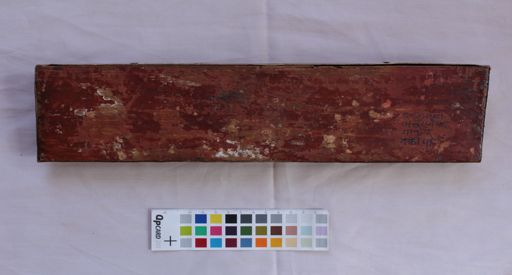
Pañcarakṣā Sūtra
eap_79006001 Language : Sanskrit Scripts : Rañjanā
Pañcarakṣā Sūtra is a Buddhist tantra text as the name suggests it contains five sections dedicated to five seperate deities used for rituals and prayers for protection. (1) Mahāpratisarā from (f.1–42) – For protection against sins. (2) Mahāmāyūrī from (f.43–87) – For protection against snake bites and venom. (3) Mahāsāhasrapramardanī from (f.87–143) – For protection against evil spirits. (4) Mahāmantrānusāriṇī from (f.144–154) – For protection against disease and plague. (5) Mahāśītavatī from (f.156–163) – For protection against dangerous animals. This manuscript is complete along with an ornamentally decorated cover with the date written at the back in two places in Nepal Akṣara. The cover has five deities carved in front. The text is written in ornamental gold and silver Rañjanā script. The folios are indigo blue with illustration of the specific deity on the beginning of each part in the center. There is an illustrated page in the end which has been smudged off. https://vmlt.in/ncc/11?page=29
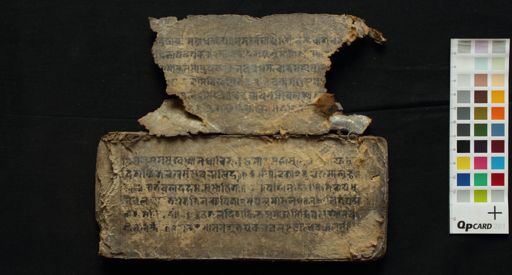
Composite Manuscript : 1. Caityavarṇa Gīta 2. Avalokiteśvara Stotra ?
eap_79007001 Language : Sanskrit Scripts : Pracalita Nepālākṣara
This Ms. is damaged. It is incomplete as it does not have a beginning nor ending. The beginning and ending folios are heavily mutilated and water damaged. Looking at the intermediate colophons and verse no.s it appears to be a composite text with different Buddhist tantra stotra-s one after the other. 1. Caityavarṇa gīta: Image 1–4 — The title is present in intermediate colophon. The other text is continued from the same folio. 2. Avalokiteśvara: There are many Buddhist stotras written on the deity Avalokiteśvara — Section 1 – Image 4–8 — 24 verses Section 2 – Image 8–14 — 25 verses Section 3 – Image 14–18 — 12 verses Sestion 4 – Image 18–22 — 24 verses
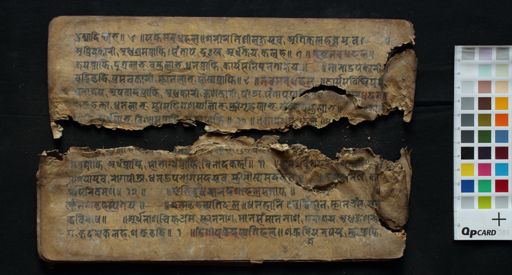
Daśāphala
eap_79007002 Language : Sanskrit Scripts : Pracalita Nepālākṣara
The manuscript has a pinkish red leather cover. However the manuscript is heavily damaged the folios have been hacked off from the side. Moreover it also lacks a beginning and an ending. Folios from image 1–7 have text written in horizontally like in a landscape format with respect to the folios but folios from image 8–14 have been written in a way resembling the folios of a book or a notebook for no particular reason it seems, perhaps to save folios. The significant text is rubbed with orange powder for highlighting. looking at the intermediate colophons indicate the name of the text is Daśāphala a Jyotiṣa text. It deals with life events of a human based on the moon's nakśatra at time of birth and the strength of Graha-s (celestial bodies) which are believed to influence positive and negative results. Daśā-s of different Graha-s are mentioned in the intermediate colophons like Candra and Budha etc.
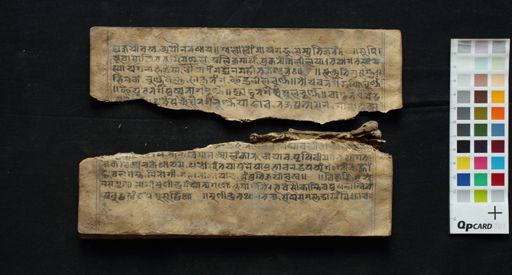
Manuscript related to Kaṭhina dāna ritual
eap_79007003 Language : Sanskrit, Newar Scripts : Pracalita Nepālākṣara
This manuscript lacks a beginning or end. It also is damaged from one side and in some places the ink of the text has also faded. The manuscript is hacked off from the margins, but the binding in between the folios is still intact. The folios are binded like a book. The main text is in Sanskrit language but the explanation is in Newar written in Nepal Akṣara. Title of the text is unknown but what is left visible in the folios. It appears to be dealing with buddhist rituals inspired by a Kaṭhina dāna, a procession which takes place in Nepal. While being a Theravāda buddhist festival of offering robes and other essential items to monks, the Kaṭhina dāna is also performed in Mahāyāna Buddhism but differently a series of rituals are performed as explained in this text apart from just monastic donation and slight difference in time and date. The text mentiones aromatic compounds like Pañcagandha, ornamental items like Pañcaratnas and other items used in the rituals like oils. The Nāga maṇḍala pūjā along with other pūjās which is believed to bring prosparity and offer boons in the afterlife Sukhāvatī the land of eternal bliss reciding place of Amitābha Buddha according to supporting texts.
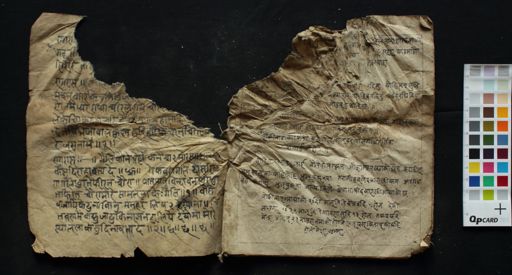
Gaṇita related Manuscript
eap_79007004 Language : Sanskrit Scripts : Devanāgarī
This manuscript is damaged. It is torn from the top creating a V-cut probably due to rodent damage. What's left of the text shows it is dealing with mainly Mathematics written in Devanāgarī. — Image 1: It contains ... — Image 2: It contains ... — Image 3: In the left page there is a Maṅgalavākya dedicated to lord Gaṇeśa which is typical. It is then followed by four incomplete mantra-s dedicated to him. The first verse is taken from the Gaṇeśa ṣodoś nāmavali stotra which is a part of the Nāradapurāṇa. "Sumukhaścaikadantaśca kapilo gajakarṇakaḥ. Lambodaraśca vikaṭo vighnanāśo vināyakaḥ." The second verse appears to be a tantric verse possibly "Dhūmraketurgaṇādhyāyakṣo bhālacandro gajānanaḥ" taken from Gaṇeśa dvādaśanāma stotra also from the Nāradapurāṇa. The word Chaṇuyādapi in the end may also be part of a similar mantra. The third and fourth incomplete verses are maybe also tantric Gaṇeśa mantras. After this there are serialised devotional or initiation verses which have been taken from different sources of literature but they are present in incomplete form due to damage. The first verse is an invocation for Sarasvatī taken from the fifth verse from the work Agastya Sarasvatī stotra. "Sarasvati namastubhyaṃ varade kāmarūpiṇi'ḥ (rūpiṇī). Vidyārambhaṃ kariṣyāmi siddhirbhavatu me sadā." The second verse has been taken from the maṅglācaraṇa of Kālidāsa's work Raghuvaṃśa "Vāgarthāviva sampṛktau vāgarthapratipattaye. Jagataḥ pitarau vande pārvatīprameśvarau". The third verse has been taken from the Atharvaveda's Kāṇḍa-8; Sukta-3; verse 6. "Sapte bhavatu supraṇītirdevī svādinī mayā paśupatipatiḥ tasyā naḥ rāsveha yat pṛtsu naḥ sahetāgne tadvarcaḥ ā bhara." The fourth verse is an established hymn for Sarasvatī pūjā commonly recited in Vasanta Pañcamī not taken from any one particular text "Jaya jaya devi carācara sāre, kucayuga śobhita muktāhare. Viṇā (Vīṇā) rañjita pustaka haste, bhagavati bhārati devi namaste." On the right page there is a table with three vertical columns with some numerical figures of which the context is unclear. — Image 4: It contains names of numerals from 1-100 in the left page and in the right the names for place holders from Ones to Quintillion which is given as 1= Eka; 10 = Daśa; 100 = Saya; 1000 = Hajāra; 10,000 = Daśa Hajāra; 1,00,000 = Lakha; 10,00,000 = Daśa Lakha; 1,00,00,000 = Kaḍauḍ ; 10,00,00,000 = Daśa Kaḍauḍ; 1,00,00,00,000 = Araba, 10,00,00,00,000 = Daśa Araba; 1,00,00,00,00,000 = Kharaba; 10,00,00,00,00,000 = Daśa Kharaba; 1,00,00,00,00,00,000 = Nīla; 10,00,00,00,00,00,000 = Daśa Nīla; 1,00,00,00,00,00,00,000 = Padma; 10,00,00,00,00,00,00,000 = Daśa Padma; 1,00,00,00,00,00,00,00,000 = Śaṃkha; 10,00,00,00,00,00,00,00,000 = Daśa Śaṃkha. — Image 5: The left page contains an incomplete heading Ekaekata, below that there are a series of numbers written in numerals with increasing digits and their names written in words along side them with the largest number being 1234567890. Below this there is a paragraph written on numbers written in form of fractions in the end which continues to the right page. Below this there is a table which contains numeral place holders from ones to 100 million in the top row and random numbers below with an increasing digit with each succesive row with their names written in words on their right. — Image 6: It also contains a table like image 5 with random numbers but from ones to 10 million below a paragraph of text in the left page, while on the right page there is a table containing 15 multiples of the respective numbers from 1 to 16. — Image 7: Both pages contain mathematical problems with examples. — Image 8: It is a continuation of image 7 with addition problems with calculations. — Image 9 and Image10: They both contains substraction problems with calculations. — Image11 and image 12: They both contains more mathematical problems. — Image13: It appears to be a continuation of the previous page.