Manuscripts
Search Filter
Akaniṣṭābhuvanasahuṃ
eap_79008001 Language : Newar Scripts : Devanāgarī
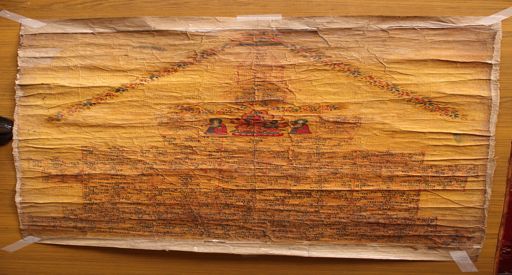
This manuscript has an illustration of the Swayambhu (Svayambhū) Stupa in Nepal Kathmandu. Just like the stupa the illustration has two eyes of Buddha which in the stupa face all four sides. The site is revered by Tibetian and Newari buddhists considered to be one of the three major historical pilgrimage sites. On top of the eyes there are 13 stories in the manuscript containing the syllable Śa with devanāgarī numeral. In the middle of the manuscript there is a red three headed deity with the fourth heads in the top. The heads are red, cream coloured, grey and black. The deity also has four pair of arms sitting in yogic posture with a smaller black deity near the left thigh. There is also a helper on each side of the deity. Below and side of the deity there is tree style branch table containing different Buddhist Saṅghas.
Durgati Pariśodhana
eap_79009001 Language : Sanskrit Scripts : Devanāgarī
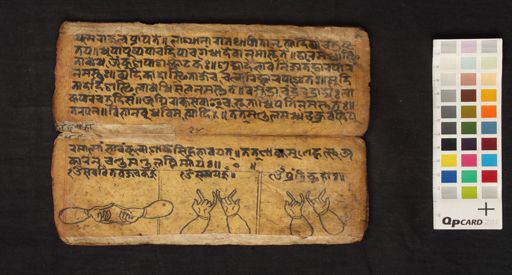
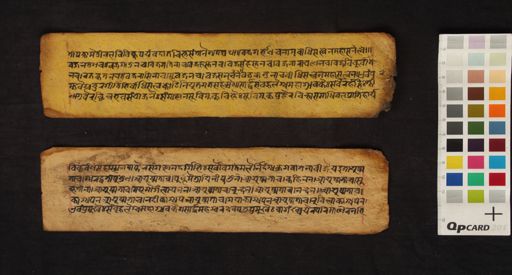
This manuscript is in fairly good condition but incomplete. It lacks an opening and also an ending. The text is in Sanskrit written in Nepal Akṣara script. It is a Buddhist tantric text Durgati Pariśodhana it contains the procedure to perform rituals along with illustrations of tantric hand gestures.
Pañcamahā Sūtra
eap_79009002 Language : Sanskrit Scripts : Pracalita Nepālākṣara
Pañcamahā Sūtra is a Buddhist tantra text as the name suggests it contains five sections dedicated to five seperate deities used for rituals and prayers for protection. This manuscript lacks the first folio and some folios are missing in between. (1) Mahāpratisarā– For protection against sins. (2) Mahāmāyūrī– For protection against snake bites and venom. (3) Mahāsāhasrapramardanī – For protection against evil spirits. (4) Mahāmantrānusāriṇī from– For protection against disease and plague. (5) Mahāśītavatī– For protection against dangerous animals. The place of manuscript is given Suvarṇa Panārī (old Pali name) Monastery (f.176) in Kathmandu Nepal known as Nhu Baha (in Newar language) in modern times. Date of the manuscript is given in (f.177).
Composite Manuscript : 1. Siddhi Gaṇeśa Stotra 2. Vividha Mantra
eap_79009003 Language : Newar Scripts : Pracalita Nepālākṣara
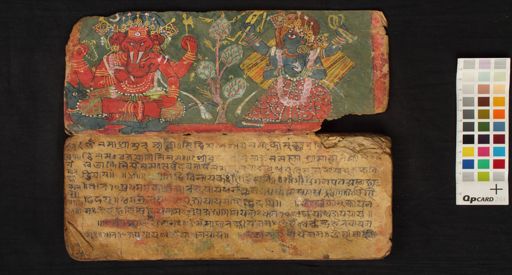
This Ms. is complete and in fairly good condition yet some folios have faded. It contains two parts: 1. Siddhi Ganeśa Stotra: The illustration on the cover page has faded but the illustration on subsequent page is clear in which there are two deities one of them is a tantric form of the elephant headed Gaṇeśa sitting on his mount a large rat. He has a third eye on his forehead and two pairs of arms carrying different items on each. What's pecular about the illustration are the two tuscs appear to be located on top of the elephant trunk making it look awkward which may be due to misdrawn proportions by the scribe. The other deity appears to be a female tantric deity who also has two pairs of arms. She is holding a minature man from one and some other item from the other. The rest of the two hands are cupping together some important artifact with a specific tantric hand gesture making the appearance of an incantation bewitching ritual. The text is full of tantric mantras in Newar language written in Nepal Akṣara script. The text ends with a Bīja mantra. 2. Vividha Mantra: It is a tantric text. There are two illustrations of a female tantric deity with two pairs of arms in the opening page. The following page shows the same deity in a seated position with a man lying flat in front of her. This illustration is also present in the last folio. The illustration is probably of Vajrapāṇī Lokeśvara or Vidyāpati Lokeśvara. Throughout the text there are various tantric yantras drawn and their associated mantras and explanation.
Rātri yajña tantra Vidhi
eap_79009004 Language : Newar Scripts : Pracalita Nepālākṣara
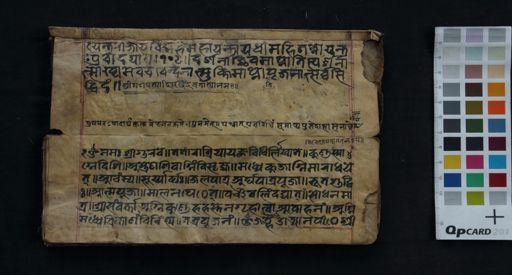
This manuscript is in fairly good condition yet not fully complete. It is a tantric manuscript written in Newar language and Nepal Akṣara script. The text deals with Rātri yajña tantra. It explains the step by step process of the yajña vidhi. Various mantras are given with illustrations on the right side of the folio, of various objects, herbs, special items and hand gestures. The text on the last folio is not vissible. The three folios before that have two illustrations on each page. Image No. 22– The first two illustrations are of Bhairava deity with 2 pairs of arms. He is a form of lord Śiva. The other two are of a semi-deity Makara (crocadile) and a headless figure Ketu whose head is considered to be Rāhu in Hindu Jyotiṣa legend. Image No. 23– The first two illustrations are of Chinnamasta a with her severed head in one hand and a celestial deity with an elephant head and the rest of the body of a bird. The other image also contains a celestial animal and hybrid horse with a man's torso in place of the horse's head, holding a hunting bow. This may be a Jyotiṣa reference to the Dhanu Rāśi (Sagittarius) zodiac sign. Image No. 24– There is a fish from whose mouth a woman is extending out holding sweets offering them to a man in a casual seated position.
Pañcarakṣā Sūtra
eap_79010001 Language : Sanskrit Scripts : Pracalita Nepālākṣara
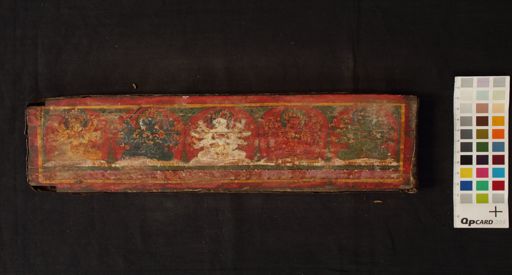
Pañcarakṣā Sūtra is a Buddhist tantra text as the name suggests it contains five sections dedicated to five seperate deities used for rituals and prayers for protection. (1) Mahāpratisarā from (f.1–51)– For protection against sins and transgressions. (2) Mahāmāyūrī from (f.–52–110)– For protection against snake bites and venom. (3) Mahāsāhasrapramardanī from (f.111–164)– For protection against evil spirits. (4) Mahāmantrānusāriṇī from (f.165–172)– For protection against disease and plague. (5) Mahāśītavatī from (f.173–179)– For protection against dangerous animals. This manuscript is complete along with an ornamental cover with five circles which were probably meant for illustrations or carving of deities but never came to be, however the secondary cover does have an illustration. The folios have an illustration of the specific deity on the beginning of each part in the center. The text is written in Pracalita Nepal Akṣara.
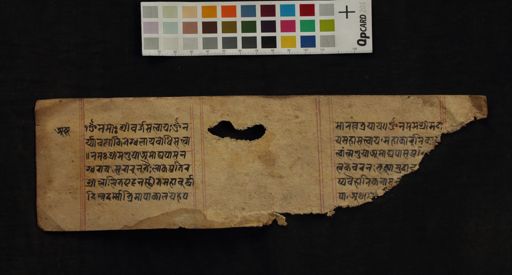
Aṣṭamī Vrata Mahātmya
eap_79011001 Language : Newar Scripts : Pracalita Nepālākṣara
Aṣṭamī Vrata Mahātmya is a tantra text in the newari Buddhist tradition written in Newar language. It is used for rituals and observances for Amoghapāśa Lokeśvara a form of Avalokiteśvara. This manuscript has been hacked off from the left side of the folio and lacks a beginning.
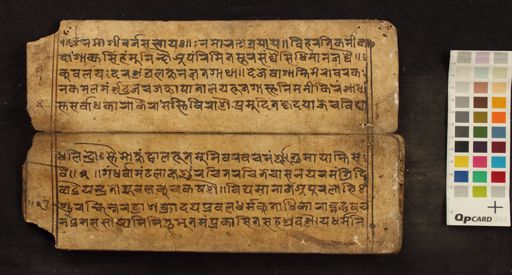
Paramārtha Nāmasaṅgīti
eap_79011002 Language : Sanskrit Scripts : Pracalita Nepālākṣara
Paramārtha Nāmasaṅgīti is a tantric stotra in the newari Buddhist tradition written in Sanskrit language in praise of embodying the five Dhyani Buddhas used for ritual practice and meditation. In the tradition the text is itself considered the spoken word of the Buddha himself. This manuscript is present in complete form, though the left margin is torn, still in most folios most of the text is visible. The cover and back page is brown probably due to water damage. The manuscript is written in two parts but the text of the second part is the direct continuation of the first. https://vmlt.in/ncc/11?page=107
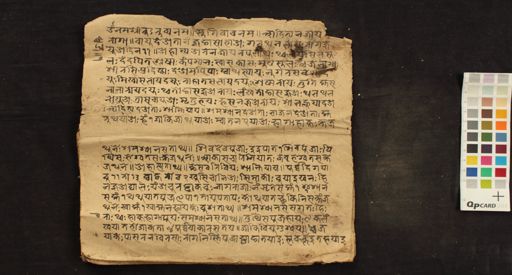
Rajograha Dvādaśa Rāśi
eap_79011004 Language : Sanskrit Scripts : Pracalita Nepālākṣara
Rajograha Dvādaśa Rāśi title present in the colophon. This Ms. is complete, it has all the folios present. The text is centered around Rāśi-s the 12 Zodiac signs, the numbered folios indicate the signs on which the respective verses are written on. The name of the signs are also given in the left margin of the folio written vertically to indicate the verses as an indicator. The names though are dialectic and not in sanskrit. It is given as initials in the final line of text which are: (1) Me– Meśa (Aries), (2) Vṛ– Vṛṣabha (Taurus), (3) Mi– Mithuna (Gemini), (4) rka– Karka (Cancer), (5) Siṃ– Siṃha (Leo), (6) Kaṃ– Kanyā (Virgo), (7) Tu– Tulā (Libra), (8) Vi– Vṛścika (Scorpio), (9) Dha– Dhanuṣa (Sagittarius), (10) Ma– Makara (Capricorn), (11) Kuṃ–Kumbha (Aquarius), (12) Mī– Mīna (Pisces).
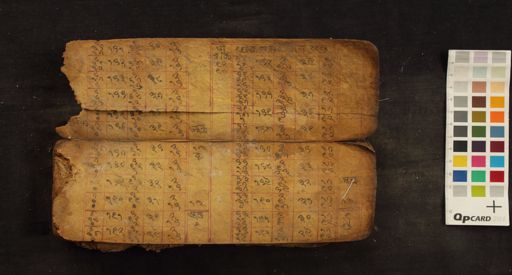
Jyotiṣa Graha related manuscript
eap_79011005 Language : Sanskrit Scripts : Pracalita Nepālākṣara
This manuscript is an unknown Jyotiṣa text. It lacks a beginning and an ending. The manuscript is in fairly good condition as damage is located mostly in the frames of the folios. The text is centered around mostly the Grahas which are significant celestial bodies noted in Jyotiṣa which are used in astrological predictions. The Grahas are written in one letter syllables and contain various tables of calculation. Sūrya, Candramā, Maṅgala, Budha, Bṛhaspati, Śukra, Śani, Rāhu, Ketu.
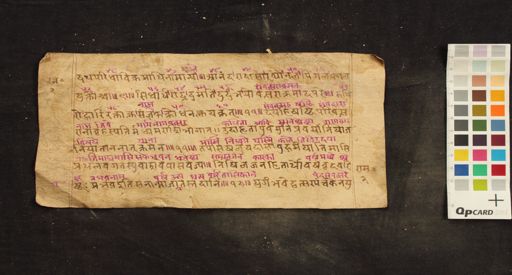
Jyotiṣa Ratnamālā Muhurta Prakaraṇa
eap_79011006 Language : Sanskrit Scripts : Devanāgarī
Jyotiṣa Ratnamālā Muhurta Prakaraṇa is a Jyotiṣa text. The title is present in the last colophon. This manuscript lacks the first folio. Some folios have water damage which have caused the ink to fade while some are hacked off at the frames. The text is written in two different coloured inks. One in black and the other in magenta which appears to be overwritten on the main text, also some words in the verses are numbered. The manuscript is incomplete, there are many folios missing in between and their order unclear. It lacks folio 1 the beginning. The text starts from folio 2, starting from verse no. 4 halfway. Adhyāya 1: f. 2–4, image 1–3 (22 verses), Adhyāya 2: f. 4–? Folio 5 appears to be digitized after folio 6. Folio 9 appears to be missing. Adhyāya 3: f. ?–11, image –14 Adhyāya 4: image –15 Adhyāya 5: image –15 Adhyāya 6: image – Not present Adhyāya 7: image –19 The text does not appear to be Kṛṣṇa Miśra's known text Jyotiṣaphalaratnamālā.
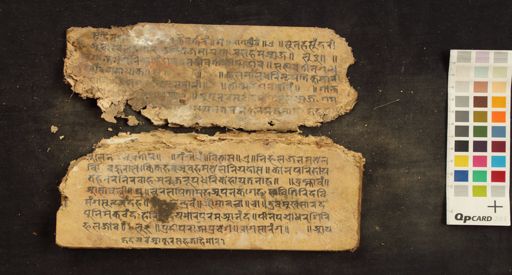
Mahābhārata Nāṭaka
eap_79011007 Language : Maithili Scripts : Pracalita Nepālākṣara
This Ms. is incomplete. It is partially damaged from the side and also the folios have worn out. It appears to be in a regional dialect written based on the epic mahābhārata. In the text of the manuscript has characters like Bhīṣma, Śāntanu and Satyāvatī are present. Intermediate colophons are present in the manuscript of first, second and seventh Aṅka (chapter) stating it to be a part of the Mahābhārata Nāṭaka. There are more than one nāṭaka with the same name written in the same time period during the rule of Malla dynasty in Nepal. It was customory during that period in Kathmandu valley to write nāṭakas and other rūpakas in Newari, Sanskrit and Maithili languages. Bhupatindramalla and his son Ranajitmalla were known for their poetry works and playwrights in that period. There is an edition of Bhupatindramalla's Mahābhārata Nāṭaka edited by Nanigopala Bandopadhyaya, reference present in NCC but the text of the manuscript does not match up. It is possible that this is the work of Jaya Jitamitra Malla who is Bhupatindramalla's father.