
Manuscripts
Search Filter
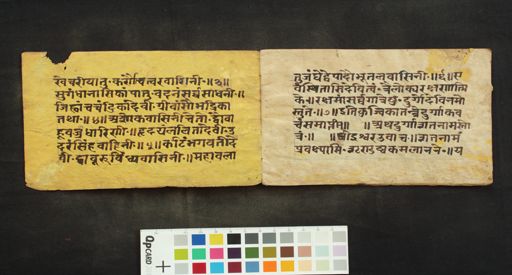
Composite (Durgānāmaśatāṣṭakam or Durgā bhavānī stotram, Dakṣiṇākālīmuktavalī Stotram)
eap_79005046 Language : Sanskrit Scripts : Devanāgarī
This is a composite stotra text of Durgānāmaśatāṣṭakam or Durgā bhavānī stotram and Dakṣiṇākālīmuktavalī Stotram. Durgānāmaśatāṣṭakam or The bhavānī Ashtakam is a powerful eight-verse hymn (stotram) composed by Adi Shankaracharya to honor Goddess Bhavani (a form of Durga), and Dakṣiṇākālīmuktavalī Stotram is a powerful devotional hymn dedicated to Dakṣiṇa Kālī also it is a part of Mahākālasamhitā as mentioned in the text , the most benevolent and popular form of the Goddess Kali. The manuscript here holds image no. 1 - 7 Durgānāmaśatāṣṭakam and from 8- 9 Dakṣiṇākālīmuktavalī Stotram, image 10 has started with some sotra of goddess kali but has not mentioned colophone so it is an incomplete text The pagination has not mentioned so image no has been followed. The text is in good physical condition written in Sanskrit language and Devanagari script.
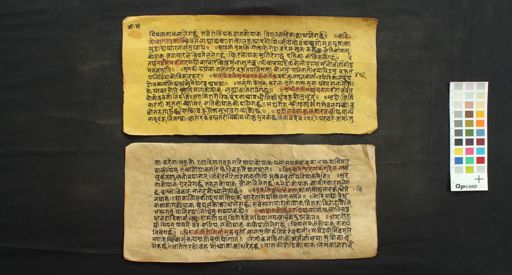
Ajirṇamañjarī
eap_79005047 Language : Newar Scripts : Devanāgarī
This is an Ayurvedic text on medicinal properties, Ajirṇamañjarī attributed to Kāśīnātha or Kāśīrāja.This text describes the medicinal properties of different fruits such as coconut, jackfruit, mango, and many others. The text is written in Newari language and devanagari script. The text has begin from folio no. 45 and continue with 51, several folios are missing, also the pagination is not arranged (Thye first folio is attached with folio 50b) so it seems it is an incomplete text though it has not mentioned authors name, the itermediate colophone has mentioned abvribiation of the text name and it is an well known text so author name has mentioned in the data. At the end of the text a list of several text name has mentioned.
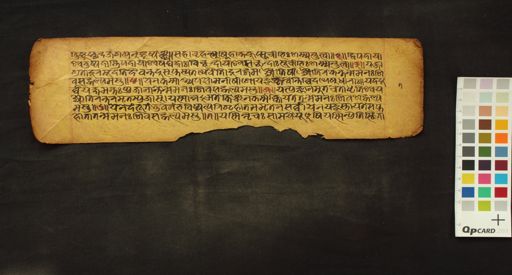
Fragment of Rudrābhiṣeka or Śivastuti
eap_79005048 Language : Sanskrit Scripts : Nepālākṣara
This is a stotra text on Rudrābhiṣeka Śivastuti. The text holds some middle part of a huge text. It begins where the Rudrābhiṣeka paddhati is end. and after that it begins from Rudrābhiṣeka at that time Śivastuti on verses . The verses are not accordingly and they are in Gayatri meters so it seems that it is an incomplete text. Colophone part is not mentioned and verses are highlighted in red ink.
Devī Māhātmya
eap_79005049 Language : Sanskrit Scripts : Nepālākṣara
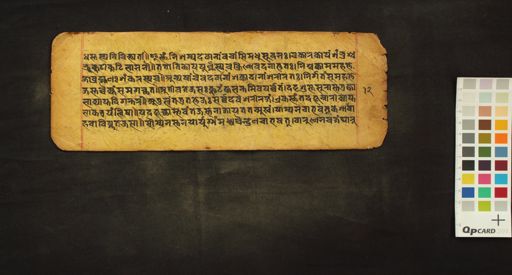
This is an stotra text, Devī Māhātmya Composed roughly between the 4th and 6th centuries CE as part of the mārkṇḍeya purāṇa. It is most important texts in Hinduism, specifically within the Shakta tradition. The text describes the each focusing on a specific manifestation of the Goddess to overcome different "demons" in &00 verses so it is also called Durgā Saptaśatī. The manuscript here describes only Mahiṣāsuravadha. It has begins from folio 12 the middle part of the main text, written in Sanskrit language and newari script. several pages are missing and interstingly 3 Illustration has depicted here 2 is Bhumi sparsha mudra Buddha scatch and other one is dancing ganesh on lotus.
Cikitsāsāra
eap_79005050 Language : Sanskrit & Newar Scripts : Nāgarī
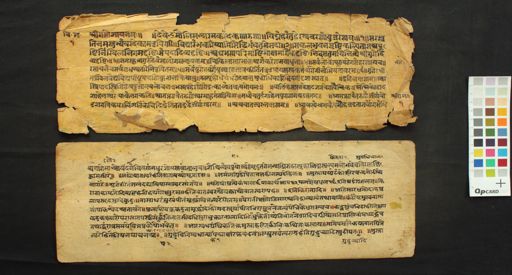
This is an Āyurvedic text Cikitsāsāra, composed by Śaṅkara. The Cikitsāsāra is a most welknown text attributted by Vangasena Jibananda. Actually Śaṅkara a scholar from Nepal write the text based the Vangasena Cikitsāsāra in Nepali languguage which he mentioned at the colophone part. The text here describes the herbs based medicine. Including; f.2 Sadangajala, f.3 Amritasataka, f.4 praneswarasa, f.6 kanakaparbhavatika . The text has only 26 folio and end part is missing so it might be an incomplete text.
Unknown Jyotiṣa fragment
eap_79005051 Language : Sanskrit Scripts : Devanāgarī
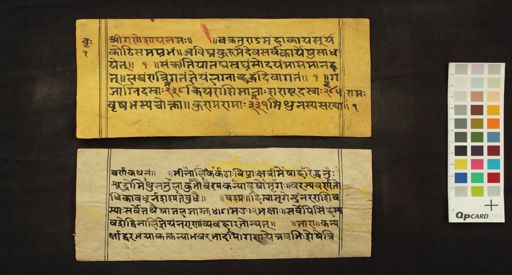
This is an unknown Jyotiśa related fragment. It has only 1 foilo completly others 3 has only verso or recto part, neither colophone nor the text name ghas mentioned.
Mādhava Nidāna fragment
eap_79005052 Language : Sanskrit Scripts : Nepālākṣara
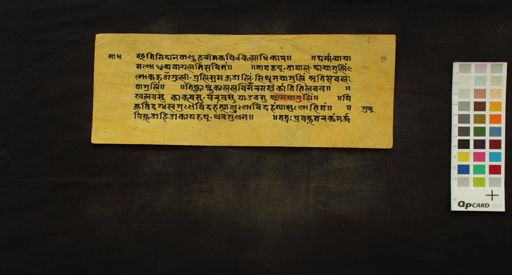
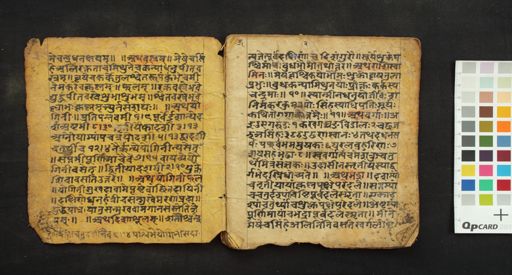
This is an Ayurvedic fragment text of Madhavanidan. The has not mentioned any colophone part or the authores name, it is written in sanskrit language and nevari script, also it has not pagination so its seems it is an incomplete text though it is but intermadiate colophone has mentioned it is a fragment of Madhavanidana text.
Unknown Jyotiṣa fragment
eap_79005053 Language : Sanskrit Scripts : Devanāgarī
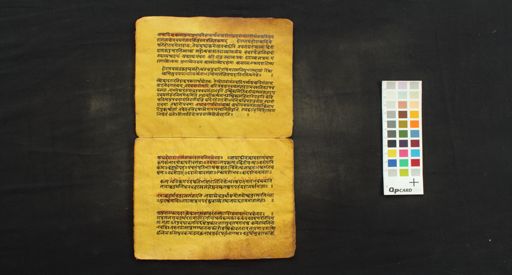
This is an unknown Jyotiśa text. The has not mentioned any clophone or authors name so it is an unknown fragment of Jyotiśa text. The text holds some sub chapters including; f. 3 yoginiphala, diśāphala, f.4 sūryodayāllagnapramāṇam, karaṇavicāra, f.5 sambarttakayoga, amṛtasiddhiyoga, yamaghaṇṭayoga, f.9 traipuṣkarayoga, yoginīprīti, grahamaitram. Interestigly in the text author mentioned as refference garga, aṅgirā, kautsya, vasiṣṭha, kaśyapa, parāśara, Kāśīnāthas Śīghrabodha also the text has several astrological chart. It is written in Sanskrit language and Devanagari script. Some pages are slightly torn and some damaged. Pagination in this manuscript has visival very lightly at the margin side not as common manuscript.
Commentry on Bṛhajjātaka
eap_79005054 Language : Sanskrit Scripts : Devanāgarī
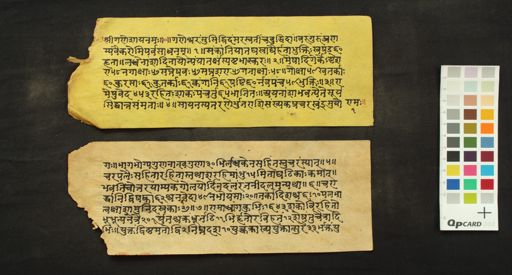
This is an astrological text of Bhaṭavala or Bhaṭṭotpala, which is a commentry on Bṛhajjātaka attributed by Varāhamihira. The text holds 28 chapters. The manuscript here describes 1st and 2nd chapter but it begins from sloka no. 15 of 1st chapter after completing 1st chapter (rāśipraveśavidi) 2nd chapter (grahayonīprabhedādhyāya) has started but not end so it seems it is an incomplete text. At end of the manuscript it has an astrological chart. The name of the text has not mentioned in th colophone only the author name has mentioned it is written in sanskrit language and Devanagari script, several grammatical mistakes are there in the text. Bhattotpala’s commentry is so fundamental that most modern English translations of the Bṛhajjātaka include his explanations as standard.
Grahaṇasāraṇī (candraparva and bhānuparva)
eap_79005055 Language : Sanskrit Scripts : Devanāgarī
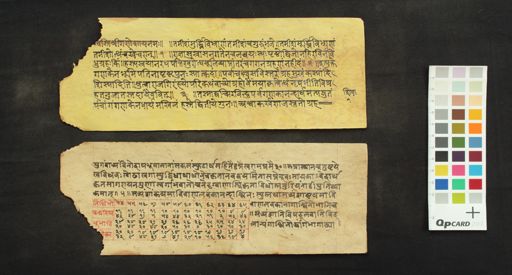
This ia an astrological text, Grahaṇasāraṇī The text has describes the mathematical tool used to find out when that eclipse actually happens. It holds 2 chapters only candraparva and bhānuparva. The text is written in Sanskrit language and Devanagari script. At the colophone it has mentioned only text name and date of the manuscript and scribe and has not mentioned authors name also the manuscript is slightly torn but complete.
Parilekha
eap_79005056 Language : Sanskrit Scripts : Devanāgarī
This is an astrological text Parilekha composed by Mallāridaivajña, who is the third son of Divākara, brother of Kṛṣṇa, Viṣṇu, Keśava, Viśvanātha, uncle of Nṛsiṃha, all astronomers. Parilekha meaning "Diagram" or "Graphical Construction." The text has describes only chapter of eclipes Ch.1 vidhugraha, ch. 2 ravigraha. The text written in sanskrit language and devanagari script. The text good but slightly torn and written in verses. The text has some another part of text but it is not ascertain which part of the text. There are some astrological achart also has drawn in the manuscripts.
Lokamanoramā
eap_79005057 Language : Sanskrit Scripts : Devanāgarī
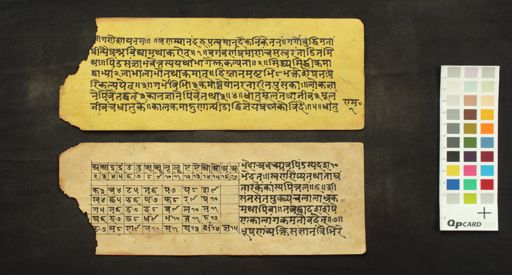
This is an astrologically text Lokamanoramā or Gargamanoramā or Praśnavidyā, ascribed to Gargācārya, this work is its detailed analysis of planetary conjunctions. It's specific results up to 7-planet conjunctions within the 12 houses. The manuscript holds only