

Manuscripts
Search Filter
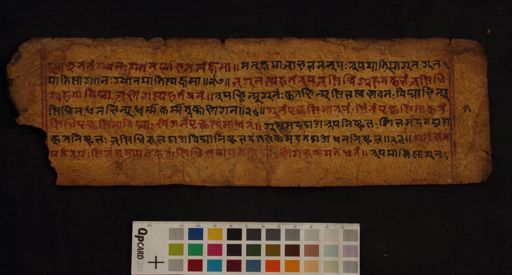
Chanakya Sara Samgraha
eap_79004011 Language : Sanskrit and Newar Scripts : Nepālākṣara
This is an incomplete manuscript of a text named 'Chanakya Sara Samgraha', which is evident from the colophon. The present manuscript contains two sections of 100 verses each, and a third section of which around 80 verses are available in the commentary. Each section is called a 'shataka' owing to the number 100. The primary topic of the text is Rajadharma, various religious acts which a king needs to perform, such as dana, worship of the son of Vasudeva (Krishna?) and other consecratory rites that need to be done for his son.
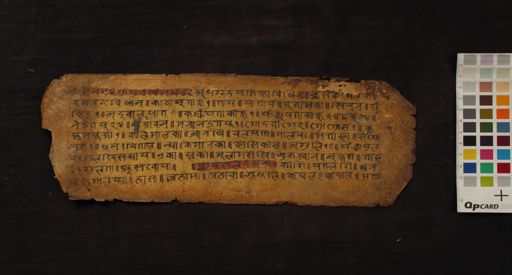
Graha Pratishtha Vidhi
eap_79004012 Language : Newar Scripts : Nepālākṣara
This is an incomplete manuscript that focuses on rituals for house consecration i.e. graha sthapana. It provides a detailed procedure including various tantric mantras, oblations to Nepali deities in mantras such as 'Sri Masi Nistavam'. It also contains an interesting list of items required for rituals, such as sindoor, jalapatra (water pot), arghapatra (pot for offerings) etc.
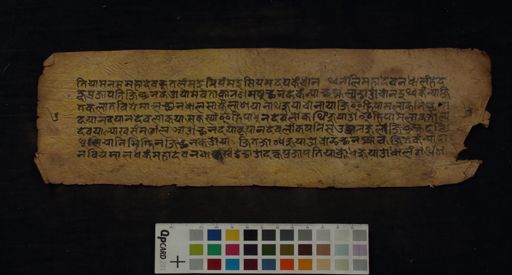
Sati Devi Mahadeva Vivaha
eap_79004014 Language : Newar Scripts : Nepālākṣara
This manuscript appears to be a poriton of a larger narrative text on the story of Shiva's wedding with Sati. The repeated references to Mahadeva, Daksha Prajapati and Sati confirm this, as well as the colophon where the title 'Sati-Mahadeva Vivaha' is given. The current portion of the text draws various scenes, including those of Shiva's wedding procession. There is yet another colophon 'Iti Shri Sati Deva Yaksha' which might be refering to another incident from the same story.
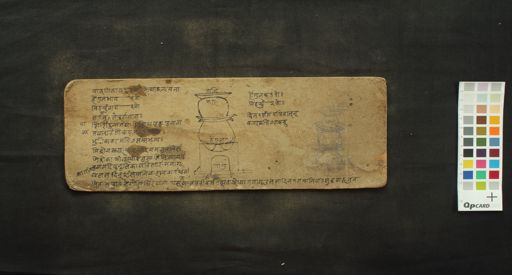
Saraswatīṛjuprakriyā
eap_79005001 Language : Sanskrit Scripts : Devanāgarī & Nepālākṣara
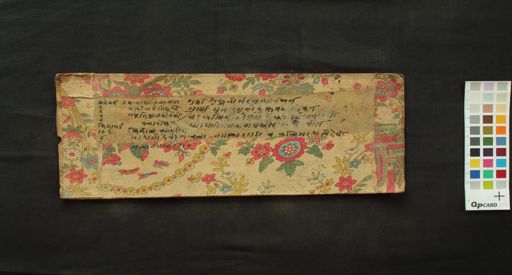
This is a grammattical text Saraswatīṛjuprakriyā. The main text Sarasvataprakriyā of Anubhūti Svarūpācārya at 13th C.E. It is a commentary on and rearrangement of 700 sutras composed by Narendra. Sārasvatavyākaraṇa, was popular due to its shortness and less complex, especially among Jains. In this text Sārasvatavyākaraṇa was briefed. so the name is Saraswatīṛjuprakriyā, ṛju means short or brief. The text has started with the text name and from f.3 Sajñyā prakriya, f.7 svarasandhi, f.7b Prakṛtibhavasandhi, f.10a Vyañjanasandhi, f.13a Visargasandhi, f.27 Svaravibhakti, f.39 Halantavibhakti, f.40 Aṣmada-Yuṣmadavibhakti, f. 45 Strīpratyaya, f.49 Kārakaprakaraṇa, f.50 Samāsa has describes but has not completed. In the text there are some grammatical mistakes may be by the scriber. At the starting cover there are an illustration of koṣṭhakayantra, which is used for making liquid of alloy or metal for the purpose of medicine and in the margin side the object of the making processe has a list in Newari language and at the end of the cover a goddess illustration has made. The manuscript is good readable red coloured ink has used for highlight, Marginal side has used for mistake notes. Though the text has written by Anubhūti Svarūpācārya but in this text author or scriber name has not menntioned.
Laghu Siddhānta kaumudi
eap_79005002 Language : Sanskrit Scripts : Devanāgarī
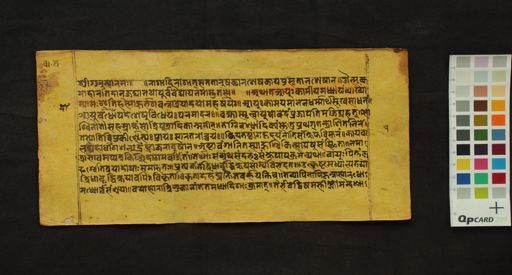
This is a Grammatical text, Laghu Siddhānta kaumudi of Varadarāja. laghu means small, Siddhanta means the theory and kaumudi means moonlight. This is one of the most significant and popular introductory texts for studying Paninian Sanskrit grammar, it serves as a easy gateway to the complex rules of Panini's Ashtadhyayi. Varadaraja was a disciple of the great grammarian Bhattoji Dikshita, who authored the Siddhānta kaumudi with nearly 4,000 rules. Varadaraja condensed it approximately 1,270 sutras. The text describes f.1b Sajñyā prakarana, f.5 svarasandhi, f.6 Vyañjanasandhi, f.7 Visrgasandhi, f.13 Ajantapuṁliṅgaśabda, f.14 Ajantastrīliṅgaśabda, f.21a Halantapuṁliṅga, f.22a Halantanapuṁsakaliṅga, f.31a Parasmaipadaparkriyā, f.33 a Atmanepadaprakriyā, f.42 b Svādidhātu, f.45 a Tudādidhātu, f. 46a Rudhādidhātu, f. 49a Tanādidhātu, f. 48b kryādidhātu. f. 49a Curādidhātu, f. 50 a Yaṅantaprakriyā, f. 50 Yaṅlugantaprakriyā, f. 51 Nāmadhātu, f. 54 a krityaprakriyā, f. 59 a Kridantaprakriyā, f. 62 a Avyayībhāva, f. 62 Tatpuruṣa, f. 65 Vahubrīhi, f. 66 Dvandva, f. 76 Taddhitaprakaraṇa, f. 78 Strīpratyaya. The manuscript is good in physical condition, some mistakes are covered by yellow colour, red ink has used for highlighter, the colophone part where the authors name has mentioned at the end of the folio no. 78.
Aṣṭāṅgahṛdaya sutrasthāna
eap_79005003 Language : Sanskrit Scripts : Nepālākṣara
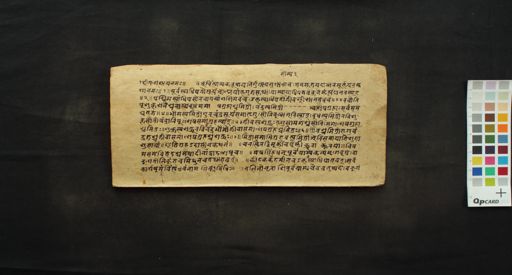
This is a Medical text, Aṣṭāṅgahṛdaya sutrasthāna by Vāgbhaṭṭa son of Vaidyapati śrī Sanghagupta. The text covers everything from daily lifestyle habits and seasonal transitions to the properties of foods and the technical procedures of various therapies. The text contains 1) f.3 Aṣkāmiya adhyāya, 2) f.5 Dincaryādhyāya, 3) f.7b Ṛticaryādhyāya, 4) f.9 Rogānupādanīyādhyāya, 5) f.13b Dravyādivijñāpanīyādhyāya, 6) f.22b Annasvarupavijñāpaniyādhyāya, 7) f.25b Annarakṣāvidhi adhyāya, 8) f.27b Māttāśanī, 9) f.29 Dravyādivijñānīyādhyāya, 10) f.31 Rasabhedādi adhyāya, 11) f.33b Doṣādivijñānīyādhyāya, 12) f.38 Doṣabhedī adhyāya, 13) f.39b Doṣopakramaṇīya adhyāya, 14) f.41 Dvibidhopakramaṇīya adhyāya, 15) f.44 Śodhanādigaśasangraha adhyāya, 16) f.46 Snehavidhi adhyāya, 17) f.47b Svedavidhi adhyāya, 18) f.50b Vasana vidhi adhyāya, 19) f.54b Asti vidhi adhyāya, 20) f.56 Nasya vidhi adhyāya, 21) f.57 Dhumapānavidhi adhyāya. The text is not complete because the sutrasthāna holds the 30 chapters in this section the text has only 21 chapter. The manuscript is good colophone part has mentioned end of the every adhyāya. The red ink has used for highlighting colophone part.
Daśācintāmaṇi
eap_79005004 Language : Sanskrit Scripts : Nepālākṣara
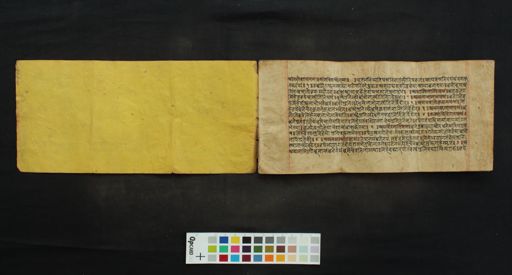
This is Jyotisa text Daśācintāmaṇi or Yoginīdaśā author of Rājarṣi son of Kalyāṇasundara, resident of Dadhīcyapura. It is an important predictive tool in Vedic astrology. The text focuses on the eight-fold cycle of the Yoginis total period of 36 years. The text contains Piṁgalādaśā, f.4b Maṅgalādaśa, f.4 Bhrāmarīdaśā, f.5 Ulkādaśā daśā, Dhyāna daśā, Siddha daśā, f.6 Bhadrikā daśā, Śaṁkaṭādaśā total 8 yoginis and each yogini represents a planet Moon, Sun, Jupiter, Mars, Mercury, Saturn, Venus, Rahu. Daśāphala will be continue following 12345678. The text has several astrological chart illustration (f. 9, 10, 11, 12,) and last folio 19 has and seasonal yearly chart some balank chart also has drawn. The text is good but its not accordingly binded some pages has horizontally some pages has vertically written. (See Kane, HDS. I. ii. p. 1210b.)
Praśnaśāstra
eap_79005005 Language : Sanskrit Scripts : Devanāgarī
This an Astrological text Praśnaśāstra. The text contains Bhuta (Past) and Bhavishyati (Future) part of the Praśnaśāstra, or thios text is the sub chapter of the Praśnaśāstra. There are several sub chapters has mentioned following; Horādhyāya, Gamāgamādhya, also have sub cahpters including; Labhālabhapraśnam, Astināstipraśnam, Naṣṭalābhapraśnam. The manuscript has started from middle of the text but not arranged. The manuscript good readable and red colour ink has used for highlighting the chapters some notes are in the margin side. some Deva has attributed the text.
Ṣaṭapañcāśikā
eap_79005006 Language : Sanskrit Scripts : Devanāgarī
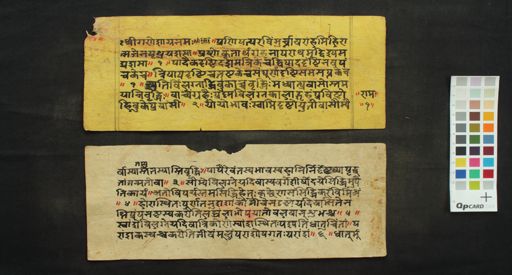
This is an Astrological text Ṣaṭapañcāśikā of Pṛthuyaśa son of Varahamihira, who is a great astrology scho;ar in ancient India. The text Ṣaṭapañcāśikā has describe in 7 chapters following; 1) f.2 Saṁkṣepahorā, 2) f.4 Gamāgama, 3) f.4b Jayaparājaya, 4) f.5b śubhāśubha, 5) f.6a Pravāsavitā, 6) f.6b Naṣṭaprāpti with 7 chapters in the edition has mentioned 7th chapter as misscellinious but the manuscript has not mentioned the chapters name. The manuscript is good red ink has used for highlighting the chapters.
Jyotiṣārṇava
eap_79005007 Language : Sanskrit Scripts : Devanāgarī
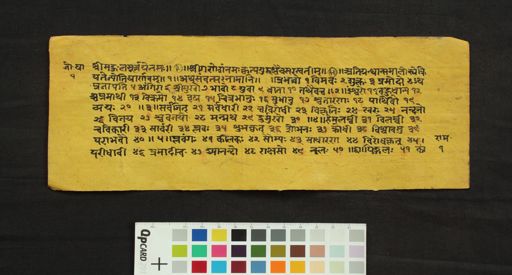
This an Astrological text Jyotiṣārṇava. The text has not mentioned any authors name but has mentioned Umāśaṅkara Miśra, who has collected the text. The text has describes Saṁvatsaranāma, Adhimāsa, Paṭṭadukula, Nakṣatranāmāni e.t.c. and also 326 slokas. The text is good but The Manuscript is complete but it seems that the text is Incomplete.
Pañcasiddhānta
eap_79005008 Language : Sanskrit Scripts : Devanāgarī
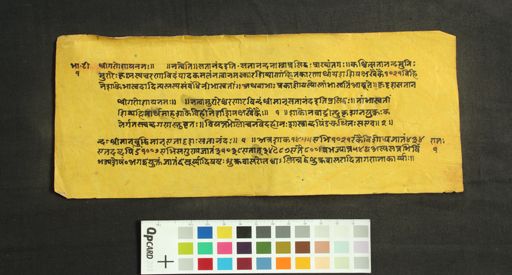
This is an Astrological text Pañcasiddhānta by Śatānanda in 1099 C.E. (The authors origin place is Odissa)with commentry Bhāswatī Ṭīkā by unknown commentators. Pañcasiddhānta is a concise manual designed for practical calculations, such as creating calendars (Panchangas) and predicting eclipses, rather than a dense theoretical treatise. Śatānanda son of Śaṅkara and Sarasvatī and resident of Purusottamakṣetra of Orissa, based on Sūryasiddhānta .The text describes 5 chapters (Adhyāyas) including; f. 3b Tithyādidhruvādhikāra, f.10b Grahadhruvādhikāra, f.14b Pancānganayanādhikāra, f.23b Grahaspasfādhikāra, f. 35b Triprasnādhikāra, f. 38b Chandragrahanādhikāra, f. 44b Sûryagrahanādhikāra, f. 46b Parilekhādhikāra. There are several Astrological chart illustration on f. 22b, 34b, 36, 40b. The main text Pañcasiddhānta is complete but the commentry itself is not complete. At the starting main text and authors name has mentioned but the commentry name or the commentator name or scriber has not mentioned. The text is good and red ink has used for highlight.
Vīrasiṃhamaṁgalgīta
eap_79005009 Language : Sanskrit & Hindi Scripts : Devanāgarī
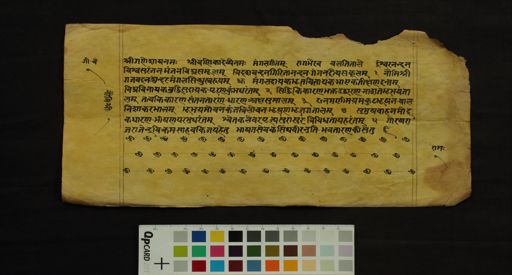
This a caupayi or Maṅgalagīta. The text has written in two language Sanskrit and hindi, its seems like commentry text Sanskrit slokas are in the middle and Hindi language is influence of Mewar. The text describes Vīrasiṁhagīta, Vīrasiṁha has known for bravery at Mewar. He find himself as Dāsa, describe the praise of godess Vindhyācala who is at the Vindhyācala range. The text is good , there are mentioned nepal's king Gorakraja Vikrama.