

Manuscripts
Search Filter
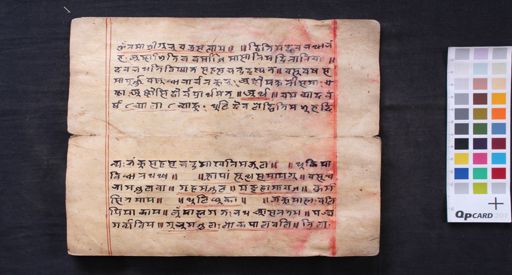
Devarathavidhi
eap_67608004 Language : Sanskrit + Newari Scripts : Nepālākṣara
Devarathavidhi is a method of worship focused on the moon. This complete text mentions numerous forms of the moon, as well as various zodiac signs. However, the manuscript lacks pagination. The manuscript date of 2046 is mentioned in the last folio, though no specific era is stated. If it is considered to be Vikram Saṃvat, the corresponding Western date would be 1989 CE.

Pratyaṅgirāsiddhimantrastavodhāra
eap_67608005 Language : Sanskrit Scripts : Nepālākṣara
Pratyaṅgirāsiddhimantrastavodhāra is a Buddhist dharini text. Pratyaṅgirā is a fierce and powerful goddess of Buddhism. She is capable of destroying negative energy, black magic and enemies. Seed syllable and stotras are recited for her accomplishment and protection. In this manuscript some seed syllable is there.

Pratyaṅgirāstotra
eap_67608006 Language : Sanskrit Scripts : Nepālākṣara
The Pratyaṅgirāstotra is a component of the Kubjikātantra. This extremely powerful hymn is dedicated to Goddess Pratyaṅgirā and noted several seed syllables within the text. Additionally, the name “Rāma” is inscribed in the marginal area of the manuscript.

Unknown Buddhist text
eap_67608007 Language : Newari Scripts : Nepālākṣara
This is an unknown Buddhist text. It is written in the Newari language and Newari script by two different scribes. There is no pagination.

Viśvantarakathā
eap_67608008 Language : Newari Scripts : Nepālākṣara
Viśvantara-kathā is one of the most popular Buddhist Jataka tales. It tells the story of a previous life of Gautama Buddha. Although the text is complete, the manuscript is in bad condition due to being worm-eaten.

Pañcarakṣāsūtra
eap_67609001 Language : Sanskrit Scripts : Nepālākṣara
The Pañcarakṣāsūtra is five female protectors (Rakṣā) of Vajrayāna Buddhism. It is a compendium of five distinct sutras, each dedicated to a specific female deity. Each deity personifies a powerful spell (dhāraṇī) capable of warding off specific worldly evils, diseases, natural disasters, and spiritual dangers. The five godeess are 1) Āryamahāpratisarā- Protects against physical sin; 2) Āryamahāsāhasrapramardanī - Protects against epidemics; 3) Āryamahāmāyūrīvidyārājñī - protects from poisons; 4) Āryamahāmantrānusāriṇī - Protects against diseases; 5) Āryamahārakṣāmahāśītavatīnāmavidyārājñī - Protects against hostile planets. The manuscript is good readable, it has an illustration of (f.1) Pañcarakṣādhāriṇī, who has 8 armed hands and holding her position on a tiger. The manuscript paper is a red coloured may be it is for the sacred text.

Lokeśvarastotra
eap_67609002 Language : Sanskrit Scripts : Nepālākṣara
The Lokeśvarastotra is a profound devotional hymn dedicated to Lokeśvara, he is one of the most important bodhisattvas in Mahāyāna and Vajrayāna Buddhism. He is especially associated with: compassion, saving beings from suffering, protection from danger, and guidance toward enlightenment. The manuscript is good, it is in a red coloured paper may be for the sacred holding, it holds only 3 folio so it seems it is an incomplete text, the title of the text has not mentioned, but the title which used here an intermadiate colphone helped for that.

Fragment of Svayambhūpurāṇa
eap_67610002 Language : Sanskrit&Newari Scripts : Devanāgarī
The manuscript deals with the religious merit and sanctity of various sacred places and may be classified as a Tīrtha-māhātmya text. The extant passage describes a series of sacred tīrthas, including Agastya Tīrtha, Ananta Tīrtha, Tāraka Tīrtha, Sahasrasundarī Tīrtha, Anāliṅga Tīrtha, Āpa Tīrtha, Vāgīśvarī Tīrtha, and Viṣṇunāpa Tīrtha. For each tīrtha, the text specifies auspicious dates, lunar days, weekdays, and solar transitions, together with the rituals of bathing and worship and the spiritual or worldly benefits derived from them. The promised rewards include fulfilment of wishes, wealth, longevity, removal of fear, acquisition of friends, gems, grain, and the destruction of sins. The reference to Śākyamuni Buddha suggests a Buddhist Newar religious context. A marginal note in the manuscript contains the word “Svāyaṃ” (possibly referring to the Svāyambhu Purāṇa), and it is therefore possible that the tīrthas described in the text are derived from or related to the Svāyambhu Purāṇa. This, however, remains a tentative observation pending detailed textual comparison.The first page is the lower side of that folio. The second folio does not contain any page number.

Fragment Misc
eap_67610003 Language : Sanskrit&Newari Scripts : Devanāgarī
The manuscript appears to be a collection of mantras, dhāraṇīs, and ritual invocations associated with Mahāgaṇapati, Mahārudra, and Ārya Tārā. The text contains a series of sacred formulas intended for recitation, remembrance, and ritual practice, including invocations for protection, accomplishment (siddhi), prosperity, and spiritual benefit. Expressions such as stambha, moha, and requests for dhanādi-siddhi indicate a tantric ritual context. The coexistence of Mahāgaṇapati, Mahārudra, and Ārya Tārā suggests a syncretic religious environment characteristic of the Newar Buddhist tradition of Nepal. The manuscript may therefore be classified as a work of Buddhist-Tantric mantra and dhāraṇī literature.

Vasundharākalpāvadāna
eap_67610004 Language : Sanskrit&Newari Scripts : Devanāgarī
The manuscript appears to be a devotional and ritual text connected with Vasundharā, the Buddhist goddess associated with prosperity, fertility, and abundance. The title indicated in the colophon is most probably Vasundharākalpāvadāna, and the work is also described as a Vasundharā-devī-vrata-dharma-kathā, suggesting that it contains ritual observances, religious narratives, and merit-producing practices related to the worship of the goddess. The language of the principal text is Sanskrit, while the colophon is written in Newar language (Nepal Bhasa/Newari), a common feature of Buddhist manuscripts from the Nepal Valley. The colophon records that the manuscript was prepared in Nepal Saṃvat 1061 (c. 1940–41 CE) in Lalitpur by members of the Śākya Buddhist community. The name Hiramān Śākya is prominently mentioned, suggesting that he was likely the patron, donor, or sponsor associated with the production or preservation of the manuscript. ( {7+49+4=60 images} Inicial pages 7, then start the folio 1-49, thereafter 4pages blank.)

Mahāpratyaṅgirā Mahāvidyārājñī
eap_67610005 Language : Sanskrit Scripts : Nepālākṣara
The manuscript may be identified as Ārya-Sarvatathāgatoṣṇīṣa-Sitātapatrā Aparājitā Mahāpratyaṅgirā Mahāvidyārājñī, an important Buddhist tantric dhāraṇī text belonging to the Mahāyāna–Vajrayāna tradition. The title itself indicates that the work is connected with the worship and protective power of Sitātapatrā, a prominent Buddhist goddess revered for protection against dangers, diseases, evil influences, planetary afflictions, and supernatural obstacles.

Ārya-Dhvajāgrakeyūra-nāma-dhāraṇī
eap_67610006 Language : Sanskrit Scripts : Nepālākṣara
Only three folios (18, 19, and 20) out of a total of 20 are extant in the manuscript, indicating that the text is fragmentary and incomplete. The manuscript belongs to the Buddhist dhāraṇī tradition and is identified as Ārya-Dhvajāgrakeyūra-nāma-dhāraṇī. The colophon confirms that it is a dhāraṇī text, intended for ritual recitation and protective religious practice within the Mahāyāna–Vajrayāna Buddhist tradition.