

Manuscripts
Search Filter
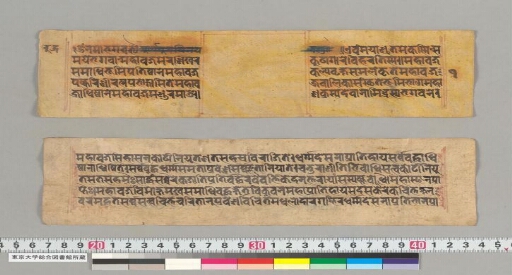
Mahāpratisarā
matsunami_290 Language : Sanskrit Scripts : Nepālākṣara
"Mahāpratisarā is one of five female protectors (Rakṣā) of Vajrayāna Buddhism, who remains important in the Newar Buddhism of Nepal. In the Pañcarakṣasūtra, her dhāraṇī is said to provide protection from a variety of dangers and to bestow rebirth in heaven." (Princeton Dictionary of Buddhism, entry on Mahāpratisarā). Mahāpratisarā kalpa begins with a frame setting, called the nidāna, where the Buddha sits. It then moves on to the Buddha giving an exposition on the benefits of the dhāraṇī and then the dhāraṇī itself. It is said that this particular dhāraṇī saved Yaśodharā while she was pregnant with Rāhula during a fire ordeal when her unborn son recited the Mahāpratisarādhāraṇī. Folio 1b has the words "ārya-buddha-vinaya-tantra" and also folio 46a has the words "Buddha bhāṣitaṁ āryya-buddha-vinaya-tantra-guhe-samāptam" struck out in blue ink. The cancellation seems like a late addition. Folio 1b also has a gap for a picture.
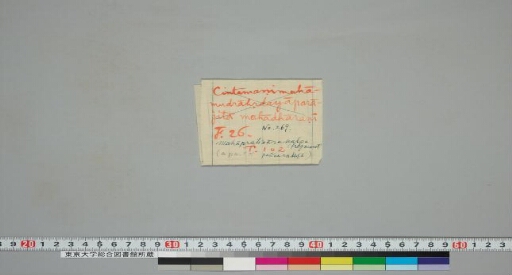
Mahāpratisarā
matsunami_291 Language : Sanskrit Scripts : Nepālākṣara
"Mahāpratisarā is one of five female protectors (Rakṣā) of Vajrayana Buddhism, who remains important in the Newar Buddhism of Nepal. In the Pañcarakṣasūtra, her dhāraṇī is said to provide protection from a variety of dangers and to bestow rebirth in heaven." (Princeton Dictionary of Buddhism, entry on Mahāpratisarā). Mahāpratisarā kalpa begins with a frame setting, called the nidāna, where the Buddha sits. It then moves on to the Buddha giving an exposition on the benefits of the dhāraṇī and then the dhāraṇī itself. It is said that this particular dhāraṇī saved Yaśodharā while she was pregnant with Rāhula during a fire ordeal when her unborn son recited the Mahāpratisarādhāraṇī.
Mahābhārata
matsunami_292 Language : Sanskrit Scripts : Maithili, Tirhuta
The Mahābhārata is one of the two major epics of India, the other being Ramāyaṇa. It is revered as a Smṛti text in Hinduism. The Mahābhārata narrates the events in the lives of two sets of cousins, the Pānḍavas and Kauravas and is divided into 18 parvans. The current mss. contains 5 parvans: Karṇaparvan (2a), Śalyaparva (1b1), Śāntiparvan (140b1), Aiṣīkaparvan (162b1) (In the manuscript, the parvas are not in sequence, and the Aiṣīkaparvan is a sub-parvan within the Sauptikaparvan.) Strīparvan (173b1). Some folios are damaged and missing. (See Matsunami's notebook 22, p. 24)
Mahābhīmasenadhāraṇī
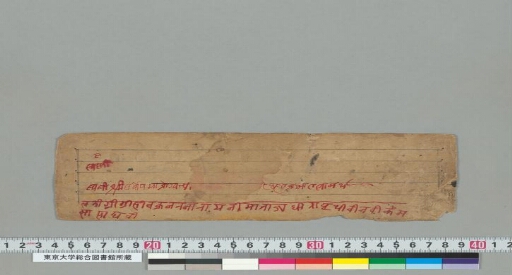
matsunami_293 Language : Sanskrit Scripts : Nepālākṣara
This is a dhāraṇī dedicated to Bhīma, second of the five Pāṇḍava brothers, who vowed to kill Duḥśāsana, a key antagonist in the Mahābhārata. "Bhīmasena is worshipped in Nepal as a form of Bhairava. Referred to as ‘Bhīmsen’, he is especially popular among the Newar business/trading community, which worships his images on small altars in shops as the God of commerce and prosperity. The Mahā-bhīmasena-dhāraṇī describes the simple iconographic form commonly seen in roadside shrines in Nepal, on tympana of temples or on or to the side of doors, when Bhīmasena serves as guardian or doorkeeper of Śiva temples." (Proantic) Matsunami notes that this mss. is filled with scribal errors.
Mahāmeghasūtra
matsunami_294 Language : Sanskrit Scripts : Nepālākṣara
The Mahāmeghasūtra presents a discourse between the Buddha Śākyamuni and the bodhisattva Great Cloud, also referred to as Great Cloud Secret Storehouse or Great Cloud Essence, alongside a vast audience of human and divine beings. Their dialogue explores a wide range of topics, with a central focus on the expansive path of bodhisattvas. The text details the meditative states, dhāraṇī power, and liberative techniques that bodhisattvas must master to guide all sentient beings toward liberation.(Princeton Dictionary of Buddhism, entry on Mahāmeghasūtra and 84000, https://84000.co/translation/toh232)
Mahāmeghasūtra
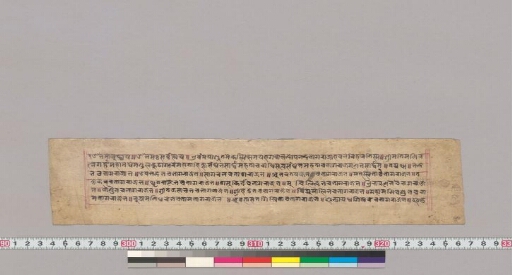
matsunami_295 Language : Sanskrit Scripts : Nepālākṣara
The Mahāmeghasūtra, also known as the Great Cloud Sūtra, is a Mahayāna Buddhist text that is part of the tathāgatagarbha (Buddha-nature) tradition. It is characterized by teachings on the permanence of the Buddha and the concept that the Buddha does not truly pass away into parinirvāṇa. The sutra also includes discussions on liberation, samādhi, dhāraṇīs, docetism, the four inversions, and the prohibition of meat-eating, according to Buddha-Nature (Tsadra). (Princeton Dictionary of Buddhism, entry on Mahāmeghasūtra and 84000, https://84000.co/translation/toh232) . This mss has cramped writing, in the bottom two lines starting from folio 6a to 10b.

Namasaṅgīti
matsunami_296_2 Language : Sanskrit Scripts : Rañjanā?
The Nāmasaṅgīti (NS) is an invocation of the names of Mañjuśri such as Ādibuddha, Mañjuśrijñānasattva, Vajratīkṣṇa, Arapacana, Vāgīśvara, Yamānataka, etc and according to scholarly belief, It is considered to be extracted from the Māyājālā-Mahāyogatantra, hence falls within the Yogatantra class of tantras. Lokesh Chandra mentions that unlike popular scholarly belief, the NS is not a recitation of the names of Manjushri, but is a recitation of the hymn of the “advaya paramartha”, that is, the non-dual ultimate truth. Understood as a deity of wisdom and knowledge, Mañjuśri has close ties with the mythical lore of the Kathmandu Valley, and hence the Nāmasaṅgīti has a popular place in the Nepalese Buddhist community as a frequently chanted scripture. Chanting this scripture is said to bring freedom from fears, good health, long life and purification of unpleasant destinies. In the modern day, Nepal celebrates the full moon day of Chaitra month (caitra pūrṇīmā) as the festival of Nāmasaṅgīti (Nāmasaṅgīti parva). (Triratna Pau, 2021 Year 2, Vol 6). This mss has folia 4, 5, 10, 11, 13, 15, 16, 17.
Mahāvastu
matsunami_297 Language : Sanskrit Scripts : Nepālākṣara
"The Mahāvastu avadāna contains the biography of Gautama buddha, and is filled with stories and miracles accompanying his extraordinary conception, birth, renunciation, enlightenment, preaching and teaching gods and men, conversion of people to Buddhism, and his demise. It also contains some Jātakas as well as some gāthas." (xvi, Introduction, The Mahāvastu Avadāna Vol.I by Radhagovinda Basak)
Mahāsukhaprakāśikā Tattvajñānasaṃsiddhiṭīkā
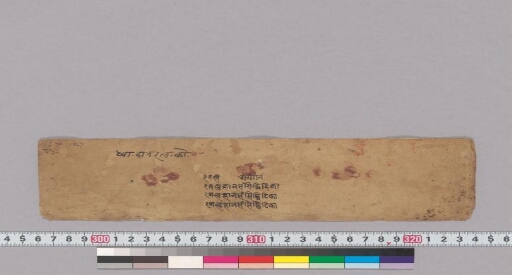
matsunami_298 Language : Sanskrit Scripts : Nepālākṣara
This text is a commentary on the Tattvajñānasaṃsiddhi of Śūnyatāsamādhi Vajrapāla (NCC)
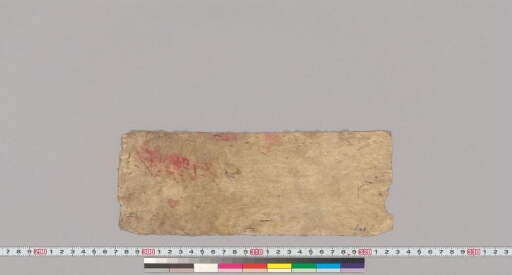
Mādhavanidāna
matsunami_299 Language : Sanskrit Scripts : Nepālākṣara
"Mādhavanidāna, also known as Rugviniścaya, is a medical work, containing lists of different types of diseases along with their causes, symptoms and complications. The food and medicines which are apt for curing different types of diseases are also mentioned." (Wisdom library, https://www.wisdomlib.org/definition/madhavanidana) The contents of this mss. are (3a1 ) iti roga-utpanna, (4a1) iti vāta, (4b9) iti pitta, (5b4) iti kapha, (6b6) iti vāta-śleṣma, (8b4) iti āgha-saṃnipāta, (10a1) iti phalagu, (10b1) iti makaryākhya. Fols 50–55b torn on the bottom margin. Some damaged. Script changes to Devanāgarī on 87a.
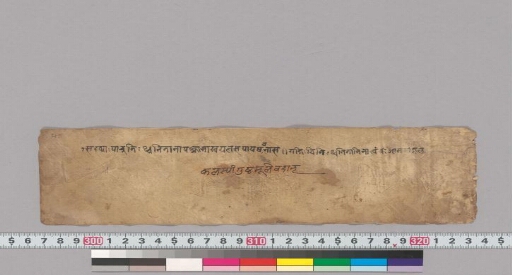
Mādhavanidānaparikarmacikitsā and other texts
matsunami_300 Language : Sanskrit Scripts : Nepālākṣara
Folia 38, 40, 70 missing from mss.
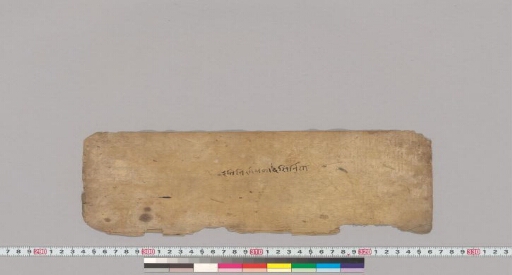
Mādhavīyakālanirṇayaśloka with Vikaraṇa commentary
matsunami_301 Language : Sanskrit Scripts : Nepālākṣara
A dharmaśāstra work by Mādhava (c. 1300) that explains the times appropriate for various religious observances. This is written in śloka form.