

Manuscripts
Search Filter
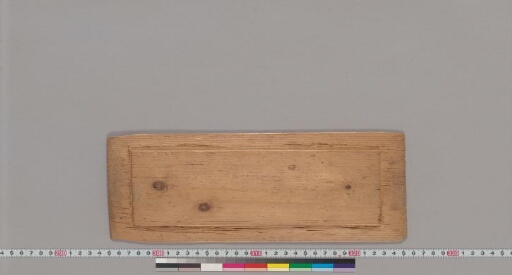
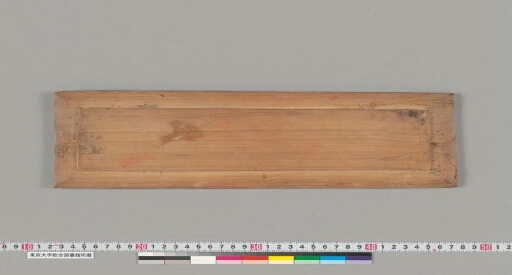
Bhadrakalpāvadāna
matsunami_267 Language : Sanskrit Scripts : Nepālākṣara and Devanāgarī
The Bhadrakalpāvadāna ("Narratives of the Good Kalpa") contains 34 legends narrated by Jayaśri to Jinaśri, recounting stories originally told by Upagupta to Emperor Aśoka (Mitra, 42–47). It chronicles the Buddha’s life from his first teachings at Sarnath to his return to Kapilavastu and departure to Svayambhū, linking the narrative to Nepal. Drawing on the Mahāvastu and other Indian sources, it uniquely expands on Yaśodharā’s hardships after Siddhārtha’s departure, differing from Sanskrit and Pali accounts (von Rospatt). The manuscript is written in both Nepālākṣara and Devanāgari scripts, with folios distributed as follows: Nepālākṣara: 1–296b, 288a, 387b–422b, Devanāgari: 270a–287b, 288b–387a, 423a–454b
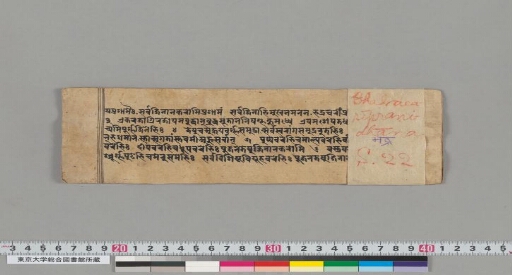
Bhadracarīpraṇidhāna
matsunami_268 Language : Sanskrit Scripts : Nepālākṣara
The Ārya-samantabhadra-caryā-praṇidhāna-rāja (Bhadracarī) is one of the most popular devotional texts in the Mahāyāna Buddhist tradition. Composed in Sanskrit or Prakrit before the fifth century C.E. it presents a bodhisattva’s aspiration to venerate all Buddhas and attain enlightenment for the benefit of all beings. By the eighth century, it was incorporated as the concluding section of the Gaṇḍavyūha-sūtra. David Gellner (1992: 107) notes that in contemporary Newar Buddhism, the Bhadracarī verses are widely known and regularly recited, particularly in funerary rites and daily devotions. The text consists of 62 verses (Bendall’s Cat., p. 14; Taishō No. 297). (Osto, A Translation of the Bhadracarī).
Bhadracarīpraṇidhāna
matsunami_269 Language : Sanskrit Scripts : Nepālākṣara
The Ārya-samantabhadra-caryā-praṇidhāna-rāja (Bhadracarī) is one of the most popular devotional texts in the Mahāyāna Buddhist tradition. Composed in Sanskrit or Prakrit before the fifth century CE, it presents a bodhisattva’s aspiration to venerate all Buddhas and attain enlightenment for the benefit of all beings. By the eighth century, it was incorporated as the concluding section of the Gaṇḍavyūha-sūtra.David Gellner (1992: 107) notes that in contemporary Newar Buddhism, the Bhadracarī verses are widely known and regularly recited, particularly in funerary rites and daily devotions. The text consists of 62 verses (Bendall’s Cat., p. 14; Taishō No. 297). (Osto, A Translation of the Bhadracarī).
Bhavānīsahasranāmastava
matsunami_270 Language : Sanskrit Scripts : Nepālākṣara
It is a text that outlines 1000 names of the Goddess Bhavāni. It is a part of the Rudrayāmala Tantra and is structured as a dialogue between Nandī and Rudra. An entry with the same name is found in British Library's EAP- https://eap.bl.uk/archive-file/EAP781-1-1-498?utm
Bhāgavatapurāṇa
matsunami_271 Language : Sanskrit Scripts : Nepālākṣara
The Bhāgavata Purāṇa attributed to Vyāsa, regarded as the most esteemed of the 18 Mahāpurāṇas, blends narrative, philosophy, and devotion, centering on Kṛṣṇa’s life. It has been widely translated, commented upon, and performed, shaping bhakti theology and ranking among Hinduism’s most influential scriptures (Venkatkrishnan, p. 2). Though a Purāṇa, it stands out for its refined storytelling, poetic style, and philosophical depth. With over 18,000 verses, it rivals the Rāmāyaṇa and Mahābhārata in significance (Oxford Center for Hindu Studies).This manuscript (fols. 37a–79b) is heavily annotated in the margins and between lines, possibly in medieval Bengali. Some pages show water damage, but the text remains legible.
Bhāsvatīkaraṇa
matsunami_272 Language : Sanskrit Scripts : Devanāgarī
A textbook on astronomy authored by Śatananda Ācarya, based on Varāhamihira’s summary of Lāṭadeva’s recension of the Sūryasiddhānta by Āryabhaṭṭa I (fifth–sixth centuries CE), which helped to popularize it throughout northern and eastern India (Pingree 1981). (Sources: SAMHiTA) Name of the scribe is Indra..bhā? but the full name is undecipherable due to colophon folio being torn.
Bhūtaḍāmaratantra
matsunami_273 Language : Sanskrit Scripts : Nepālākṣara
The Bhūtaḍāmara Tantra is a Buddhist esoteric text on magic and exorcism, detailing rituals for controlling spirits and deities under the authority of Vajrapāṇi as Bhūtaḍāmara, the “Tamer of Spirits.” Likely compiled in eastern South Asia around the 7th–8th century CE, it introduced the cult of Bhūtaḍāmara. The text was later absorbed into Hindu traditions with a Śaiva reinterpretation and spread throughout the Himalayas and Tibet. It opens with Śiva being overpowered, slain, revived, and converted by Vajradhara, after which he becomes a Buddhist protector. The tantra’s sādhanas invoke female deities who grant yogīs supernatural power and wealth. Apart from a few ritual manuals, this remains the primary text dedicated to Bhūtaḍāmara (Source: 84000, Religion Database)

Bhūtaḍāmara
matsunami_274 Language : Sanskrit Scripts : Nepālākṣara
The Bhūtaḍāmara Tantra is a Buddhist esoteric text on magic and exorcism, detailing rituals for controlling spirits and deities under the authority of Vajrapāṇi as Bhūtaḍāmara, the “Tamer of Spirits.” Likely compiled in eastern South Asia around the 7th–8th century CE, it introduced the cult of Bhūtaḍāmara. The text was later absorbed into Hindu traditions with a Śaiva reinterpretation and spread throughout the Himalayas and Tibet. It opens with Śiva being overpowered, slain, revived, and converted by Vajradhara, after which he becomes a Buddhist protector. The tantra’s sādhanas invoke female deities who grant yogīs supernatural power and wealth. Apart from a few ritual manuals, this remains the primary text dedicated to Bhūtaḍāmara (Source: 84000, Religion Database) The current mss. contains damaged and torn leaves. Writing is washed out and illegible in the last few folia.
Mañjuśrīmūlakalpa
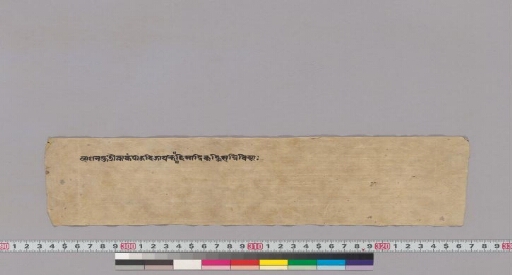
matsunami_275 Language : Sanskrit Scripts : Nepālākṣara
"The Mañjuśrīmūlakalpa is the largest and most important single text devoted to Mañjuśrī, the bodhisattva of wisdom. A revealed scripture, it is, by its own classification, both a Mahāyāna sūtra and a Mantrayāna kalpa (manual of rites). Because of its ritual content, it was later classified as a Kriyā tantra and assigned, based on the hierarchy of its deities, to the Tathāgata subdivision of this class. The Sanskrit text as we know it today was probably compiled throughout the eighth century ᴄᴇ and several centuries thereafter. What makes this text special is that, unlike most other Kriyā tantras, it not only describes the ritual procedures, but also explains them in terms of general Buddhist philosophy, Mahāyāna ethics, and the esoteric principles of the early Mantrayāna (later called Vajrayāna), with an emphasis on their soteriological aims." (Source: 84000 https://84000.co/translation/toh543 )
Maṇikkāmārāstavastotra and 42 other stotras
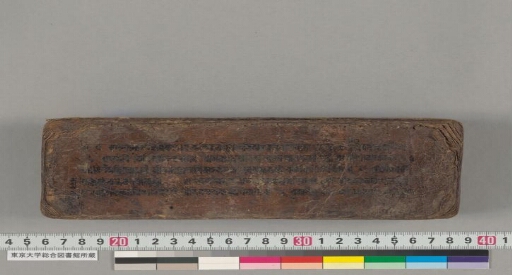
matsunami_276 Language : Sanskrit Scripts : Nepālākṣara
A composite text with a collection of stotras. Matsunami lists this collection as Stotrasaṁgraha in his notebook 16, p. 42-47 and lists all of 43 stotras contained in the work. He writes "this copy has no name but this name is suitable following its contents. the First page is so strained that no letter is to be read (this copy is only a middle part of a work, dead? and end are missing contents). Pagination marked in pencil on the right corner, first and last folio on the book cover are difficult to read due to wear and tear and faded writing.
Maṇicūḍāvadāna
matsunami_277 Language : Sanskrit Scripts : Nepālākṣara
The Newari avadāna recounts the tale of Maṇicūḍa, son of King Brahmadatta of Suketu, born with a jewel in his head. As king, he ruled justly, established alms-houses, and married Padmāvati, with whom he had a son, Padmottara. During the Nigada Mahāyajña, a demon requested human blood and meat, and Maṇicūḍa sacrificed his own body. The demon revealed himself as Indra and offered worldly riches, but Maṇicūḍa wished for Buddhahood instead. Later, when King Dusprasava sought his crown jewel, Maṇicūḍa split his head open to give it away, miraculously regenerating a more magnificent jewel. The Buddha then revealed that he was Maṇicūḍa in a past life, attributing his miraculous powers to past generosity. (Mitra, p. 162-163)