

Manuscripts
Search Filter
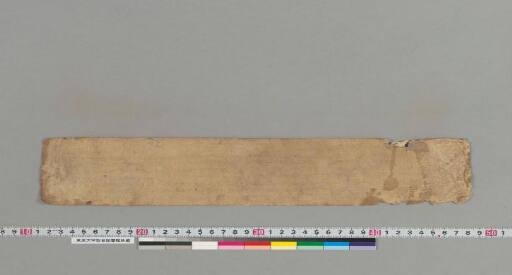
Maṇicūḍāvadāna
matsunami_278 Language : Sanskrit Scripts : Nepālākṣara
The Newari avadāna recounts the tale of Maṇicūḍa, son of King Brahmadatta of Suketu, born with a jewel in his head. As king, he ruled justly, established alms-houses, and married Padmāvati, with whom he had a son, Padmottara. During the Nigada Mahāyajña, a demon requested human blood and meat, and Maṇicūḍa sacrificed his own body. The demon revealed himself as Indra and offered worldly riches, but Maṇicūḍa wished for Buddhahood instead. Later, when King Dusprasava sought his crown jewel, Maṇicūḍa split his head open to give it away, miraculously regenerating a more magnificent jewel. The Buddha then revealed that he was Maṇicūḍa in a past life, attributing his miraculous powers to past generosity. (Mitra, p. 162-163).
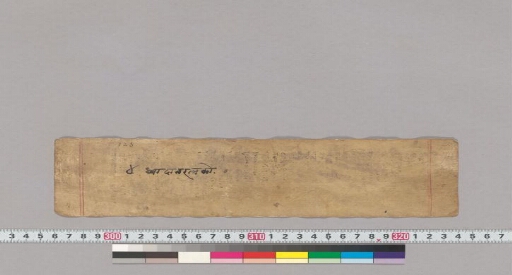
Maṇicūḍāvadāna
matsunami_279 Language : Sanskrit Scripts : Nepālākṣara
The Newari avadāna recounts the tale of Maṇicūḍa, son of King Brahmadatta of Suketu, born with a jewel in his head. As king, he ruled justly, established alms-houses, and married Padmāvati, with whom he had a son, Padmottara. During the Nigada Mahāyajña, a demon requested human blood and meat, and Maṇicūḍa sacrificed his own body. The demon revealed himself as Indra and offered worldly riches, but Maṇicūḍa wished for Buddhahood instead. Later, when King Dusprasava sought his crown jewel, Maṇicūḍa split his head open to give it away, miraculously regenerating a more magnificent jewel. The Buddha then revealed that he was Maṇicūḍa in a past life, attributing his miraculous powers to past generosity. (Mitra, p. 162-163)
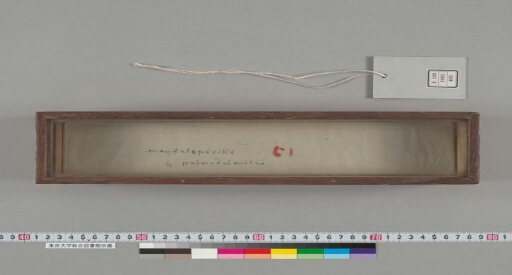
Maṇḍalopāyikā
matsunami_280 Language : Sanskrit Scripts : Bhujinmol
The Maṇḍalopāyikā is a Tantric Buddhist initiation manual attributed to the scholar Padmaśrīmitra. (Szanto)The colophon refers to him as Khaśarṣaṇīya Maṇḍalācārya Padmaśrīmitra, likely indicating a connection to the Kharsaṇiyā region. Alexis Sanderson notes that he was based at Khasarpaṇa Monastery (The Rise of Tantrism, p. 126). This text elaborates on various esoteric rituals within the Vajrayāna tradition, culminating in the Antasthitikarmoddeśa, a final chapter detailing funerary rites for a Tantric master (Tanemura). The manuscript’s first folio (1a) features an image of Mañjuśrī, depicted with four—possibly six—arms. The writing remains legible throughout, though the final folios appear densely inscribed. Folio 8 is missing.
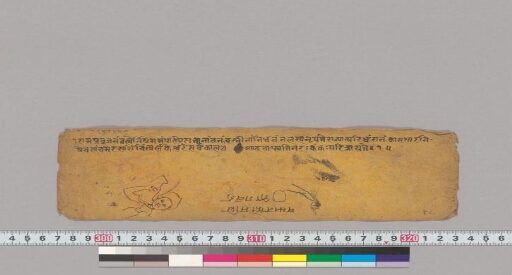
Madhyasiddhāntakaumudī
matsunami_281 Language : Sanskrit Scripts : Devanāgarī
The Madhyasiddhāntakaumudī is a Sanskrit grammar text, specifically an abridgment of Bhaṭṭoji Dīkṣita's Siddhāntakaumudī. It was written by Varadarāja, a student of Bhaṭṭoji Dīkṣita, to make the study of Siddhāntakaumudī more accessible. The work is also sometimes referred to as Madhyakaumudī. (NCC, p. 158b). In this manuscript, the handwriting changes after folio 17, becoming noticeably rough. The last folio is written in yet another distinct hand.
Marmakaṇikā
matsunami_282 Language : Sanskrit Scripts : Nepālākṣara
This text is a commentary (pañjikā) on Śūnyasamādhipada Tattvajñānasaṃsiddhi by Vīryaśrīmitra also known as Mahāpaṇḍita Bhikṣu Vīryaśrīmitra or Śrīvīryamitrapāda of śrī Vikramaśila Vihāra as mentioned in the colophon. (NCC).
Marmakaṇikā
matsunami_283 Language : Sanskrit Scripts : Nepālākṣara
This text is a commentary (pañjikā) on Śūnyasamādhipada Tattvajñānasaṃsiddhi by Vīryaśrīmitra also known as Mahāpaṇḍita Bhikṣu Vīryaśrīmitra or Śrīvīryamitrapāda of śrī Vikramaśila Vihāra as mentioned in the colophon. (NCC).
Marmakaṇikā
matsunami_284 Language : Sanskrit Scripts : Nepālākṣara
This text is a commentary (pañjikā) on Śūnyasamādhipada Tattvajñānasaṃsiddhi by Vīryaśrīmitra also known as Mahāpaṇḍita Bhikṣu Vīryaśrīmitra or Śrīvīryamitrapāda of śrī Vikramaśila Vihāra as mentioned in the colophon. (NCC).
Mahajjātakamālā
matsunami_285 Language : Sanskrit Scripts : Nepālākṣara
"The Mahajjātakamāla was composed in late medieval Nepal (fourteenth to seventeenth centuries C.E.); half of its contents paraphrase an earlier Mahāyāna sūtra, the Karuṇapunḍarīka Sūtra. It has been edited by Michael Hahn." (Reikho Ohnuma, Head Eyes, Flesh and Blood, p. 288) Also see SAMHiTA on Bṛhat jātaka. This text is written in verse śloka form, and the jātaka genre of literature usually recounts previous lives of the Buddha.
Mahākālatantra
matsunami_286 Language : Sanskrit Scripts : Nepālākṣara
The Mahākālatantra is a tantric text focused on Mahākāla, revered in Vajrayāna Buddhism and Śākta/Śaiva traditions. It details rituals, mantras, and mystical rites for supernatural attainments and worldly control, covering topics such as the origin of Mahākāla, fire altars and rituals, mantras, Vajrābhiṣeka, deity worship, and corpse rituals. It also includes practical rites for affection, obstruction, stupefaction, death, rain prevention, pacifying Saturn, removing disturbances, and controlling kingdoms (Mitra, 172). The manuscript features an illustration on folio 1b, while the final folio, 65b, is difficult to read due to washed-out lettering.
Mahākālatantra
matsunami_287 Language : Sanskrit Scripts : Nepālākṣara
The Mahākālatantra is a tantric text focused on Mahākāla, revered in Vajrayāna Buddhism and Śākta/Śaiva traditions. It details rituals, mantras, and mystical rites for supernatural attainments and worldly control, covering topics such as the origin of Mahākāla, fire altars and rituals, mantras, Vajrābhiṣeka, deity worship, and corpse rituals. It also includes practical rites for affection, obstruction, stupefaction, death, rain prevention, pacifying Saturn, removing disturbances, and controlling kingdoms (Mitra, 172). This mss is a fragment.
Mahākālatantra
matsunami_288 Language : Sanskrit Scripts : Nepālākṣara
The Mahākālatantra is a tantric text focused on Mahākāla, revered in Vajrayāna Buddhism and Śākta/Śaiva traditions. It details rituals, mantras, and mystical rites for supernatural attainments and worldly control, covering topics such as the origin of Mahākāla, fire altars and rituals, mantras, Vajrābhiṣeka, deity worship, and corpse rituals. It also includes practical rites for affection, obstruction, stupefaction, death, rain prevention, pacifying Saturn, removing disturbances, and controlling kingdoms (Mitra, 172). Fol. 68 is missing. Picture: fols. 1b, 37b and 51b. Picture folia have been digitized twice.
Mahākālasādhana
matsunami_289 Language : Sanskrit Scripts : Nepālākṣara
Contents :- 1. 1b1-1b3 Catur-bhuja-mahākāla-sādhana. 2. 1b3-1b5 Mahākāla-sādhana. 3. 1b5-2b3 Ṣaḍ-bhuja-mahākāla-sādhana. 4. 2b3-6b4 Ṣoḍaśa-bhuja-mahākāla-sādhana.