

Manuscripts
Search Filter
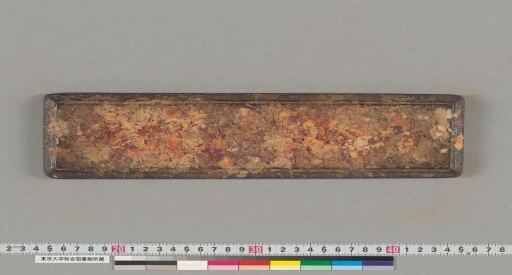
Lokeśvaraśataka
matsunami_342 Language : Sanskrit Scripts : Nepālākṣara
"A century of verses in Śragdharā metre said to be composed by Vajradatta one on each day, on Avalokiteśvara, to recover from a malady." (NCC)
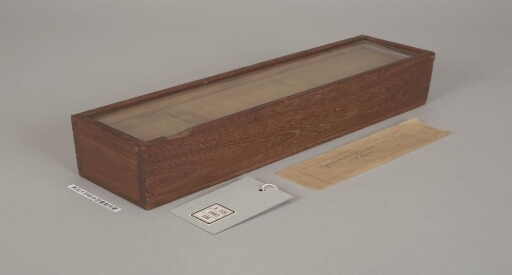
Vajraḍākamahātantra
matsunami_343 Language : Sanskrit Scripts : Bhujinmol
The Vajraḍākamahātantra (abbr. Vajraḍāka) is a scripture belonging to the Buddhist Cakrasaṃvara (or śaṃvara) cycle, and can be considered to have been compiled in around the tenth century. The 12th chapter is a sadhana (sādhana or “perfect realization”) of Vajraḍāka (vajraḍākasyasādhana). (Tsunehiko Sugiki, Critical Editions of chapters 12 and 13 of Vajraḍākamahātantra).
Vajravārāhikalpa (Actually Vasudhārā Vrata Kathā)
matsunami_346 Language : Sanskrit Scripts : Nepālākṣara
This text has been incorrectly catalogued by Matsunami as the Vajravārāhīkalpa. In fact, it is a text titled Vasundharā Vrata Kathā and forms part of the Aśvaghoṣa Avadāna. This has been been critically edited by Chhatra Bahadur Kayastha. As the Buddhist goddess of prosperity, Vasudhārā is associated with both material and spiritual abundance.Vasudhārā is also one of the most widely worshipped deities in Newar household shrines, where she is invoked for success in both business and domestic life. Each autumn, she is venerated in a two-day devotional ritual (vrata) known as Gatila or Tila, which involves both individual and communal worship. (Kerry Lucinda Brown, on Vasudhara). Also been catalogued as Vasundhara Vrata Kathā by EAP. https://eap.bl.uk/archive-file/EAP790-2-11 and also https://eap.bl.uk/archive-file/EAP790-15-2 This mss has two kinds of pagination, on the right and left hand side. The left pagination is in red ink, which makes it seems like a new work, and the right hand pagination makes it seems like it belongs to a bigger text.
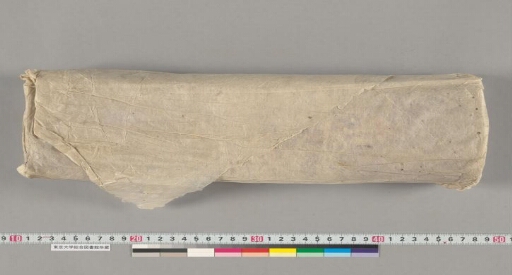
Vajravārāhikalpa
matsunami_347 Language : Sanskrit Scripts : Nepālākṣara
Vajravārāhikalpa is attributed to Sarvadevasamāgama. Vajravārāhi features as a part of the Śakta worship in Newaris of Kathamandu. Their ceremony of initiation before the Maṇḍala of Cakrasaṁvara is followed on the final day by initiation before the Maṇḍala of Vajradevī (Vajravārāhi). The full Vajravārāhikalpa is of about three thousand verses, which interweaves the Ḍākārṇava and the Saṁvarodaya, and incorporates thirteen non scriptural Sādhana texts of Vajravārāhī and one of Nairatmya, the consort of Hevajra, the closely related Yoginījāla, of about one thousand verses; and the collection of forty-six Sādhanas of Vajrayogini known as the Guhyasamayasadhanamala. (Alexis Sanderson, The Genesis and Development of Tantrism, 176, 177).
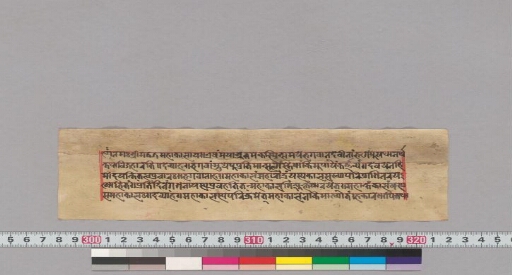
Vajravīramahākālatantrahṛdaya and other works
matsunami_348 Language : Sanskrit Scripts : Nepālākṣara
Vajrasattvakāyasya tathāgatajātavyāpta
matsunami_349 Language : Sanskrit Scripts : Nepālākṣara
This appears to be a dhāraṇī text dedicated to Vajrasattva, who is described in the colophon as the eradicator of all passions and diseases. The title of the text is written in red at the end of the colophon.
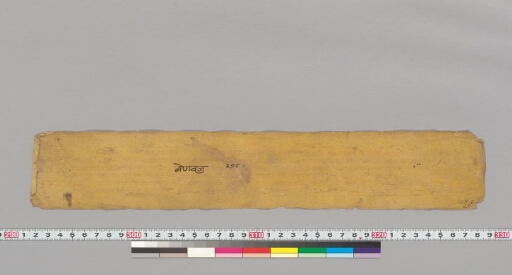
Vajrāvalī
matsunami_351 Language : Sanskrit Scripts : Nepālākṣara influenced by Kuṭila
"The Vajrāvalī by Abhayākaragupta is referred to as a maṇḍalopāyikā, meaning a guide to the methods (upāyika) involved in the understanding and construction of maṇḍalas, which form the essential foundation of Buddhist tantra. In addition to maṇḍala-related systems and procedures, the text addresses various other aspects of Tantric Buddhist worship and rituals, including the recruitment of disciples, the preparation and purification of ritual grounds, proper sitting postures, rules for the purification of ritual implements, and guidelines for the consecration of images, monasteries, and other sacred structures. The Vajrāvalī also discusses the generation of the mind of awakening (bodhicittotpāda) and the observance of the corresponding vow (Caryāvrata), both of which are central to Tantric Buddhist practice. (D.C. Bhattacarya, New Materials for the study of Buddhist iconograpy in Journal of Asiatic Society of Bombay, 95–96)
Varṇasūtra and Paribhāṣāsūtra (Varṇasūtra, Paribhāṣāsūtra)
matsunami_352 Language : Sanskrit Scripts : Bhujinmol
The Varṇasūtra and Paribhāṣāsūtra appear to be components of a distinct grammatical tradition separate from the Pāṇinian school. The Varṇasūtra opens with a homage to Mañjuśrī and serves as an introduction to phonetics, focusing on the articulation of svarṇas (phonemes) and principles of speech production. The Paribhāṣāsūtra, in turn, addresses the interpretation and application of the rules in Sanskrit grammar. (A History of Sanskrit Grammatical Literature in Tibet and NCC)
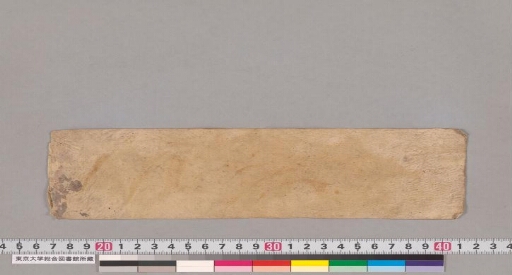
Varṣāpaṇavidhi
matsunami_353 Language : Sanskrit Scripts : Nepālākṣara
A buddhist ritual manual on agriculture. This mss has a few marginal corrections, foliation: two sets of numbering, one with letters and the other with numerals, on verso. The manuscript contains the colophons of the following texts: Herukabhyudayatantroddhrta-varsāpaņavidhi 4a, Mārīcīkalpoktakrama-varsāpaņavidhi 15a, Varsapanakramamahābalasādhana 27a, Mahākālatantroddhrta-varsāpaņavidhi 28a, Kalaviretamantroddhrtavarsāpaņavidhi 28b, Vajratuņdanāmasamayakalparāja 86b, Herukabhyudayatantroddhrtavarsapanavidhi 88a, Catuspithatantroktakrama-varsapanavidhi 95b, Abhidhanottaratantroddhrta-varsapanavidhi 99b, Samputatilakatantroddhrta-varsapanavidhi 101a, Samaryatantroktavarsapanavidhi 107a, Samvarodayatantroddhrta-varsapanavidhi 107a, Vajradakamahatantroddhrta-varsāpaņavidhi 125b, Hevajratantrokta-varsāpaņavidhi 129a, Hevajratantrokta-meghasthapanavidhi 129b, Mahāvipulavimānasupratisthitaguhyakalpoddhrta-varsāpaņavidhi 131b, Kurukullakalpokta-varsapanavidhi 134a, Mahakalatantrokta-varsapanavidhi 140a, Vajrapanisadhana-upacaravidhi 145a. (A Buddhist ritual manual on Agriculture, p. 30)
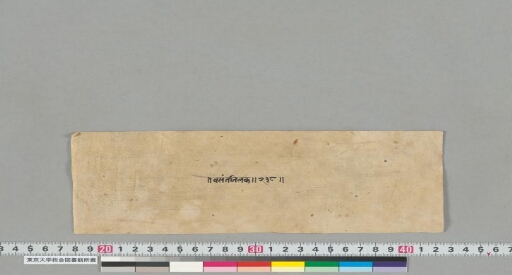
Vasantatilakā
matsunami_354 Language : Sanskrit Scripts : Devanāgarī
Vasantatilakā is a Tantric Buddhist work associated with the Cakrasamvara tantra. It is attributed to Kṛṣṇācārya.
Vasudhārākalpāvadānasūtra
matsunami_355 Language : Sanskrit Scripts : Nepālākṣara
The Vasudhārākalpāvadānasūtra also referred to as the Sucandrāvadāna contains the dhāraṇī dedicated to Vasudhārā, the bodhisattva of wealth, prosperity, and abundance (who has a strong following among the Newar Buddhists of the Kathmandu valley). It is taught by the Buddha in Kauśāmbī to the rich merchant and layman Sucandra. He has been reduced to poverty and so requests a sermon from the Lord, so that he may provide for his own family, so that all beings may become prosperous. This scripture includes a dhāraṇī along with enumerations of benefits. (Buddhist Digital Archives)
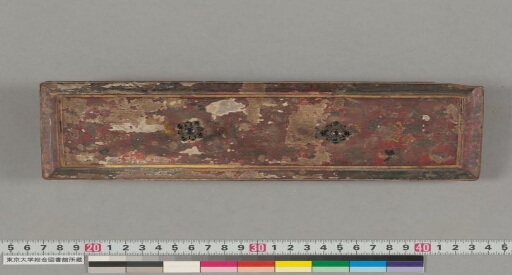
Vasudhārādhāraṇī
matsunami_356 Language : Sanskrit Scripts : Rañjanā
This mss. is a fragment of the Vasudhārādhāraṇī, dedicated to Vasudhārā, the bodhisattva of wealth, prosperity, and abundance (who has a strong following among the Newar Buddhists of the Kathmandu valley). The wooden covers are beautifully illustrated with two images. The first image before fol 1 is an orange figure with a mustache. On the last side is the image of 6 armed Vasudhārā in yellow. Mss written on black paper with gold/yellow lettering, in a newari script influenced by Kuṭila. Last page is undecipherable due to faded Ranjana lettering.