

Manuscripts
Search Filter
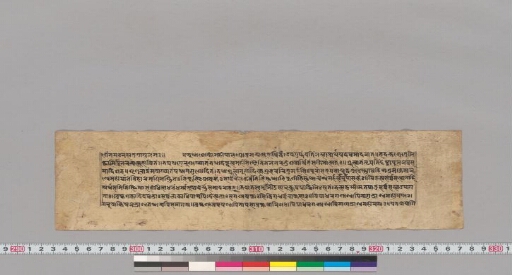
Vicitrakarṇikāvadāna
matsunami_369 Language : Sanskrit Scripts : Nepālākṣara
Vicitrakarṇikāvadāna is a collection of 32 stories, mostly derived from the Avadānaśataka and others pertaining to the type of Vratāvadāna. (Literal History of Sanskrit Buddhism, Nariman, p. 61) This mss. contains chapters 16–32, with the names of the chapters written on the side in the margins. Folia are numbered from 126–233.
Vicitrakarṇikāvadāna
matsunami_370 Language : Sanskrit Scripts : Nepālākṣara
Vicitrakarṇikāvadāna is a collection of 32 stories, mostly derived from the Avadānaśataka and others pertaining to the type of Vratāvadāna. (Literal History of Sanskrit Buddhism, Nariman, p. 61). This mss is an incomplete fragment, containing only chapters 1 to 4. Last fol. 32b is faded and some letters are washed out and blurred, making them illegible.
Vicitrakarṇikāvadāna
matsunami_371 Language : Sanskrit Scripts : Nepālākṣara
Vicitrakarṇikāvadāna is a collection of 32 stories, mostly derived from the Avadānaśataka and others pertaining to the type of Vratāvadāna. (Literal History of Sanskrit Buddhism, Nariman, p. 61) Fols. 30–36 are missing. Small note on fol 56 in Devanāgarī below the main text. Fol. 160a onward writing is shoddy and lighter compared to the rest of the mss. Last folio is an addition written in another hand. Fol. 136 contains the number 1952 in the bottom by a secondary hand in black, but what dating system is it refering to is unclear.
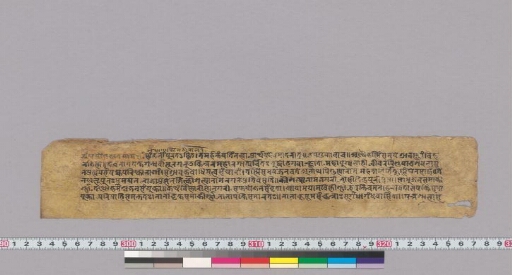
Vicitrakarṇikāvadāna
matsunami_372 Language : Sanskrit Scripts : Nepālākṣara
Vicitrakarṇikāvadāna is a collection of 32 stories, mostly derived from the Avadānaśataka and others pertaining to the type of Vratāvadāna. (Literal History of Sanskrit Buddhism, Nariman, p. 61) This mss. contains chapters 18–24.
Vicitrakarṇikāvadāna
matsunami_373 Language : Sanskrit Scripts : Nepālākṣara
Vicitrakarṇikāvadāna is a collection of 32 stories, mostly derived from the Avadānaśataka and others pertaining to the type of Vratāvadāna. (Literal History of Sanskrit Buddhism, Nariman, p. 61). This mss has only upto chapter 16. Fols. 38–46 are missing. Two leaves with fol. No. 127.
Vibhūtidhāraṇa
matsunami_374 Language : Sanskrit Scripts : Nepālākṣara
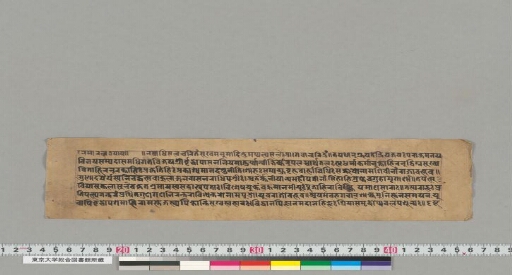
This text is sometimes attributed to Viśvamitra and is believed to be part of a larger work known as the Viśvamitrakalpa (cf. NCC). While the Viśvamitrakalpa primarily addresses the daily duties of Brahmins, the Vibhūtidhāraṇa section appears to be distinctly esoteric, as suggested by the chapter titles inscribed in red ink in the manuscript. These titles pertain to tantric rituals and vidhis. The chapters include: (10a3) Iti Mahākālasaṃhitokta Vibhūtidhāraṇam- “Thus [ends the section on] the Wearing of Powers, as stated in the Mahākāla Saṃhitā.” (10a8) Iti Tāntrika Tilakadhāraṇam -“Thus [ends the section on] the Wearing of the Tantric Forehead Mark.” (12a4) Iti Snāna Vibhṛti Dhāraṇa Sandhyātarpaṇavidhiḥ - “Thus [ends the section on] the Ritual Instructions for Bathing, Adorning the Body, and the Offering at Twilight.” (13b6) Iti Śrīkulaḍāmare Siddhalakṣmī Vidyātritayaṃ Saṃkṣepataḥ Saṃpūrṇam - “Thus ends the Brief Completion of the Three Siddhalakṣmī Mantras in the Śrīkulaḍāmara tradition.” (14a5) Iti Śrīmahākṣallālike Prākṛta Siddhalakṣmī Vidyā Samāptaḥ - “Thus ends the Prākṛta Siddhalakṣmī Mantra in the Śrīmahākṣallālikā tradition.” (17a9) Iti Śrītridaśaḍāmare Pratyaṅgirā Devyā Mahāstavādhikāraḥ - “Thus ends the Chapter on the Great Hymn to the Goddess Pratyaṅgirā in the Śrītridaśaḍāmara.” (28b11) Iti Pañcācalaprastāra Vinirgatā Siddhalakṣmī Mantrārghanavidhiḥ -“Thus ends the Ritual for the Offering of the Siddhalakṣmī Mantra, Emerged from the Pañcācala Tradition.”
Viśvantarajātaka
matsunami_375 Language : Sanskrit Scripts : Nepālākṣara
The Viśvantarajātaka is the 9th chapter of Āryāśūra's Jatakamālā. In the Viśvantarajātaka, The bodhisattva is reborn as Prince Viśvaṃtara, known for his radical generosity. When he gives away his kingdom’s elephant to brahmins, the people demand his exile. He leaves with his wife Madrī and their children, Jālī and Kṛṣṇājinā, to live on Mount Vaṅka. There, he gives away his children to a brahmin and later offers his wife to another—Śakra in disguise—who reveals himself and returns her. Viśvaṃtara is eventually reunited with his family and returns to rule as king. (Jātaka stories)
Viśvantarajātaka
matsunami_376 Language : Sanskrit Scripts : Nepālākṣara
The Viśvantara-jātaka is the ninth story in Āryaśūra’s Jātakamālā, in which the bodhisattva is reborn as Prince Viśvaṃtara, renowned for his extreme generosity. After giving away the kingdom's auspicious elephant to brahmins, he is exiled and retreats to Mount Vaṅka with his wife, Madrī, and their children, Jālī and Kṛṣṇājinā. There, he donates his children to a brahmin and offers his wife to a mendicant who is later revealed to be Śakra in disguise. Śakra restores the family, and Viśvaṃtara eventually returns to rule as king. Matsunami notes that the colophon of the manuscript reads “iti jātakamālāyāṃ viśvantara-jātakaḥ navamaḥ samāptaḥ”, identifying it as the ninth story of the Jātakamālā.
Viśvaprakāśābhidhāna
matsunami_377 Language : Sanskrit Scripts : Devanāgarī
This text is a work on Sanskrit lexicography, titled Viśvaprakāśa, attributed to the lexicographer Maheśvara Kavi. It is a homonymic dictionary composed of approximately 2,200 verses and is notable for being the earliest Sanskrit koṣa (lexicon) to state the year of its compilation. According to C. Vogel (Indian Lexicography, p. 329), the Viśvaprakāśa had a significant influence on the development of Sanskrit lexicography. The main text is accompanied by a supplementary work titled Śabdabhedaprakāśa, which is divided into four sections (nirdeśas), addressing various types of lexical variation. Folios 21 and 27 are missing from the manuscript. Folio 37 appears twice.
Vetālapañcaviṃśati
matsunami_378 Language : Sanskrit Scripts : Nepālākṣara
Vetālapañcaviṃśati is a Sanskrit prose narrative attributed to Śivadāsa, comprising twenty-five tales involving a vetāla (a kind of revenant spirit). The stories center around the legendary King Vikramāditya, who faces a series of moral dilemmas and challenges orchestrated by a necromancer threatening his kingdom. (Wisdom Library) In this manuscript, folios 21 and 50 are missing, and folio 22a contains mostly illegible, washed-out text. The leaves up to folio 22 exhibit damage along their upper-right edges. From folio 58 onward, the folios show partial damage. Although Matsunami notes that the final folio appears to have been replaced, it is consistent in appearance and format with the rest of the manuscript.
Vyākhyāmadhukośa
matsunami_379 Language : Sanskrit Scripts : Nepālākṣara
Vyākhyāmadhukośa (commonly known as Madhukośa) is an extensive and valuable commentary on the Mādhavanidāna, attributed to Vijayarakṣita and his pupil Śrīkaṇṭhadatta. It is the earliest known commentary on Mādhava’s treatise and appears to draw not only from earlier sources but also from the authors’ own insights. The first half, up to chapter 32, was composed by Vijayarakṣita, and the second half by Śrīkaṇṭhadatta. Both authors cite numerous authorities, including Bhattāra (Hariścandra), Jejjāṭa, Gadādhara, Vāpyacandra, Śrīcakrapāṇidatta, Bakula, Īśvarasena, Bhoja, Īśāna, Karttika(kunda), Śukra, Sudhīra, Maitreya, and Mādhava. (History of Indian Medical Literature, Meulenbeld, p. 72). In this mss, the final folio (40a) is illustrated with two flowers and is torn at the top right.
Vratāvadānamālā
matsunami_381 Language : Sanskrit Scripts : Nepālākṣara
The Vratāvadānamālā is a collection of stories of various optional fasts or vratas (Mitra, 275 ), but the current mss is incomplete since it contains only chapters 1 to 3. Chapter 1 (upto fol. 14a), chapter 2 (upto fol.51a), chapter 3 (upto fol.74a).