

Manuscripts
Search Filter

Saṃvarodayatantra
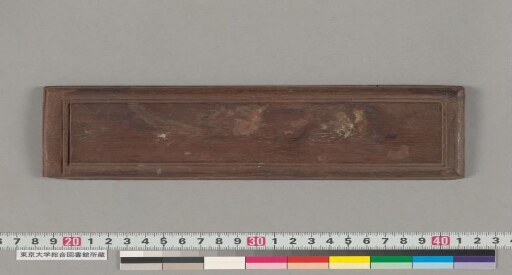
matsunami_403 Language : Sanskrit Scripts : Nepālākṣara
The Saṃvarodayatantra (also known as Saṃvarodaya or Samvarodaya Tantra) is a significant Buddhist tantric text associated with the Cakrasaṃvara cycle, a central tradition within Vajrayāna Buddhism. Comprising 33 chapters, it delves into advanced yogic practices, ritual frameworks, and esoteric teachings. Seems to be written by two different scribes given the difference in handwriting from fol 27a onward. Annotations and corrections made on the mss. in black ink.
Saṃvarodayatantra
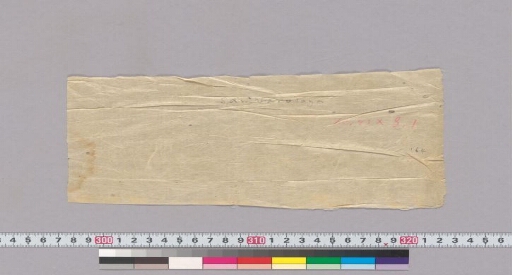
matsunami_404 Language : Sanskrit Scripts : Nepālākṣara
The Saṃvarodayatantra (also known as Saṃvarodaya or Samvarodaya Tantra) is a significant Buddhist tantric text associated with the Cakrasaṃvara cycle, a central tradition within Vajrayāna Buddhism. Comprising 33 chapters, it delves into advanced yogic practices, ritual frameworks, and esoteric teachings. Two binding holes in the middle of all pages. The colophon of the manuscript states that it was produced during the reign of the Malla king Jayaśivasiṃhadevamalla, who ruled Kantipur (Nepal) from 1578 to 1619.
Saṃvarodayatantra
matsunami_405 Language : Sanskrit Scripts : Nepālākṣara
The Saṃvarodayatantra (also known as Saṃvarodaya or Samvarodaya Tantra) is an important Buddhist tantric text associated with the Cakrasaṃvara cycle, a central tradition within Vajrayāna Buddhism. Comprising 33 chapters, it explores advanced yogic practices, ritual procedures, and esoteric teachings. This manuscript features both red and black ink on folios 17 and 18. The script is consistently compact and roughly executed throughout. A red ink splatter is visible on fol. 6a.
Saṅgharakṣitāvadāna
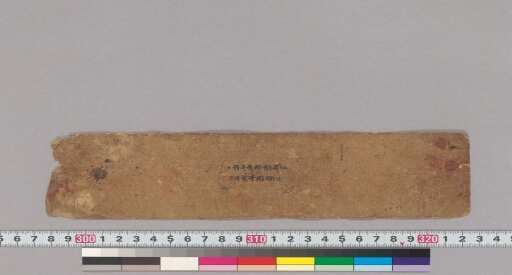
matsunami_406 Language : Sanskrit Scripts : Nepālākṣara
Folia 70–79 (left margin), 1–9 (right margin): This section recounts the story of Saṅgharakṣita, a dharma teacher accompanying five hundred merchants on an overseas journey. During the voyage, the ship is seized by nāgas who invite Saṅgharakṣita to their underwater realm to teach the four Āgamas. After fulfilling their request, he returns to the ship, and they reach land safely. There, Saṅgharakṣita encounters beings suffering in hell due to transgressions committed as monastic disciples under the Buddha Kāśyapa. He later meets and converts five hundred seers, and along with the original merchants, brings them all to the Buddha for ordination. (Rotman, Andy. Divine Stories: Divyāvadāna, Part 1. Somerville, MA: Wisdom Publications, 2008, p. 13.)
Saccakatāḍanāvadāna(?)
matsunami_407 Language : Sanskrit Scripts : Nepālākṣara
Fol. 10b mentions " iti śrī-caitya-pūjā-phaloddeśa samāptaḥ ||", while the text ends on fol. 18a. This seems a text similar to the Caitya puṅgava, a rite and narrative dedicated to the worship of caityas. This narrative takes place between the Buddha and Sucetna sthavira.

Saddharmapuṇḍarīkasūtra
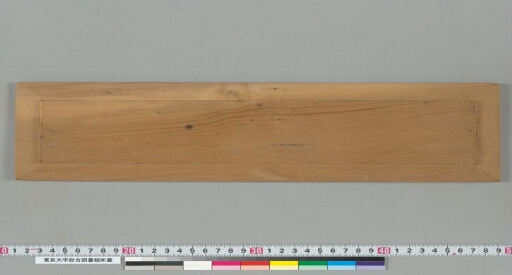
matsunami_408 Language : Sanskrit Scripts : Bhujinmol
This manuscript contains the Lotus Sūtra (Saddharmapuṇḍarīka Sūtra), also known as The White Lotus of the Good Dharma, a foundational Mahāyāna scripture attributed to the Buddha Śākyamuni. Delivered on Vulture Peak to a vast assembly of bodhisattvas—including those emerging from beneath the earth—the sūtra teaches the existence of a single, true path to enlightenment. It distinguishes between provisional and ultimate teachings and portrays the Buddha as an eternal being who continues to teach beyond his historical lifetime. Central episodes include the appearance of the long-departed Buddha Prabhūtaratna in a suspended stūpa, into which Śākyamuni enters, signifying the unity of all Buddhas. Especially revered in East Asia, the text emphasizes its own supremacy and the boundless merit gained through devotion to it. (Source: 84000) According to Matsunami (Notebook 1, p. 41ff.), folio 35 is missing. The manuscript is incomplete and shows signs of damage, particularly toward the end. Folia are numbered on the recto in the right margin. To assist with foliation, Matsunami inserted paper slips. The final leaves are heavily deteriorated.
Saddharmapuṇḍarīkasūtra
matsunami_409 Language : Sanskrit Scripts : Nepālākṣara
This manuscript contains the Lotus Sūtra (Saddharmapuṇḍarīka Sūtra), also known as The White Lotus of the Good Dharma, a foundational Mahāyāna scripture attributed to the Buddha Śākyamuni. Delivered on Vulture Peak to a vast assembly of bodhisattvas—including those emerging from beneath the earth—the sūtra teaches the existence of a single, true path to enlightenment. It distinguishes between provisional and ultimate teachings and portrays the Buddha as an eternal being who continues to teach beyond his historical lifetime. Central episodes include the appearance of the long-departed Buddha Prabhūtaratna in a suspended stūpa, into which Śākyamuni enters, signifying the unity of all Buddhas. Especially revered in East Asia, the text emphasizes its own supremacy and the boundless merit gained through devotion to it. (Source: 84000). The folia appear dull after fol. 125 and the handwriting seems to change as well. It is choppy and rougher, suggesting perhaps two different scribes may have written the mss. Lettering on 128a- 131b is washed out, making it difficult to read. The top edges of fols 158a- 171b are torn. Fol. 195a appear newly written.

Saddharmapuṇḍarīkasūtra
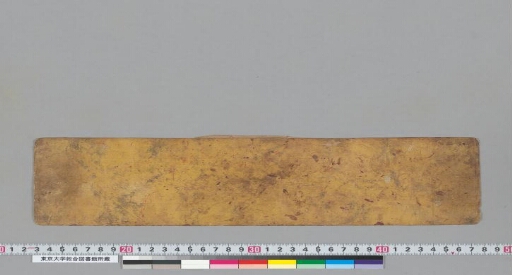
matsunami_410 Language : Sanskrit Scripts : Nepālākṣara
This manuscript contains the Lotus Sūtra (Saddharmapuṇḍarīka Sūtra), also known as The White Lotus of the Good Dharma, a foundational Mahāyāna scripture attributed to the Buddha Śākyamuni. Delivered on Vulture Peak to a vast assembly of bodhisattvas—including those emerging from beneath the earth—the sūtra teaches the existence of a single, true path to enlightenment. It distinguishes between provisional and ultimate teachings and portrays the Buddha as an eternal being who continues to teach beyond his historical lifetime. Central episodes include the appearance of the long-departed Buddha Prabhūtaratna in a suspended stūpa, into which Śākyamuni enters, signifying the unity of all Buddhas. Especially revered in East Asia, the text emphasizes its own supremacy and the boundless merit gained through devotion to it. (Source: 84000) The first page of the manuscript contains an illustration of Śākyamuni flanked by two attendants. Matsunami has inserted two additional leaves at the beginning of the manuscript. The sūtra appears to begin at fol. 1, though the text opens abruptly and continues through fol. 8. It then restarts at fol. 1a, which also includes an illustration of the Buddha with two attendants. The outer box of the manuscript is painted. The last fol. is 194b which has Chinese script on the left of the margin, making it a biscript text.
Saddharmapuṇḍarīkasūtra
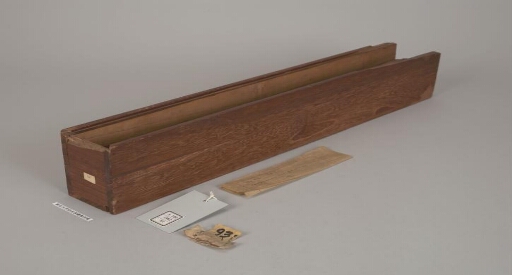
matsunami_411 Language : Sanskrit Scripts : Nepālākṣara
This manuscript contains the Lotus Sūtra (Saddharmapuṇḍarīka Sūtra), also known as The White Lotus of the Good Dharma, a foundational Mahāyāna scripture attributed to the Buddha Śākyamuni. Delivered on Vulture Peak to a vast assembly of bodhisattvas—including those emerging from beneath the earth—the sūtra teaches the existence of a single, true path to enlightenment. It distinguishes between provisional and ultimate teachings and portrays the Buddha as an eternal being who continues to teach beyond his historical lifetime. Central episodes include the appearance of the long-departed Buddha Prabhūtaratna in a suspended stūpa, into which Śākyamuni enters, signifying the unity of all Buddhas. Especially revered in East Asia, the text emphasizes its own supremacy and the boundless merit gained through devotion to it. (Source: 84000). Fol 1b has a picture of Śākyamuni with four gods and five monks.
Saddharmapuṇḍarīkasūtra
matsunami_412 Language : Sanskrit Scripts : Nepālākṣara influenced by Kuṭila
This manuscript contains the Lotus Sūtra (Saddharmapuṇḍarīka Sūtra), also known as The White Lotus of the Good Dharma, a foundational Mahāyāna scripture attributed to the Buddha Śākyamuni. Delivered on Vulture Peak to a vast assembly of bodhisattvas—including those emerging from beneath the earth—the sūtra teaches the existence of a single, true path to enlightenment. It distinguishes between provisional and ultimate teachings and portrays the Buddha as an eternal being who continues to teach beyond his historical lifetime. Central episodes include the appearance of the long-departed Buddha Prabhūtaratna in a suspended stūpa, into which Śākyamuni enters, signifying the unity of all Buddhas. Especially revered in East Asia, the text emphasizes its own supremacy and the boundless merit gained through devotion to it. (Source: 84000) Pagination in this manuscript begins at folio 14. The first two folia are notably thin and appear to be written in regular Newari script, with three lines per page. The text on fols. 35b and 36b is significantly faded and partially washed out, making it difficult to decipher. Matsunami has inserted white paper slips to indicate folio numbers.

Saddharmapuṇḍarīkasūtra
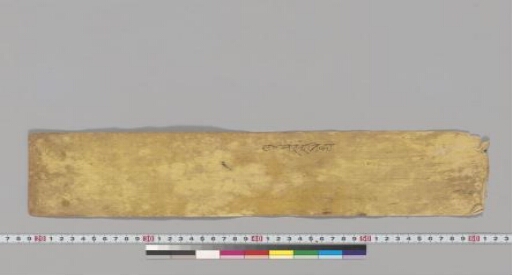
matsunami_413 Language : Sanskrit Scripts : Nepālākṣara influenced by Kuṭila
This manuscript contains the Lotus Sūtra (Saddharmapuṇḍarīka Sūtra), also known as The White Lotus of the Good Dharma, a foundational Mahāyāna scripture attributed to the Buddha Śākyamuni. Delivered on Vulture Peak to a vast assembly of bodhisattvas—including those emerging from beneath the earth—the sūtra teaches the existence of a single, true path to enlightenment. It distinguishes between provisional and ultimate teachings and portrays the Buddha as an eternal being who continues to teach beyond his historical lifetime. Central episodes include the appearance of the long-departed Buddha Prabhūtaratna in a suspended stūpa, into which Śākyamuni enters, signifying the unity of all Buddhas. Especially revered in East Asia, the text emphasizes its own supremacy and the boundless merit gained through devotion to it. (Source: 84000) Matsunami catalogues details of the mss in his notebook 2, p.12. Matsunami inserts paper slips to mark folio numbers and mentions that the folio from 167 on are lost.
Saddharmapuṇḍarīkasūtra
matsunami_414 Language : Sanskrit Scripts : Nepālākṣara
This manuscript contains the Lotus Sūtra (Saddharmapuṇḍarīka Sūtra), also known as The White Lotus of the Good Dharma, a foundational Mahāyāna scripture attributed to the Buddha Śākyamuni. Delivered on Vulture Peak to a vast assembly of bodhisattvas—including those emerging from beneath the earth—the sūtra teaches the existence of a single, true path to enlightenment. It distinguishes between provisional and ultimate teachings and portrays the Buddha as an eternal being who continues to teach beyond his historical lifetime. Central episodes include the appearance of the long-departed Buddha Prabhūtaratna in a suspended stūpa, into which Śākyamuni enters, signifying the unity of all Buddhas. Especially revered in East Asia, the text emphasizes its own supremacy and the boundless merit gained through devotion to it. (Source: 84000) .There is a picture of the Buddha with many attendants on the first folio.