

Manuscripts
Search Filter
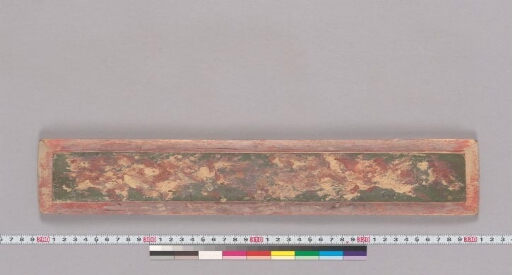
Guhyasamājatantra (Pūrva- and Parārdha)
matsunami_439 Language : Sanskrit Scripts : Nepālākṣara
The Guhyasamājatantra is one of the earliest Buddhist tantras associated with the Vajrayāna tradition. According to Tibetan sources, it originated in South India. The text is divided into two parts: the Pūrvārdha, also known as the Aṣṭādaśapaṭala ("Eighteen Chapters"), and the Uttarārdha or Aparārdha, which consists of fifteen chapters and is often considered spurious (see NCC). This manuscript includes both the Pūrvārdha and the Parārdha. The folios are marked with printed stickers bearing Roman numerals. The upper wooden cover is painted with the Eight Auspicious Symbols (aṣṭamaṅgala) of Buddhism. The final folio 160b contains some Tibetan letters at the end.
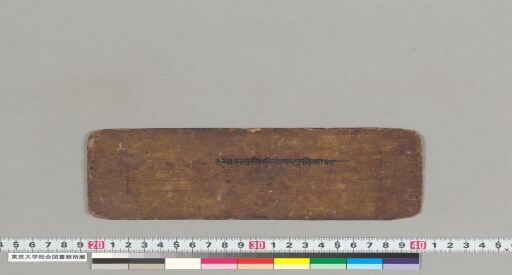
Sarvatathāgatoṣṇīṣasitātapatrāvidyārājñī
matsunami_440 Language : Sanskrit Scripts : Nepālākṣara
This text presents a vidyā (spell) centered on the female deity Sitātapatrā (White Umbrella Goddess), who emerges from the uṣṇīṣa of the Buddha Śākyamuni as he rests in samādhi among the gods of the Heaven of the Thirty-Three. It enumerates various dangers, illnesses, and threats, offering spell formulas for their averting. Sitātapatrā, as both deity and spell, has long served as a source of protection against misfortune and continues to be widely invoked in contemporary Buddhist practice. For further details, see Matsunami’s notebook 20, p. 12. Notably, even though the titles of the texts are the same for sr. no. 440 and 441-1, the homage verses in 440 are addressed to all buddhas and bodhisattvas, in contrast to text 441-1, which begins with a dedication to Mahāpratyaṅgirā.
Composite text
matsunami_441 Language : Sanskrit Scripts : Nepālākṣara
This composite manuscript contains two texts: the Sarvatathāgatoṣṇīṣasitātapatrāvidyārājñī (fols. 1b1–18a4) and the Dhvajāgrakeyūrīdhāraṇī (fols. 18a4–22b). The former presents a vidyā (spell) focused on the female deity Sitātapatrā (White Umbrella Goddess), who emerges from the uṣṇīṣa of the Buddha Śākyamuni as he abides in samādhi among the gods of the Heaven of the Thirty-Three. It enumerates various threats—illness, misfortune, and malevolent forces—and offers recitation formulas for their averting. Sitātapatrā, as both deity and spell, has served as a longstanding source of protection and remains widely invoked in contemporary Buddhist practice (84000). Unlike manuscript 440, this version begins with an homage to Mahāpratyaṅgirā. The Dhvajāgrakeyūrīdhāraṇī is a protective charm that manifests as a female deity when recited. She dispels fear, grants blessings such as good reputation and abundance, and offers divine protection. According to the text, the Buddha gives this dhāraṇī to Indra to help him triumph in battle after being overpowered by other gods (Mitra, 283). A red smudge appears on fol. 18a.
Sarvatathāgatoṣṇīṣasitātapatrānāmaparājitāpratyaṅgirā (mahā-)vidyārājñī
matsunami_442 Language : Sanskrit Scripts : Nepālākṣara
This text presents a vidyā (spell) centered on the female deity Sitātapatrā (White Umbrella Goddess), who emerges from the uṣṇīṣa of the Buddha Śākyamuni as he rests in samādhi among the gods of the Heaven of the Thirty-Three. It enumerates various dangers, illnesses, and threats, offering spell formulas for their averting. Sitātapatrā, as both deity and spell, has long served as a source of protection against misfortune and continues to be widely invoked in contemporary Buddhist practice. The manuscript is written on black paper with alternating lines of gold and silver ink. The silver lettering on folios 1b and 2a is faded and difficult to decipher. Folio 1b features an illustration, likely of Avalokiteśvara, depicted with an eye on each hand and leg. Although a date appears after the word "saṃvat" on the final folio, it is illegible due to damage.
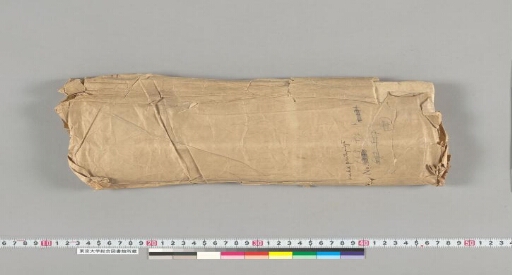
Sarvatathāgatoṣṇīṣasitātapatrāmahāpratyaṅgirā
matsunami_443 Language : Sanskrit Scripts : Devanāgarī
This text contains a protective spell associated with the goddess Sitātapatrā, or the White Umbrella Goddess, who is said to emanate from the crown of Buddha Śākyamuni during deep meditation in the Heaven of the Thirty-Three. It is further designated a pratyaṅgirā (“counter-spell”) for its ability to avert threats before they strike, and aparājitā (“invincible”) for its reputed potency (84000). The manuscript is incomplete, with folios 57–68 missing—a gap noted in a paper slip by Matsunami titled “(Mahāpratyaṅgirā) Sitātapattra-tantra from 57–68,” possibly referencing a related tantric work. The text also ends abruptly on folio 74a4 with a list of names ending with "nāgarāja." The manuscript appears to have been written by two different scribes, as indicated by a noticeable shift in handwriting, the first more linear and sharp, the second broader and more horizontal.
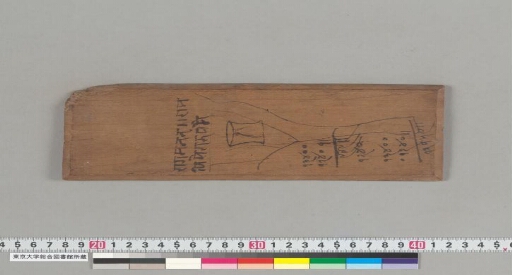
Sarvatathāgatoṣṇīṣasitātapatrāmahāpratyaṅgirā
matsunami_444 Language : Sanskrit Scripts : Nepālākṣara
This text contains a protective spell associated with the goddess Sitātapatrā, or the White Umbrella Goddess, who is said to emanate from the crown of Buddha Śākyamuni during deep meditation in the Heaven of the Thirty-Three. It is further designated a pratyaṅgirā (“counter-spell”) for its ability to avert threats before they strike, and aparājitā (“invincible”) for its reputed potency (84000). The first folio, beginning with the number 32a, features a rudimentary illustration of an orange colored deity holding a mālā in one hand and what appears to be a text in the other. The colophon notes the manuscript was written during the reign of King Pṛthvī Nārāyaṇa Śāha of Nepal, aligning the date mentioned as "Saṃvat 890" with his rule upto 1775 CE. Additionally, although the name of the scribe is mentioned, it is illegible due to the faded handwriting in the colophon. The first wooden slat bears writing in Hindi, written by the another hand, mentioning the owner's name Rāmajosi—likely from the Pahari region—and the deity's name Rāma along with Saṃvat 1911, indicating later ownership. These details suggest regional transmission and ownership of the manuscript across time.
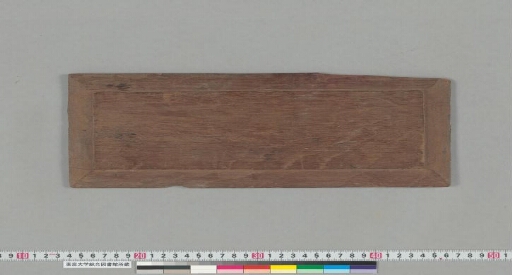
Sarvatathāgatoṣṇīṣasitātapatrāmahāpratyaṅgirā
matsunami_445 Language : Sanskrit Scripts : Devanāgarī
This text contains a protective spell associated with the goddess Sitātapatrā, or the White Umbrella Goddess, who is said to emanate from the crown of Buddha Śākyamuni during deep meditation in the Heaven of the Thirty-Three. It is further designated a pratyaṅgirā (“counter-spell”) for its ability to avert threats before they strike, and aparājitā (“invincible”) for its reputed potency (84000). Matsunami outlines the various sections of the ms. with their folio numbers in his notebook 20, p. 3.
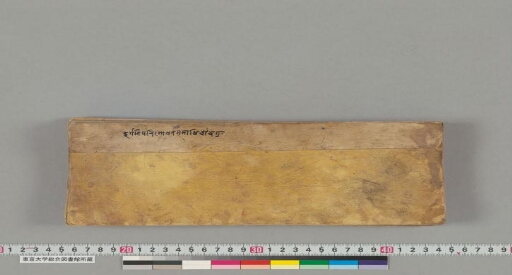
Composite text
matsunami_446 Language : Sanskrit Scripts : Nepālākṣara
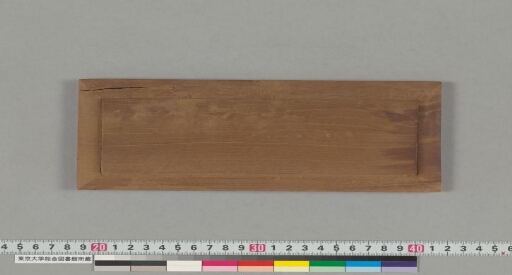
This is a composite manuscript, comprising three texts. The first text, although labeled in the catalogue as the Sarvadurgatipariśodhana, is actually the Sarvadurgatipariśodhanasamādhi, a ritual manual that illustrates in color the hand gestures (mudrās) associated with purification rituals of funerary rites. This text is digitized in a jumbled order, beginning after the third text (Rajaḥpravāhavidhi?), with a picture on folio 1 and continuing to folio 28. It then resumes at the start of the manuscript from folio 29 and continues to folio 61.1. It details various mantras and dhāraṇīs with mudrās, performed while holding various tantric ritual implements, and also indicates the color in which the hands performing these gestures should be painted. The second text, the Asthiprakṣālanavidhi, running from folio 61.3 to 68.5, seems to be a ritual text as well, such as mandala rituals. The final text, the Rajaḥpravāhavidhi, is a vidhi (ritual manual) and runs from folio 68.6 to 70.2.The manuscript is in book format, with the page numbers written in pencil on the right side of the text.
Sarvadurgatipariśodhana
matsunami_447 Language : Sanskrit Scripts : Nepālākṣara
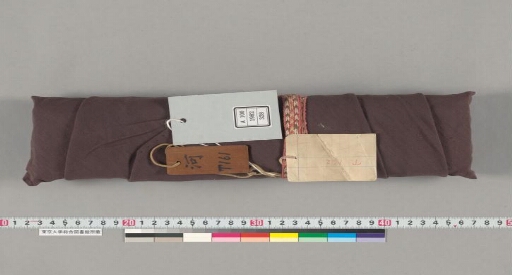
This appears to be a shorter text related to the Sarvadurgatipariśodhana and is filled with mantras and incantations. The Sarvadurgatipariśodhana (SDP) Tantra, or The Purification of All Negative Rebirths, is a Buddhist Yoga Tantra long associated with funerary practices across various Buddhist cultures. However, like most canonical tantras, the text itself offers little practical ritual instruction. (Open Edition Journals). The SDP consists of eleven chapters. There is a puṣpikā on folio 1b, and some folios appear to be newly written or later additions.
Sarvadurgatipariśodhana
matsunami_448 Language : Sanskrit Scripts : Nepālākṣara
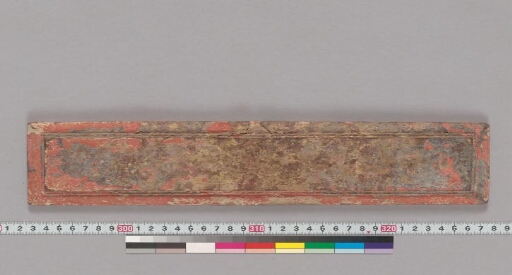
The Sarvadurgatipariśodhana (SDP) Tantra, or The Purification of All Negative Rebirths, is a Buddhist Yoga Tantra long associated with funerary practices across various Buddhist cultures. However, like most canonical tantras, the text itself offers little practical ritual instruction. Instead, this role is taken up by local ritual manuals and handbooks that have developed around the tantra over the centuries (Open Edition Journals). The SDP consists of eleven chapters. In this ms. the top wooden slat has a sketch of a Buddha holding a bowl.
Sarvadurgatipariśodhana
matsunami_449 Language : Sanskrit Scripts : Nepālākṣara
The Sarvadurgatipariśodhana (SDP) Tantra, or The Purification of All Negative Rebirths, is a Buddhist Yoga Tantra long associated with funerary practices across various Buddhist cultures. However, like most canonical tantras, the text itself offers little practical ritual instruction. Instead, this role is taken up by local ritual manuals and handbooks that have developed around the tantra over the centuries (Open Edition Journals). The SDP consists of eleven chapters. Picture of a Buddha teaching 4 deities on fol 1b. According to the colophon, the donor of this ms. belongs to "Śrī Bhāskaradeva Saṃskārita Śrī Keśavacandrakṛta Pāravata Mahāvihāra."
Saṃvarodayā nāma maṇḍalopāyikā (?)
matsunami_450 Language : Sanskrit Scripts : Rañjanā
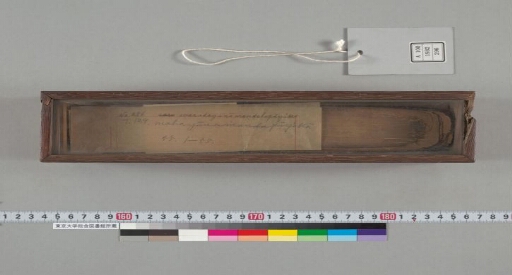
This text, belonging to the cult of Saṁvara or Śamvara is an initiation manual and is attributed to Bhūvācārya (Brill). Matsunami notes the names of the various rituals in the text with their folio numbers: (44a4) vāhyādhyāśa(?)-homa-vidhi; (45b3) pramāṇavidhi; (47b1) āveśa-vidhi; (51b1) udgata-vidhi; (54a2) abhiśeka-vidhi; (55a5) pratisthā-vidhi.